
- Google claims Android is faster than iOS when it comes to web browsing
- Company says some Android phones are up to 47% faster
- Testing was performed using the Speedometer and LoadLine benchmarks.
Choosing between iOS and Android can be difficult: should you opt for the deeply integrated, privacy-focused approach of iOS or the open and flexible mindset adopted by Android? Both mobile phone operating systems offer brilliant experiences to their users, but if you’re looking for a way to decide on one or the other, Google believes it has a good reason to opt for one of the best Android phones: web browsing speed.
Specifically, a new post on Google’s Chromium blog claims that Android has set a “new record for mobile web performance,” making it “the fastest mobile platform for web browsing.” Given the importance of web browsing to everyday phone use, “web content and its performance are critical to the user experience,” Google says.
Android browsing speed was measured using two benchmarking tools: Speedometer, which focuses on latency, and LoadLine, which measures page loading speeds. According to a graph provided by Google, three anonymous Android phone makers scored higher on Speedometer and LoadLine than a “competing mobile platform,” which is almost certainly iOS.
Article continues below.
In fact, in the LoadLine test, developed by the makers of Google and Android, Android scored “up to 47% higher than its non-Android competitors,” Google says. Since this is a test designed expressly by companies in the Android ecosystem, it shows the benefits of stakeholders working together to improve performance, but could raise questions about how suitable it is for iOS.
‘Deep vertical integration’
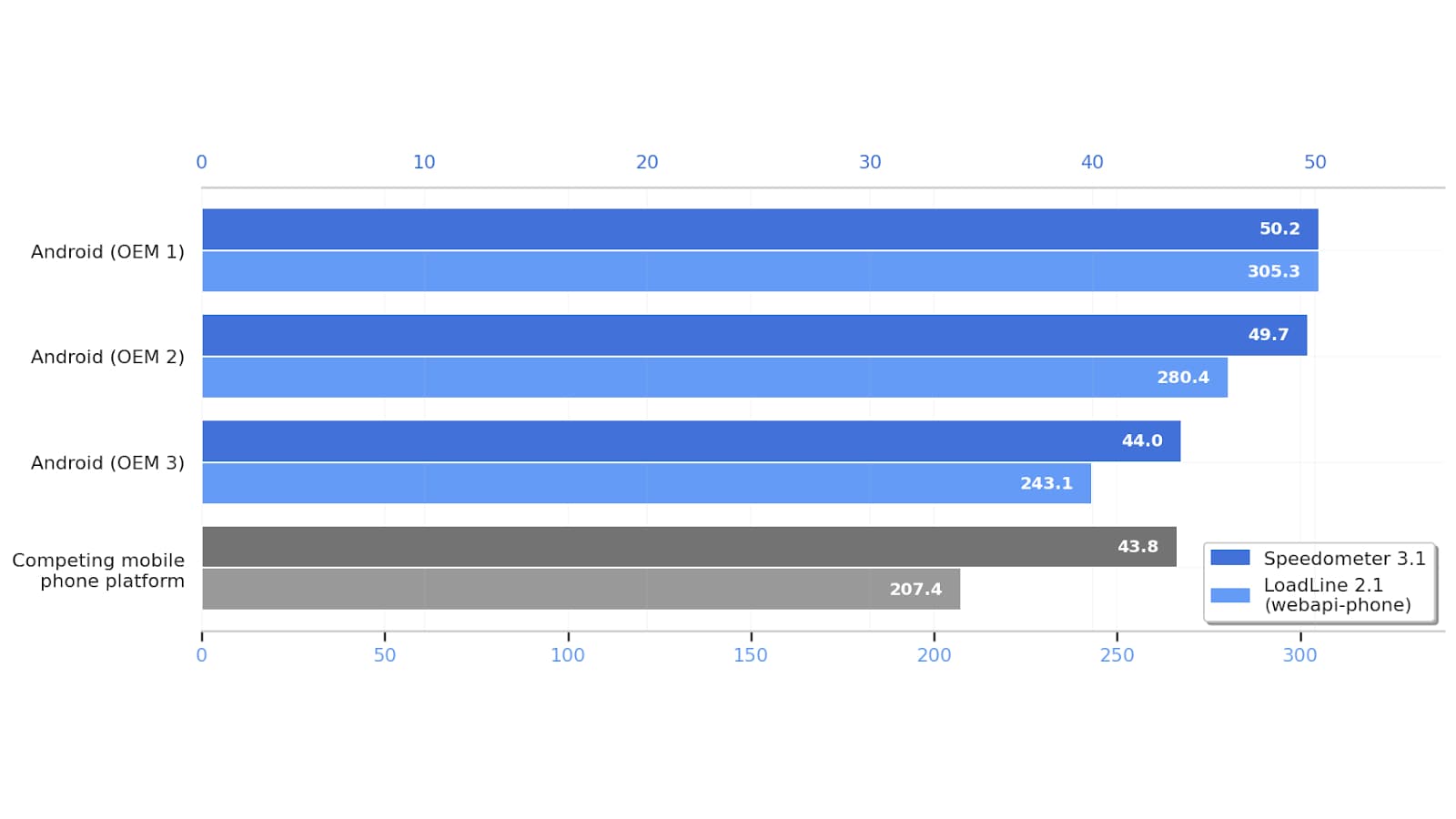
Google says these results were achieved thanks to a “deep vertical integration between the hardware, the Android operating system and the Chrome engine.” The company also worked with Android partners to optimize their devices, leading to an improvement in speedometer and LoadLine scores of between 20% and 60% year over year.
Of course, Google is not a neutral observer in this battle: Android is its own creation and is responsible for maintaining and updating the operating system. Without independent testing, these results should perhaps be taken with caution.
Anyway, what can iOS fans do? Well, it may just be a matter of time before Apple catches up. After all, if there is a company known for its “deep vertical integration,” it is Apple. It designs both the hardware and software for its phones (something Google doesn’t yet do) and that’s part of the reason its products tend to work so well. But with Google throwing down the gauntlet, Apple will have to use all that integration to move back toward iOS.
Follow TechRadar on Google News and add us as a preferred source to receive news, reviews and opinions from our experts in your feeds. Be sure to click the Follow button!
And of course you can also follow TechRadar on TikTok for news, reviews, unboxings in video form and receive regular updates from us on WhatsApp also.


