
Bitcoin fell another 2% in 24 hours, falling below $68,000 for the first time in four days. The drop sparked more than $50 million in long liquidations in the past hour, according to Coinglass, about 70% of which came from bitcoin positions alone.
The drop caused shares of cryptocurrency-related companies such as Circle Internet (CRCL), Coinbase (COIN) and Strategy (MSTR), the largest public holder of Bitcoin, to fall in pre-market activity.
Traders with long positions bet that prices will rise. Liquidations occur when an exchange forcibly closes a leveraged trade because the trader no longer has enough collateral, known as margin, to support the position.
A look at the 48-hour liquidation heat map, a tool that highlights price levels where large clusters of forced liquidations may occur, shows significant liquidity below $66,000, indicating that Bitcoin is likely to face further downside in the near term.
In another sign of bearish sentiment, funding rates are also negative. Funding rates are periodic payments between traders in perpetual futures contracts, which are derivatives that track the price of an asset without expiration. When they are negative, short traders, those who bet on falling prices, pay long traders.
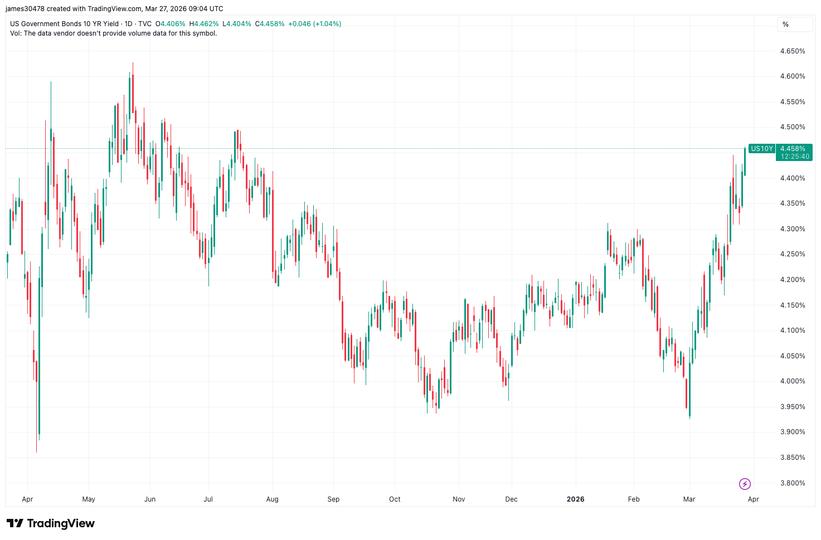
Macroeconomic conditions are deteriorating further as the conflict in the Middle East progresses. The 10-year US Treasury yield, a benchmark interest rate for government debt, is approaching 4.5%, its highest level since July, making risk assets such as cryptocurrencies less attractive.
The MOVE index, which measures the volatility of the US bond market, has increased by 18% in the last 24 hours, indicating greater uncertainty.
Meanwhile, oil prices, including Brent and WTI crude, have risen 3% as Ukraine’s disruption of Russian oil flows upends President Donald Trump’s plans to ease supplies.
The DXY index, which tracks the dollar’s strength against a basket of major trading partners, is rising towards 100, creating more headwinds for risk assets.


