- The EFF and RSF reviews are concluded successfully.
- Total disbursements may reach $4.5 billion.
- The IMF warns about the risks of conflict in the Middle East.
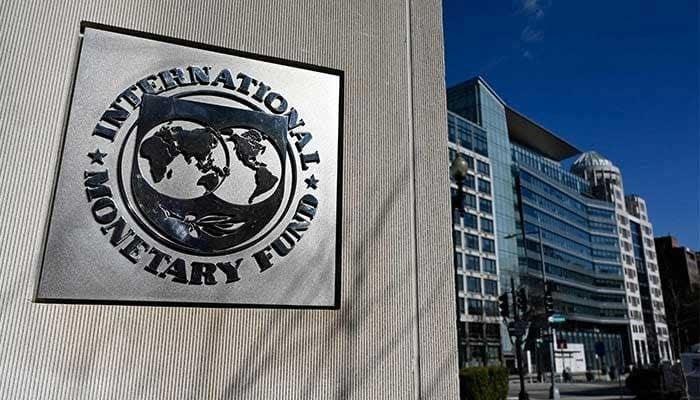
The International Monetary Fund (IMF) said on Friday it had reached a staff-level agreement with Pakistan on the third review of its Extended Fund Facility and the second review of its Resilience and Sustainability Fund (RSF), with the country receiving a disbursement of around $1.2 billion.
A statement issued by the IMF said the agreement was reached in the third review of the 37-month Extended Arrangement under the Extended Fund Facility (EFF) and the second review of the 28-month agreement under the RSF.
The staff-level agreement is subject to approval by the IMF Executive Board.
Upon approval, the global lender said, Pakistan will have access to around $1 billion under the SAF and around $210 million under the RSF, bringing total disbursements under the two deals to around $4.5 billion.
“With the support of the EFF, ongoing policies have continued to strengthen the economy and rebuild market confidence,” the Fund said in a statement.
It added that economic activity had gained momentum, inflation and the current account had remained contained and external reserves had continued to strengthen, although the conflict in the Middle East had clouded the outlook by increasing the risk of energy price volatility, tighter global financial conditions, higher inflation and pressure on growth and the external account.
As part of the process that led to the staff-level agreement, Pakistani authorities and the IMF exchanged drafts of the Memorandum of Economic and Financial Policies after finalizing key guidelines of the 2026-27 budget, according to background details from The News.
The report said the Fund had sought a fiscal framework focused on an FBR tax collection target of Rs 15.08 trillion for the next fiscal year.
The same report said the IMF had also urged Islamabad to review oil and lubricant prices more frequently to better reflect international market movements. Pakistan has already moved from fortnightly to weekly price adjustments, while officials are said to be discussing how much more frequently prices should be reset.
In its statement today, the IMF said the authorities’ policy priorities include maintaining a prudent fiscal stance, broadening the tax base, strengthening spending discipline, expanding spending on health, education and social protection, and improving federal-provincial burden sharing.
The Fund said revenue mobilization efforts were already yielding results, and the FBR was taking priority actions under its transformation plan, including stronger audits of taxpayers, wider use of digital invoicing and production monitoring, and better internal governance. He added that the Fiscal Policy Office was developing a medium-term reform strategy aimed at revenue neutrality and fiscal policy stability.
The IMF also said the State Bank of Pakistan should maintain an appropriately tight, data-dependent monetary policy and be prepared to raise interest rates if price pressures intensify, including from swings in global food and fuel prices.
He added that exchange rate flexibility should remain the main buffer against external spillovers, including those from the Middle East conflict.
Regarding energy, the Fund said that “sustainability should be maintained through timely tariff adjustments that ensure cost recovery”, while non-specific energy subsidies should be avoided.
It also outlined structural reforms aimed at reducing circular debt, improving transmission and distribution, privatizing inefficient generation companies, completing the transition to a competitive electricity market and facilitating the shift to renewable energy.
The IMF further said the authorities remained committed to strengthening the Benazir Income Support Program (BISP) through inflation-adjusted cash transfers, broader coverage of beneficiaries, and improved payment systems to protect vulnerable households from volatile food and fuel prices.
He also highlighted broader reform goals, including state-owned enterprise reform, privatization, anti-corruption efforts and climate resilience measures under the RSF.