
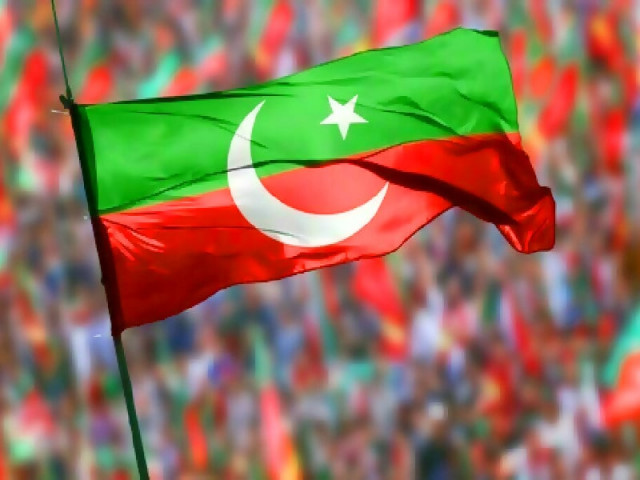
Softer tone and growing sympathy for jailed leader hint at possible policy shift
ISLAMABAD:
For a brief moment in early 2026, it seemed like PTI had found an opportunity. A softer tone, growing sympathy for their imprisoned leader and growing pressure on the government hinted at a possible political shift. But that moment did not last long. Since then, the outbreak of the Iran-US war has overshadowed everything, turning the PTI’s resurgence into an afterthought.
When news emerged that jailed PTI leader Imran Khan may have lost up to 85 per cent vision in his right eye, it provided a rare opportunity for the former ruling party to regain pressure and regain visibility.
The moment not only resonated nationally but internationally, drawing widespread media attention and renewed scrutiny of the state’s handling of his illness.
The Supreme Court also took notice, and there was increasing pressure on the government to provide medical relief or engage in meaningful dialogue.
But before the PTI could seize the moment, an unforeseen war significantly changed Pakistan’s trajectory. When the United States and Israel launched a war against Iran, few anticipated that Pakistan would emerge as a key player in the rapidly changing global landscape.
Just as the PTI was passing through this critical juncture, the outbreak of war significantly changed the national and international landscape of Pakistan. With global attention focused on the conflict, Pakistan unexpectedly emerged as a central player in diplomatic and strategic calculations. This sudden shift has not only altered the country’s foreign policy priorities, but has also positioned Pakistan as a critical player capable of helping end the conflict.
Adding to its emerging diplomatic profile, Pakistan could soon host talks in Islamabad aimed at mediating between the United States and Iran.
Officials have indicated that the country is prepared to facilitate meaningful negotiations in the coming days. Both Washington and Tehran have reportedly expressed confidence in Pakistan’s neutrality, while regional partners, including Saudi Arabia, Türkiye and Egypt, have expressed support for Islamabad’s initiative. Observers around the world recognize and praise Pakistan’s efforts, presenting the country as a potential peacemaker in a conflict that has generated global concern.
So, has PTI politics become the unexpected victim of this war?
Political analysts say the Middle East crisis has dramatically reshaped Pakistan’s domestic political landscape, leaving little room for any party to advance its narrative.
According to Hassan Askari, “The impact of this war is clear: Pakistan’s focus, which had been on internal issues, has now shifted towards the global conflict. The country’s internal politics has taken a backseat, and this shift is having a direct effect on the PTI as well.”
Askari adds that PTI currently has limited options. “Even if the party wants to respond or take action, it must wait for the war to subside before resuming its political activities. For now, any attempt to get involved is unlikely to get a response from the government.”
He also notes that Pakistani governments often take advantage of foreign policy successes to expand their influence over domestic politics and sideline opposition parties. “The current government is more likely to maintain a tough stance against the PTI,” he says.
Echoing this, Ahmad Bilal Mehboob, president of the Pakistan Institute of Legislative Development and Transparency (PILDAT), highlights the media’s focus on the regional crisis, leaving little room for internal narratives. “PTI politics are clearly suffering as attention shifts to the Middle East, while the government becomes more central to peace efforts,” he says.
Mehboob suggests that Imran Khan might consider an honorable rapprochement with the government and establishment, noting that “after all, he had once offered a lifetime extension to General Bajwa in exchange for power.”
He adds that even before hostilities escalated, the PTI had begun to lose appeal due to the perceived immaturity of its leadership and uncertainty over Khan’s preferences, leading many within the party to favor inaction as the safest path.
“With provocative statements and tweets from Khan and his inner circle, I don’t see the government or the establishment reconsidering their policy towards him anytime soon,” Mehboob concludes.


