
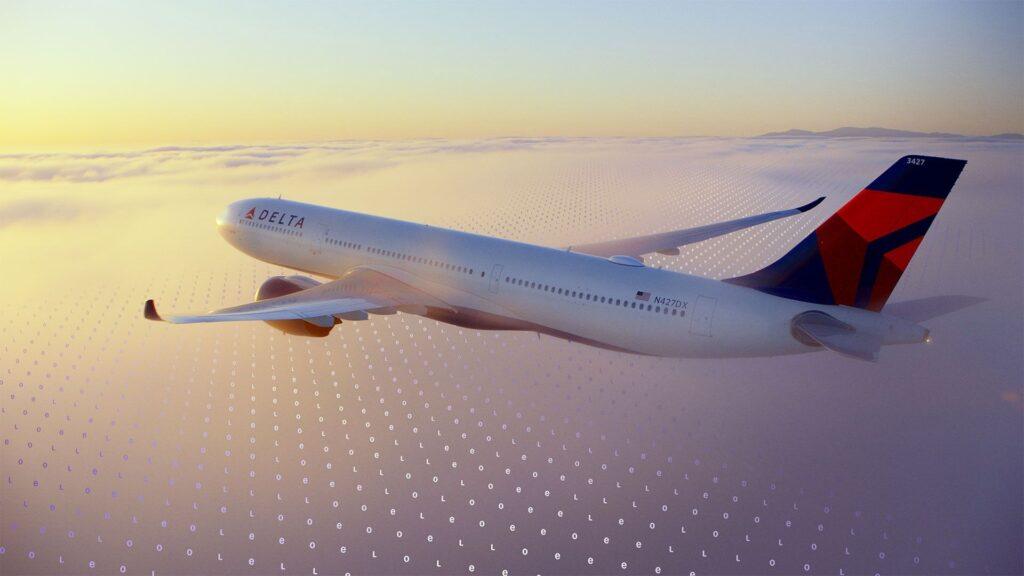
- Delta Partners with Amazon’s LEO to Offer Faster, Satellite-Powered Inflight Wi-Fi
- Installations will begin in 2028 on 500 aircraft types.
- United continues to lead for now with Starlink Wi-Fi on more than 340 aircraft and a full rollout by 2027
A little over a week ago, I was cruising at 35,000 feet on a Starlink Wi-Fi-equipped United Airlines flight, and it was the closest I’d felt to happiness while flying economy in quite some time. But United Airlines is now facing stiff competition from arguably its biggest rival.
Delta Air Lines has formally announced that it is partnering with Amazon’s Leo Network, formerly Project Kuiper, to bring faster satellite Wi-Fi to flights. It’s a smart investment that aligns with a current trend among other airlines, including United Airlines and JetBlue.
However, there is a small drawback, which requires patience. Delta Air Lines will begin installing Amazon Leo antennas on 500 aircraft starting in 2028. That’s a long way off and the process itself may take time. United Airlines began installing Starlink connectivity in 2025 and won’t finish it until 2027, when it expects availability across its fleet. As of now, it offers free, fast Wi-Fi on more than 340 aircraft, including its entire United Express regional fleet and several larger mainline aircraft.
Article continues below.
Still, it’s an exciting move by Delta and an interesting partnership. It won’t let you simply shop in the sky, although an airline partnering with Amazon might make you think that. Instead, it will offer a door-to-door experience with much faster, lower-latency Wi-Fi that will be free for Delta SkyMiles members.
How Delta will do it
The installation will include a phased array antenna on each Delta aircraft, enabling connections to the Amazon Leo satellite network and supporting speeds of up to 1 Gbps downstream and 400 Mbps upstream.
Right now, there are about 200 Amazon Leo satellites orbiting Earth at an altitude of about 600 kilometers, with more than 20 missions planned over the next year to launch additional satellites. The more satellites in orbit, the broader coverage Amazon Leo will provide. For comparison, Starlink has more than 10,000 satellites in orbit, which means more capacity for commercial flights and other connections.
And yes, that should help address Wi-Fi congestion on flights and reduce large dead zones over the oceans. Delta says Leo-powered Wi-Fi will support connections for gaming, uploading photos or videos, streaming TV shows or movies (even live), and will offer a much faster experience for basics like web browsing and messaging. Of course, receiving calls, whether video or audio, will continue to be prohibited.
Delta will continue to work with Viasat and Hughes for existing Wi-Fi on many of its aircraft, and in the future will be a combination of those providers plus Amazon. In a statement, the airline notes that “by working with multiple connectivity leaders, Delta ensures we equip the right aircraft with the right technology to serve customers around the world.”
As of now, 500 planes will receive faster speeds from Leo, but time will tell if that expands to cover Delta’s fleet of nearly 1,000 planes.
In the meantime, and possibly in the short term, if you’re looking for free satellite Wi-Fi, booking a ticket on United Airlines might make more sense.
Yes, the airline is still rolling it out and currently has more than 340 aircraft equipped with the connectivity, but it hopes to complete the rollout by the end of 2027, while Delta will only begin installations in 2028.
Follow TechRadar on Google News and add us as a preferred source to receive news, reviews and opinions from our experts in your feeds. Be sure to click the Follow button!
And of course you can also follow TechRadar on TikTok for news, reviews, unboxings in video form and receive regular updates from us on WhatsApp also.


