
ISLAMABAD:
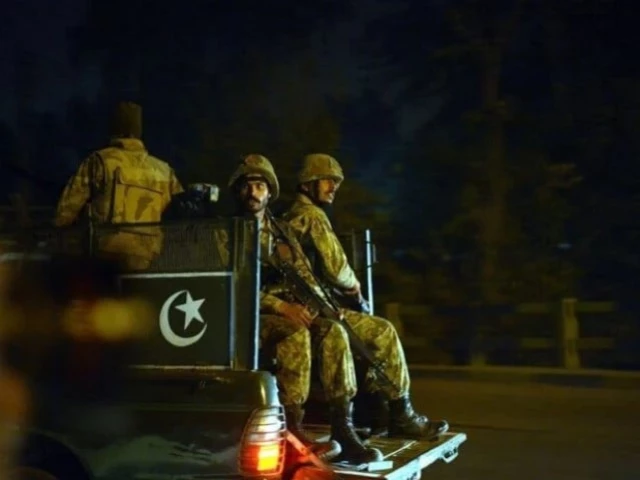
Pakistan confirmed on Thursday that talks were ongoing with Afghanistan under a trilateral mechanism involving China, but made it clear that there was no change in its counter-terrorism posture and that Operation Ghazab Lil Haq was continuing unabated.
Foreign Ministry Spokesperson Tahir Andrabi, in his weekly press conference, said that Pakistan’s participation in the talks being held in Urumqi should not be interpreted as a change in policy, particularly with regard to ongoing security operations.
“There is no material change to the current Operation Ghazab Lil Haq that I mentioned last week,” the spokesman said, adding that security forces had also carried out counter-terrorism actions in recent days. “So, I think the operation is underway… there are no changes to that operation because of the talks.
Andrabi confirmed that a Pakistani delegation is currently in Ürümqi as part of the Trilateral Counter-Terrorism Cooperation Mechanism, which includes China and Afghanistan. He described Pakistan’s participation as consistent with its long-standing position of supporting “credible processes” aimed at eliminating militant sanctuaries and curbing cross-border terrorism emanating from Afghan soil.
“Our participation is a reiteration of our fundamental concerns,” he said, emphasizing that significant progress depends on Afghanistan’s actions. “The onus for real progress lies with Afghanistan, which must demonstrate visible and verifiable actions against terrorist groups using Afghan soil against Pakistan.”
The spokesperson said talks are still ongoing and details will become clearer once the delegation returns. “For now, I can only tell you that our delegation is there,” he said, adding that Pakistan “has never shied away from dialogue” and remains committed to China on this issue.
He clarified that the Ürümqi commitment was carried out at the working level, with the participation of senior officials. However, he said he did not have full visibility on the exact composition of the Pakistani delegation.
Responding to a question about alleged overtures by the Afghan Taliban, Andrabi said Pakistan had taken note of statements indicating Kabul’s intention, but stressed that past commitments had not been fulfilled. He referred to guarantees given by the Taliban in the 2021 Doha agreement and said those commitments were not met.
“That intention has to be backed by concrete and verifiable written assurances that its territory will not be used against Pakistan,” he said. “While we recognize these statements of intent, we expect concrete, verifiable written assurances.”
Turning to broader regional diplomacy, Andrabi said Pakistan’s recently unveiled five-point peace initiative had received “appreciation from across the region and beyond,” including the United States.
He noted similarities between Beijing’s initiative and the results of the consultations held in Islamabad involving Pakistan, Saudi Arabia, Türkiye and Egypt, describing them as complementary efforts aimed at ending conflicts and promoting sustainable peace.
Regarding the possible participation of senior US officials in future talks in Islamabad, Andrabi said no details were available and reiterated that Pakistan’s role remains that of facilitator. “It is up to the relevant parties to determine the members of their delegations or the timing of these talks,” he said.
He also dismissed suggestions that Pakistan was trying to pressure Iran, calling such claims “not a valid observation.” “Iran is a sovereign country… we are advocating dialogue and diplomacy, and our advocacy should not be misconstrued as applying pressure,” he said, adding that Islamabad’s engagements with Tehran remain positive.
On speculation about a possible formal alliance arising from consultations between Pakistan, Saudi Arabia, Türkiye and Egypt, Andrabi called such assumptions premature. He said discussions are currently focused on enhancing cooperation between the four countries on issues of mutual interest.
Despite the complex regional environment, the spokesperson underlined Pakistan’s continued commitment to diplomatic engagement. “While there may be challenges and obstacles, we will continue our quest for facilitation and our advocacy for dialogue in all seriousness,” he said.
He rejected reports that the Iranian delegation was reluctant to come to Pakistan due to security concerns, saying that “Islamabad remains safe.”


