
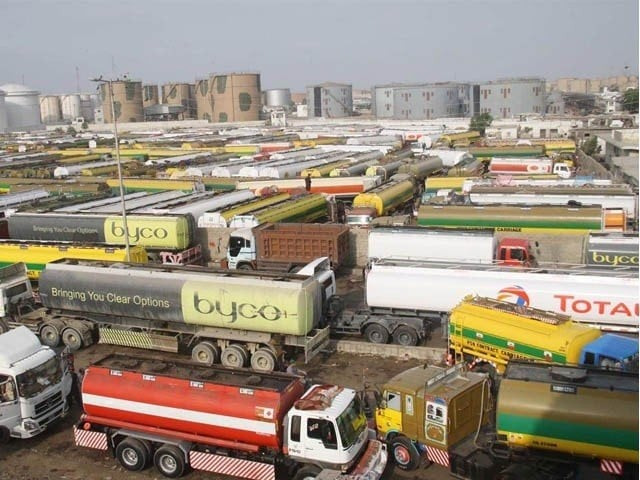
ACTO says it is not possible to operate with current freight rates, there is a serious risk of financial losses
ISLAMABAD:
The Tanker Contractors Association (OTCA) on Friday threatened to halt operations and launch protests after a sharp rise in oil prices, warning of possible supply disruptions in parts of the country, according to a statement issued by ACTO.
ACTO Chairman Abdullah Afridi said in the statement that diesel prices increased by Rs 184 to Rs 185. “Tomorrow no oil tanker will be loaded,” he said.
The government on Thursday further raised petrol prices by Rs 137 per litre, or 43%, to a record level of Rs 458.4, after Prime Minister Shehbaz Sharif decided to impose more taxes on consumers.
The new petrol price of Rs 458.4 per liter is also much higher than the increase in the international market as Prime Minister Shehbaz decided to increase the petroleum tax to a record Rs 160.61 per liter of petrol. With a stroke of the pen, the prime minister increased the tax on petrol from Rs 106 to Rs 161 per litre, an increase of Rs 55 in taxes.
It was the second major hike in fuel prices in less than a month after Chief Minister Shehbaz increased diesel and petrol prices by Rs 55 per liter or 20%. The accumulated increase in the price of gasoline in one month stands at 63%, and that of high-speed diesel at 75%.
He also announced protests against the oil marketing companies (OMC) and demanded an increase in freight rates. “It is not possible to operate at the current pace; there is a serious risk of financial losses,” Afridi said.
It warned that fuel supply could be affected in Khyber-Pakhtunkhwa, Punjab and other areas. “It is better to keep vehicles parked than to suffer losses,” he added.
Read: The prime minister asks the provinces to eliminate “some” projects
Afridi criticized the WTO and the authorities, saying the situation amounts to “oppression and injustice.” He said: “We have been in contact with the authorities for a week but no positive progress has been made.”
He added that he had contacted Oil Minister Ali Pervaiz Malik several times and sent letters requesting negotiations. Afridi said changes in pipeline quotas were also affecting tanker owners, adding: “Until freight rates increase, tankers will not operate.”
He warned of a nationwide strike and protests if his demands are not met, and called on tanker owners to keep their vehicles off the roads and take part in protests.
The government raised prices after it failed to convince the International Monetary Fund (IMF) to allow it to provide more subsidies. The IMF capped maximum fuel subsidies at Rs 152 billion.
Read more: NEPRA amends solar regulations to protect existing users
The failure to convince the IMF also highlights that Prime Minister Shehbaz remained unable to leverage his relations with US President Donald Trump to convince the IMF to allow the country to absorb the price shock.
It is also the failure of Finance Minister Muhammad Aurangzeb and his ministry, who could not convince the IMF and failed to meet fiscal targets. Failure to meet fiscal targets consumed additional fiscal space available in the budget.
However, the most impactful action of the government was to increase the rate of petroleum tax to Rs 161 per liter of petrol to raise additional funds to cross-subsidize diesel prices. The government outsourced the state’s primary function of protecting its citizens to oil consumers.
The express PAkGazette reported today that the government assured the IMF that it was willing to increase fuel prices. It was one of the worst negotiated staff-level agreements, in which the government pretended to the IMF that everything was normal in the economy despite the worst fuel crisis in history since 1973.


