
Ahsan Iqbal says Pakistan is honored to take ‘warring parties from battlefield to negotiating table’
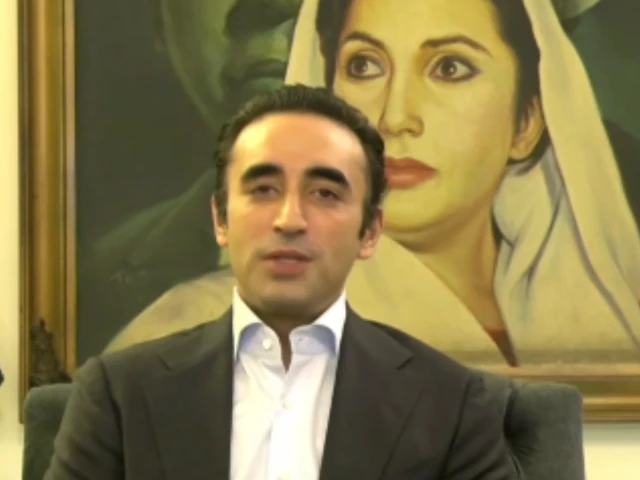
PPP Chairman Bilawal Bhutto Zardari speaking to Al Jazeera ahead of the 2026 Islamabad talks. PHOTO: Screen Recording
Pakistan People’s Party Chairman Bilawal Bhutto Zardari said on Saturday that “war is not an option” and welcomed the Islamabad talks as a key opportunity for peace as US and Iranian delegations arrived in Pakistan.
In an interview with Al Jazeera, Bilawal said the negotiations come after weeks of devastation and noted that the world is watching “with cautious optimism” as efforts are made to move from conflict to dialogue.
“The fact that these talks are taking place is the biggest achievement so far,” he said, adding that it is significant that “the ceasefire is in force” and that “bombing has stopped in most of the Middle East.” He added that there is hope that the current ceasefire could lead to “a more lasting and permanent resolution of this conflict.”
Referring to the broader diplomatic effort, he said several countries have played a role in creating spaces for dialogue, including Pakistan, China, Saudi Arabia, Turkiye, Egypt and Qatar. “Everyone has been affected by this, so we are all making a collective effort to create the diplomatic space for this ceasefire to happen,” he said.
However, he warned that the road ahead remains difficult, adding that the talks are “complex and challenging”, but stressed that “war is not an option” and warned that the conflict will continue to have serious consequences unless a middle ground for lasting peace is reached.
Responding to questions about alliances being redefined in the Gulf region, Bilawal said regional players remain focused on resolving the ongoing conflict. “I think everyone is focused on now, on resolving this current conflict,” he said, adding that the situation has had “the biggest impact in the Middle East,” including Iran and several Gulf countries.
Read more: Pakistan’s envoy to the United States says Islamabad is acting as a facilitator in US-Iran talks and the outcome depends on the parties.
He further noted that broader questions about shifting alliances would need to be addressed later, emphasizing that this would only be possible “if this ceasefire is permanent and we have a solution to this conflict.”
He also warned of wider consequences if the efforts fail, saying there remains “the danger that we won’t succeed”, adding that such an outcome would have repercussions “for the entire region”.
US Vice President JD Vance landed in Islamabad as part of a US delegation to discuss the US-Iran ceasefire, dubbed “Islamabad Talks 2026”, the Foreign Ministry said on Saturday. The delegation included Vance and President Donald Trump’s top Middle East envoys, Steve Witkoff and Jared Kushner.
Iranian Foreign Minister Abbas Araghchi and Parliament Speaker Mohammad-Bagher Ghalibaf landed in Pakistan late Friday night to attend high-stakes negotiation talks with the United States.
Pakistan Tehreek-e-Insaf (PTI) extends its sincere prayers for the success of the ongoing US-Iran talks currently taking place in Islamabad. It is our sincere hope that these deliberations will produce constructive and mutually beneficial results, promoting collective interests…
-PTI (@PTIofficial) April 11, 2026
Meanwhile, Pakistani lawmakers and political figures from all parties have welcomed the talks, describing them as an honor and emphasizing the need for dialogue. Pakistan Tehreek-e-Insaf (PTI), in a post on X, expressed hope for the success of the ongoing talks between the US and Iran in Islamabad. The party said it offered “sincere prayers for the success” of the negotiations and hoped the deliberations would produce “constructive and mutually beneficial results.”
PTI said the talks should help “promote the collective interests of the Muslim Ummah”, while reinforcing Pakistan’s strategic interests and promoting “peace, stability and prosperity” in the wider region.
“May Almighty Allah bless these efforts with wisdom and guidance,” expressing the hope that the discussions will lead to “fruitful resolutions that serve the good of all parties concerned,” he added.
Planning Minister Ahsan Iqbal, also in a post on
Pakistan is honored to host the Islamabad peace talks and play its role in bringing the warring parties from the battlefield to the negotiating table. I pay tribute to the leaders of Pakistan, Iran and the United States, and to all brother countries whose constructive…
– Ahsan Iqbal (@betterpakistan) April 11, 2026
He said: “Our effort has been guided by a simple conviction: that mistrust must yield to dialogue, moderation must prevail over escalation, and wisdom must triumph over the impulse for war.”
The minister said that “the burden of failure will not fall solely on the combatants” but will be felt by “ordinary men, women and children around the world” through increased insecurity, inflation and instability.
Iqbal warned that the continuation of the conflict would be “catastrophic not only for the region, but for the global community.” He expressed hope that the talks would be successful and said their outcome would be crucial for “regional peace” and the “economic security and future of millions of families around the world.”
Today is a proud moment for Pakistan. Few could have imagined that our nation would take on a leadership role on the world stage, but here we are.
The Prime Minister, the Deputy Prime Minister and our Field Marshal have played a vital role in restoring the stature and pride of the country. Their…
– Maryam Nawaz Sharif (@MaryamNSharif) April 11, 2026
Punjab Chief Minister Maryam Nawaz described recent developments as a “proud moment for Pakistan” and said the country has emerged in a leading role on the world stage in a post on X.
The prime minister praised the country’s leadership for restoring Pakistan’s stature at the international level. “Today is a proud moment for Pakistan. Few could have imagined that our nation would take a leading role on the world stage, but here we are,” Maryam said.
The leaders, including those of Prime Minister Shehbaz, Ishaq Dar and Field Marshal Asim Munir, were credited with playing a “pivotal role in restoring the stature and pride of the country”. He added that their efforts had brought “renewed trust and honor to Pakistan,” making “all Pakistanis truly proud.”
Today is not just another day; It is a defining moment in Pakistan’s history. With the arrival of delegations from the United States and Iran to Islamabad, the city now hosts one of the most important diplomatic negotiations of our time between Washington and Tehran. Pakistan stands tall in… pic.twitter.com/slsDzWXSa3
-Faisal Karim Kundi (@fkkundi) April 11, 2026
Khyber-Pakhtunkhwa Governor Faisal Karim Kundi also said the arrival of American and Iranian delegations in Islamabad marks a “defining moment in Pakistan’s history.”
In a post on
The governor added that Pakistan “is at the center of global diplomacy,” helping to guide the region and the world away from conflict and toward lasting peace.
Calling it a moment of national importance, he said: “With the world watching, this is a moment of pride for all Pakistanis and a diplomatic victory for Pakistan.”
Also read: Capital under strict security measures with significant traffic restrictions imposed
Pakistan has become a key mediator in the region. On February 28, the United States and Israel launched airstrikes against Iran, prompting Tehran to retaliate with attacks on Israel and US military bases in the Gulf. This escalation of tensions in the Middle East led to efforts by Pakistan’s political and military leaders to reduce tension.
To ease tensions, Pakistan had also organized a quadrilateral meeting of foreign ministers in Islamabad, with representatives from Turkiye, Saudi Arabia and Egypt. The meeting caught the attention of the world and was widely appreciated for Pakistan’s efforts.
Pakistan and China also jointly proposed a five-point initiative aimed at restoring peace and stability in the Gulf and the broader Middle East.


