
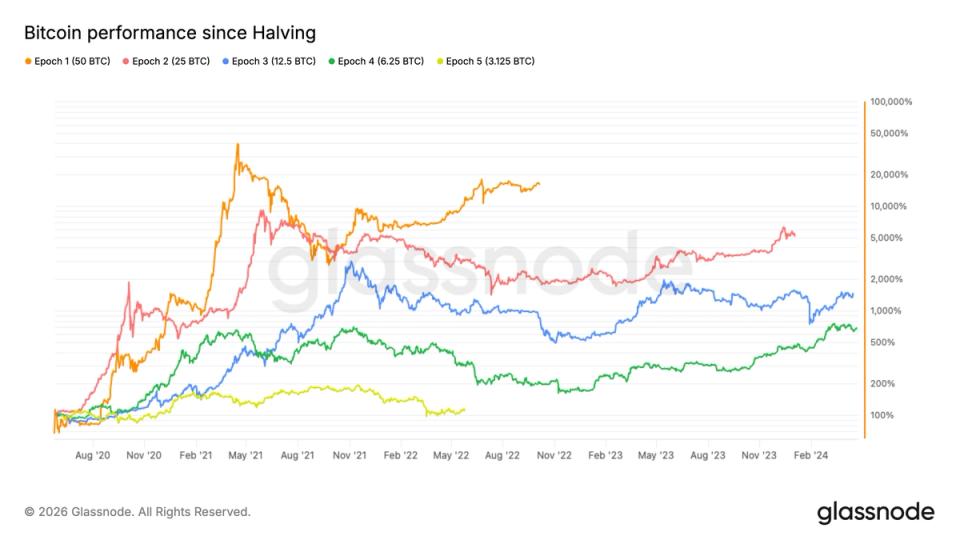
The Bitcoin network is now more than half (50.01%) through its current halving cycle, with the next halving expected to be April 12, 2028, just under two years away, according to mempool.space.
This cycle, known as “epoch 5,” began in April 2024 and will continue until 2028.
A halving occurs every 210,000 blocks, approximately every four years, and reduces the reward miners receive by 50%.
This process controls the issuance of bitcoins and ensures a predictable decrease in its inflation rate (currently below 1%). At the current time, the subsidy per block is 3,125 BTC per block. Since blocks are mined on average every 10 minutes, around 450 BTC are issued daily.
This 10-minute schedule is maintained by difficulty adjustments, which occur every 2,016 blocks. The network increases or decreases the difficulty of mining depending on how quickly blocks are found, keeping the issuance constant.
With approximately 104,986 blocks remaining in this cycle, the bitcoin supply continues its reliable path towards its fixed limit. Each new epoch further reduces the emission and its inflation rate, reinforcing its long-term scarcity.
Bitcoin has a fixed maximum supply of 21,000,000 coins, one of its main characteristics that supports its scarcity. Recently, the network reached a major milestone by mining the 20 millionth bitcoin, meaning the last million will take another 114 years to be mined.
Bitcoin Post-Halving Gains Lag Past Cycles
Bitcoin is up around 15% since the April 2024 halving, going from around $64,000 to just under $75,000. It previously reached an all-time high of around $126,000 in October 2025 before falling roughly 50% to $60,000 in early February.
However, it has underperformed previous cycles during the same post-halving period, continuing the trend of diminishing returns, according to Glassnode data.
This is largely expected as Bitcoin matures, with greater adoption and larger market capitalization requiring more capital to generate outsized profits. As a result, volatility decreases each cycle and price action becomes more gradual compared to previous cycles.


