- Trump says Iran wants a deal and the war “should end soon.”
- The timing of the next round of talks between the United States and Iran remains uncertain.
- Britain and France will chair the meeting on the role of the Strait of Hormuz.
WASHINGTON/ISLAMABAD: Iranian Foreign Minister Abbas Araghchi said the Strait of Hormuz was open following a ceasefire deal agreed in Lebanon, while US President Donald Trump said he believed a deal to end Iran’s war would come “soon”, although the timing remains unclear.
Araghchi said in a post on
He said the passage of the ships would have to be along the route that the Iranian Maritime and Port Organization had announced.
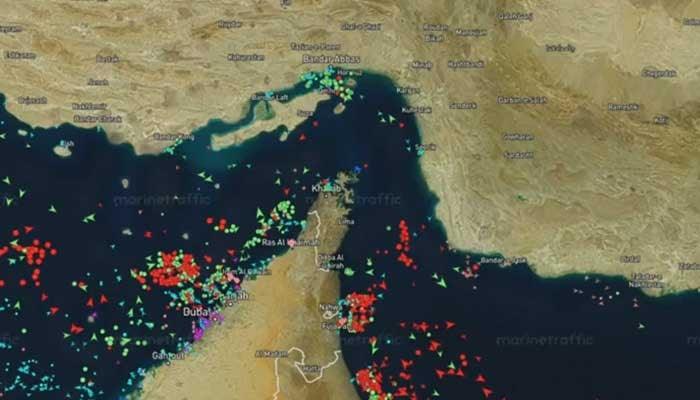
The US-Israel conflict with Iran, which began on February 28, has killed thousands of people and destabilized the Middle East. The conflict also effectively closed the Strait of Hormuz, through which a fifth of the world’s oil and liquefied natural gas normally transits, threatening the worst oil crisis in history.
Oil prices fell about 9%, extending earlier losses, following Araghchi’s release.
The International Monetary Fund this week reduced its global growth forecasts and warned that the global economy risked falling into recession if the conflict dragged on.
The US blockade remains in force
Shortly after Araghchi’s statement, Trump posted on Truth Social: “IRAN JUST ANNOUNCED THAT THE IRAN STRAIT IS FULLY OPEN AND READY FOR PASSAGE.”
However, Trump said the US military blockade of ships sailing through the Strait to Iranian ports, announced after talks with Iran last weekend in the Pakistani capital Islamabad ended without a deal, remained in place.
He said the blockade will remain in full force until “our transaction with Iran is 100% complete,” which he said should happen very quickly given that most of the points have already been negotiated.
Trump had said on Thursday that talks could take place as soon as this weekend, although that looked increasingly unlikely on Friday afternoon given the logistics of gathering officials in Islamabad, where the talks are expected to take place.
Despite Trump’s optimism, Iranian sources said Reuters on Friday that some “gaps still needed to be resolved” before reaching a preliminary agreement and senior clerics leading Friday prayers adopted a defiant tone.
In a sermon in Tehran, cleric Ahmad Khatami said: “Our people do not negotiate while they are humiliated,” while in the central city of Isfahan, the imam said: “We do not accept the terms proposed by the other side.”
In Islamabad, troops were seen along routes leading to the capital on Friday, but roads were still open and the government had not issued orders for businesses to close, as it did before the last meeting.
Progress of backdoor diplomacy
A Pakistani source involved in mediation between the United States and Iran said on Friday that there was progress in backdoor diplomacy and that an upcoming meeting between the two sides could result in the signing of a memorandum of understanding, followed by a comprehensive agreement within 60 days.
“Both sides agree in principle. And the technical details come later,” the source said on condition of anonymity.
One of the main sticking points has been Tehran’s nuclear ambitions, with the United States proposing in last weekend’s talks a 20-year suspension of all Iranian nuclear activity. Tehran suggested a suspension of three to five years, according to people familiar with the proposals.
Iran has demanded that international sanctions be lifted and Washington has pushed for the removal of all highly enriched uranium from Iran. Two Iranian sources have said there were signs of a compromise over HEU stockpiles, and that Tehran was considering sending some of them out of the country.
Trump told reporters outside the White House on Thursday that Iran had agreed to “give us back nuclear dust,” but Iranian state media outlet Mizan disputed that claim on Friday, highlighting current differences.
No negotiations have ever taken place on the “transfer of highly enriched uranium from Iran to the United States and, naturally, there is no agreement on this matter either,” he said, citing sources.
Ceasefire comes into force in Lebanon
The US-backed ceasefire agreed between Israel and Lebanon to end fighting between Israel and Hezbollah appeared to largely hold on Friday, despite some reports from the Lebanese army of violations by Israel.
Mediator Pakistan said on Thursday that a parallel ceasefire in Lebanon was an essential component of any talks on a deal to end the conflict in Iran.
The conflict in Lebanon reignited on March 2 when Hezbollah opened fire on northern Israel in support of Tehran, sparking an Israeli offensive that authorities say has killed 2,000 people.
There was no immediate comment from the Israeli military on the ceasefire violations reported on Friday.