
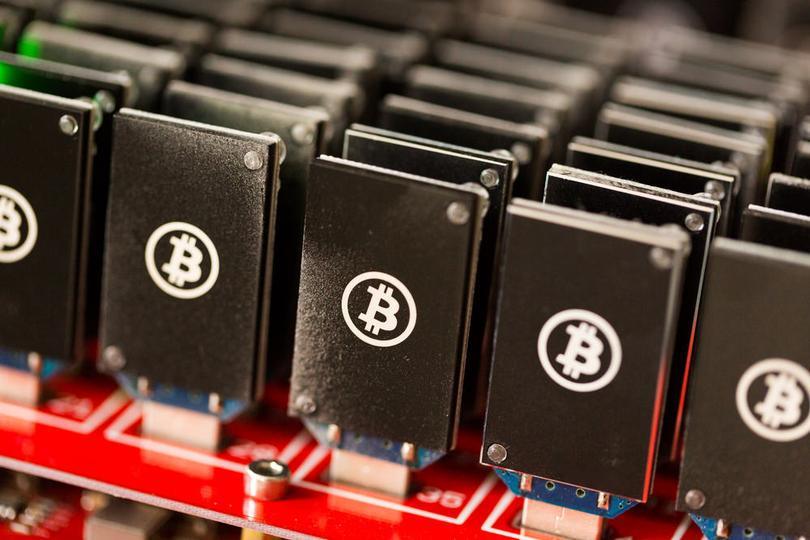
A bitcoin mining pool created to reject both the pay-per-share industrial model and the pure lottery approach has now proven that its design works. Twice.
Upstart mining pool Parasite Pool mined block 945,601 on Friday morning, its second block since launching in April 2025 and about 48 days after the pool’s first block at number 938,713 in late February.
The block made 7,398 transactions and 0.002 BTC in fees, with bitcoin trading at $76,213.
The pool operates with a hybrid model that is unparalleled in conventional mining. A winning miner who solves a block receives 1 BTC directly, and the remaining 2,125 BTC plus fees are distributed proportionally among all pool participants based on shares submitted from the previous block.
There are no fees to participate in this pool and payments are sent via the Lightning Network.
Mining secures bitcoin by having computers compete to solve a cryptographic puzzle every 10 minutes, with the winner earning the right to add the next block of transactions to the blockchain and receive a reward.
That reward is currently 3.125 BTC plus transaction fees included, worth around $238,000 at Friday’s price, down from 6.25 BTC after the April 2024 halving and is scheduled to drop again to 1.5625 BTC in 2028.
The competition is dominated by industrial operators that manage warehouse-scale facilities of specialized ASIC hardware that consume enough electricity to rival a small city.
Mining pools exist to smooth out the variation in who finds blocks, pooling the hashrate of thousands of participants so that profits are divided by contribution rather than winner-take-all.
Parasite is founded by ZK Shark, the pseudonymous creator of Ordinal Maxi Biz (an NFT collection about Bitcoin), and targets the home miner.
Pure individual pools like CKpool pay the entire block reward minus a 2% fee to the finder, but statistical reality means that the vast majority of participants never see a block.
But Parasite’s answer is to split the difference. The 1 BTC finder’s fee preserves the lottery’s payday, while the proportional distribution of the remainder keeps satoshis flowing to participants during the stretches between blocks.
The second block has more weight than the first. The pool retained the hashrate during the 48-day interval between payments, and the proportional distribution mechanic now has two rounds of actual validation instead of one.
Parasite’s hash rate currently stands at 52 petahashes per second, down from a peak of 182 PH/s in June 2025, according to the group’s dashboard. That equates to approximately 0.005% of the estimated hashrate of the bitcoin 1-zetahash network.
The pattern around individual and small pool mining has become hot.
CoinDesk reported earlier this year on a 230 terahash per second home miner who beat 1 in 28,000 odds to claim block 943,411 and a $210,000 reward, and on a separate operator who rented $75 of cloud hashrate to validate block 938,092 through CKpool for a $200,000 payday. Both wins followed CKpool’s winner-take-all model but a 2% fee.
Parasite is the first group on this scale to test whether a hybrid split keeps participants mining during losing stretches. A third block within the next two months would resolve the Parasite model’s case, while a six-month drought would suggest the first two were the easiest.


