
PUBLISHED April 19, 2026
KARACHI:
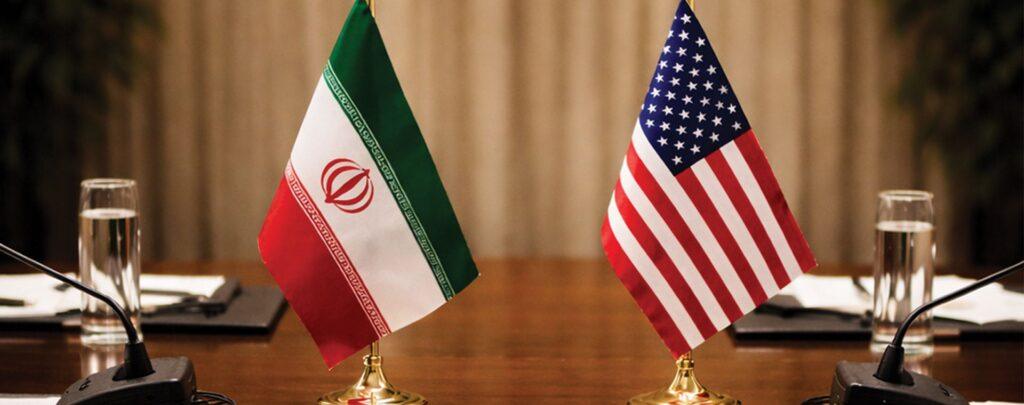
It’s probably been said many times over the past few weeks, but it’s still worth repeating. The world is living in unprecedented times, in more ways than one. In trying to find a way out of the US and Israel’s war against Iran, we are navigating uncharted waters, boldly going where no one has gone before, to borrow from Star Trek.
It is not just the stakes that are unprecedented: the global economy, the specter of nuclear holocaust and the possibility of another world war are at stake. It is the nature of the challenge itself. This is a war that began with the beheading of a country’s leaders at the very moment it seemed willing to accept its adversary’s demands at the negotiating table: a supreme act of bad faith. Added to this is that the leader of a global superpower who seems to see the world through the logic of WWE or The Apprentice, carries out “diplomacy” through grandiose posts on social media, while remaining indebted to the ultimate actor in bad faith in Israel.
No wonder Pakistan’s efforts to bridge the gap to peace have seemed – still seem – so unlikely. And yet, against all odds, as time runs out on Donald Trump’s ultimatum, Islamabad helped achieve a breakthrough: a fragile ceasefire that, for now, continues to hold, albeit tenuously.
The first round of talks in Islamabad between Iran’s leaders and a US delegation led by Vice President JD Vance ended in a stalemate, with Tehran and the Trump administration once again stonewalled. Since then, all eyes have been on Pakistan’s leaders, who this week mounted an unprecedented diplomatic push ahead of a potential second, and possibly decisive, round of negotiations between Iran and the United States. The country’s top civil and military leaders fanned out across major regional capitals to build momentum and achieve a breakthrough: Prime Minister Shehbaz Sharif visited Saudi Arabia, Qatar and Turkiye, while Chief of Defense Staff and Army Chief Field Marshal Asim Munir made a surprise trip to Tehran.
Regardless of how the next phase unfolds, Pakistan’s nimble and tireless diplomacy has already earned it rare recognition from world leaders and geopolitical observers alike. Trump himself has repeatedly praised Prime Minister Shehbaz and Field Marshal Munir. “Thank you to Pakistan and your great Prime Minister and Field Marshal, two fantastic people!” he wrote in a recent post on Truth Social. Earlier in the week, Vice President Vance, in an interview with Fox News, credited both leaders for their role in mediating between Washington and Tehran, calling them exceptional hosts who demonstrated true statesmanship.
Also from Tehran the response has been remarkably warm. Iranian President Masoud Pezeshkian has praised Islamabad for its role in mediating and helping establish a ceasefire in the US-Israel war, according to state news agency IRNA. Welcoming Field Marshal Munir to Tehran, Foreign Minister Abbas Araghchi, who was part of the Iranian delegation in Islamabad, expressed “gratitude for Pakistan’s gracious hosting of dialogue.”
The United Nations has also taken note. Secretary-General António Guterres, in a phone call with Deputy Prime Minister and Foreign Minister Ishaq Dar, appreciated Pakistan’s constructive role in convening the Islamabad talks and expressed the UN’s full support for its continued efforts in the peace process.
For analysts and observers, Pakistan’s role borders on the extraordinary. “Pakistan’s tireless efforts have brought hope to the world,” Indian defense analyst Pravin Sawhney wrote in a post on X, adding that Islamabad could take on an important security role in West Asia if talks move forward.
Geopolitical analyst Pepe Escobar described Pakistan’s diplomacy in the crisis as “a very clever way of maneuvering a situation that is practically impossible from any perspective.”
“Munir is probably the only person on the planet, right now, who can pick up the phone and talk to Trump whenever he wants, and at the same time be received as a brother in Tehran,” he said in a podcast with Mario Nawfal.
Around the world, the growing consensus is that few countries could have threaded this needle.
“Pakistan brings a different set of assets to the table. Its established military-to-military channels around the world, regional familiarity and tactical flexibility are useful in facilitating sensitive dialogue. Like Norway, Pakistan also contributes troops to peacekeeping missions,” wrote Tanya Goudsouzian, a Canadian journalist who has covered Afghanistan and the Middle East for more than two decades, in a post on X.
As this chorus of praise grows louder, it is worth pausing to question what exactly Pakistan has achieved. Reducing its role to mere logistics would be to overlook what is truly novel about this moment. This is not traditional mediation, of the kind long associated with Oman or Qatar: small, wealthy, neutral states that have built a reputation through quiet facilitation and discreet channels. Those models were designed for slower, more predictable crises, not for a war unfolding in real time, under the pressure of imminent escalation and the constant threat of miscalculation.
Instead, what is emerging is something closer to crisis mediation under fire: a form of diplomacy that combines access, influence and, crucially, the implicit endorsement of hard power.
The choice of Pakistan as the venue for the talks was not accidental. It reflects a convergence of strategic realities. Tehran views Islamabad as a neighbor with which it shares not only geography but also deep social ties, including one of the largest Shiite populations outside Iran. At the same time, Pakistan’s long-standing ties with Saudi Arabia, recently formalized through a mutual defense pact, give it credibility in Riyadh. Added to this is China’s silent but decisive support, rooted in its own strategic partnerships with both Pakistan and Iran.
On the American side, the calculation is more personal, but no less significant. Donald Trump’s well-documented relationship with Field Marshal Munir (forged during last year’s war with India) has created an unusual channel of access that avoids the bureaucratic inertia that often hampers diplomacy in moments of urgency. In a crisis defined as much by personalities as by policies, that matters.
But if Pakistan’s comparative advantage lies in access, what sets it apart is its willingness and ability to operate in the shadow of coercive power.
Let us consider the events surrounding the first round of talks. As Iranian negotiators traveled to and from Islamabad amid fears that they could be attacked en route, Pakistan mounted a large-scale air escort operation, deploying fighter jets along with airborne early warning systems to ensure their safe passage. This was not neutrality in the classical sense. It was an assertion of responsibility, blurring the line between diplomatic facilitation and military assurance.
Meanwhile, Islamabad’s decision to deploy fighter jets to Saudi Arabia under its newly signed mutual defense pact around the same time points to a broader strategy. On one level, the move served as a barrier to the ceasefire, signaling to Tehran that any expansion of the conflict into Saudi territory would have consequences. On the other hand, it sent a message to Israel that the regional balance was not entirely permissive. In both cases, Pakistan was not simply hosting the dialogue; was actively shaping the strategic environment in which that dialogue took place.
This is a fundamentally different model of engagement, reflecting Pakistan’s own geopolitical realities. Unlike European mediators like Norway, whose success was based on decades of cultivated neutrality and institutional depth, Pakistan is deeply immersed in the very conflicts it seeks to reduce. Their proximity is both a limitation and a leverage.
By assuming this role, Islamabad is testing the limits of what middle powers can achieve in an era when traditional diplomatic frameworks do not adapt to the pace and complexity of modern conflict. If the current ceasefire holds, and if subsequent rounds of talks produce even incremental progress, Pakistan will have demonstrated that influence in today’s world does not necessarily flow from neutrality alone. It can also arise from a more complex interplay of proximity, access, and controlled assertiveness. From the ability to operate simultaneously as host, interested party and, when necessary, guarantor.
For now, Pakistan has done something few thought possible: it has inserted itself into the center of one of the most dangerous geopolitical crises of our time, not as a spectator, but as an active participant in the search for a way out. What comes next will require a delicate balancing act that will test your diplomatic skills, your internal coherence, and your ability to navigate competing external pressures.
Zeeshan Ahmad is a freelance journalist and media scholar who writes on politics, security, technology and media narratives.
All facts and information are the sole responsibility of the author.


