
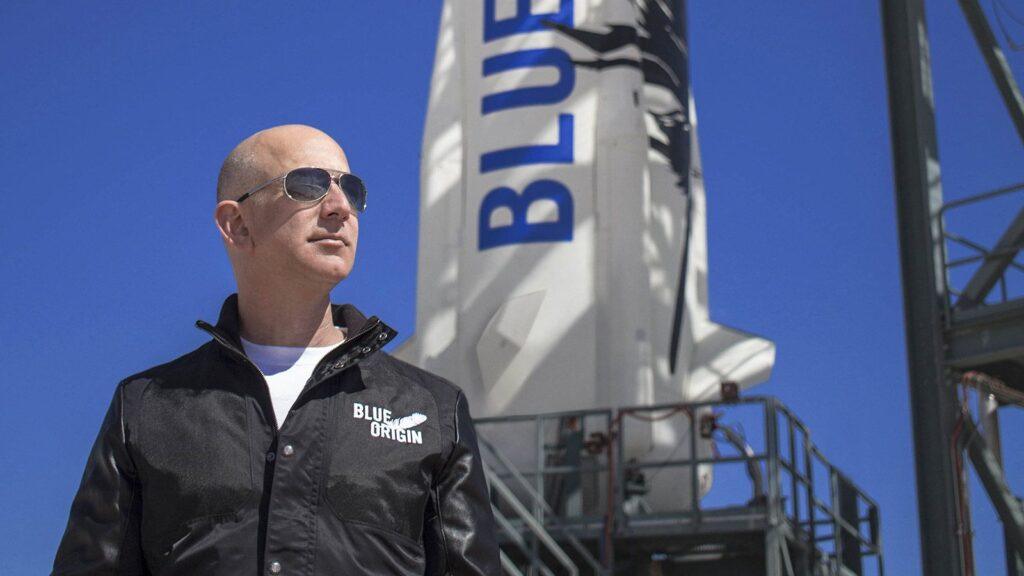
- Blue Origin reused a rocket booster on its last mission
- This was the first time he had done so, which marked a major milestone.
- However, the mission was a failure as it did not place the satellite’s payload high enough.
Over the weekend, Jeff Bezos’ Blue Origin space company reached a major milestone by successfully reusing a booster rocket for the first time: it deployed the same ‘Never Tell Me The Odds’ rocket on Sunday’s NG-3 mission that it used in November for NG-2.
This should be a moment of celebration as Blue Origin proves it can better compete with SpaceX on sustainability and space travel prowess, but it isn’t. Because? Because the main goal of NG-3 was a complete failure.
Beyond a booster rocket reusability test, Blue Origin’s primary goal for this flight was to put an AST SpaceMobile communications satellite, BlueBird 7, into orbit. It technically did this, but NG-3 placed the satellite “lower than planned,” as AST put it.
Article continues below.
According to a statement from AST SpaceMobile, “while the satellite separated from the launch vehicle and powered up, the altitude is too low to sustain operations with its onboard thruster technology and [be] exorbitant “The cost of the satellite is expected to be recovered through the company’s insurance policy.”
This means that the satellite will be repositioned and left to burn up in the Earth’s atmosphere.
EN rocket science
For AST SpaceMobile, this failure doesn’t mean the end of the world (it says it still plans to launch 45 more satellites before the end of 2026), but for Blue Origin this failure will leave an embarrassing stain on what should have otherwise been a momentous flight.
The bright side is that if this mission had to be a failure, at least Blue Origin got it wrong with the launch of a satellite and not the first launch of its lunar lander, which was originally going to be the purpose of the NG-3.
NASA’s next Artemis mission is expected to take people to the Moon for the first time in more than 50 years, but it still needs a lander. SpaceX and Blue Origin are currently competing to design and test the craft that will take astronauts from their spacecraft to the lunar surface, but neither has completed the project yet.
Because the Artemis missions are intended to establish a permanent lunar base, the new lander approach cannot be a repeat of the unique style of previous lunar missions; It must be something that can repeatedly carry crew and cargo.
There is also much less room for error when transporting crew compared to cargo. Things can be replaced, but people’s lives cannot.
We’ll have to wait and see how this bug affects Blue Origin’s lunar landing offering. Rocket science is famously difficult, so we hope this is simply a learning experience for the company.

Follow TechRadar on Google News and add us as a preferred source to receive news, reviews and opinions from our experts in your feeds.


