
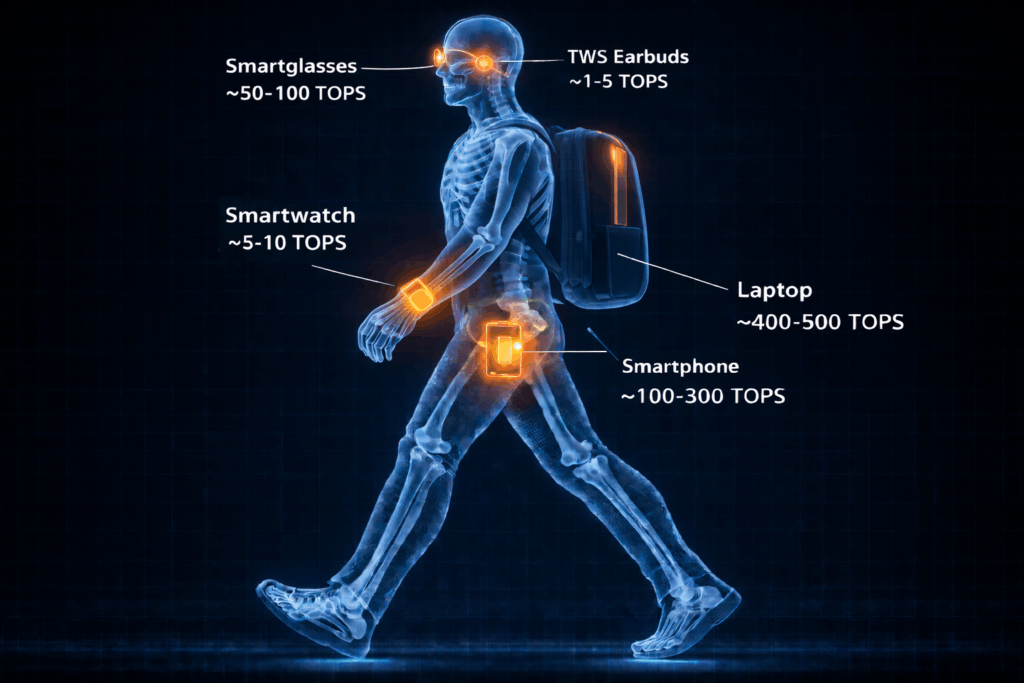
- Combined AI calculation of devices could exceed 1,000 TOPS by the end of the decade
- Smartphones, wearables and headphones are becoming key distributed AI processors
- Average users are likely to carry hundreds of TOPS on multiple personal devices
Personal electronics is heading toward a point where AI computing combined in everyday devices rivals the systems that once filled dedicated facilities, a study finds. Future source CE analysis tracking cutting-edge AI silicon trends through 2030.
The report examines how neural processors are spreading across smartphones, wearables and audio devices, and how performance growth in those categories could change our expectations about personal computing power.
Smartphones are, naturally, central to all of this, with flagship chips from companies like Qualcomm, MediaTek, Samsung and Apple now offering up to 100 TOPS of neural processing power.
Article continues below.
Increasing NPU performance
Forecasts suggest that smartphones alone could nearly triple their NPU performance by the end of the decade.
Smartwatches are also not lagging behind smartphones, as dedicated neural processors are starting to appear in smartwatch chips, a step beyond previous designs that relied heavily on shared processing blocks.
Smartwatch shipments reached around 94 million units worldwide in 2025, showing how widespread they are now.
Wireless earbuds are also becoming increasingly popular, with 360 million units shipped annually. Each headset carries its own chip, so the silicon footprint far exceeds 700 million units each year.
That distribution of AI-enabled hardware across multiple devices supports a broader vision often described as the “walking supercomputer.”
“These are not speculative scenarios,” said Simon Forrest, director of core technology at Futuresource Consulting. “They are the logical product of chip design trends already in motion. Edge AI offers real advantages in speed, privacy and cost, and traditional hard-coded algorithms are being replaced by versions of machine learning that increase efficiency while expanding capabilities. For CE brands, understanding where AI computing is headed and what silicon enables is becoming a critical strategic need.”
Forrest told us that it would be feasible for someone in 2030 to carry personal electronic devices with a combined AI compute greater than 1000 TOPS (1 POPS), although it would not be common.
He said: “Futuresource’s forecast model shows that the average is most likely to be in the 450 to 550 TOPS range by the end of the decade, assuming a person carries a smartphone, laptop, smartwatch, plus smart glasses and perhaps another wearable device. However, this is still a significant amount of distributed AI computing power located in and around the body.”
When combined with advances in laptops, smart glasses, and wearable devices, the aggregate computing figure is being discussed more widely alongside the performance of a single device.
Marketing parlance often relies on headline TOPS numbers, although raw numbers alone don’t capture real-world performance. Architecture design, memory bandwidth, and software optimization remain equally important in translating theoretical computing into practical AI tasks.
The move toward distributed processing across multiple devices is reducing reliance on cloud services, improving response times, and keeping sensitive data closer to the device itself.
Follow TechRadar on Google News and add us as a preferred source to receive news, reviews and opinions from our experts in your feeds.


