
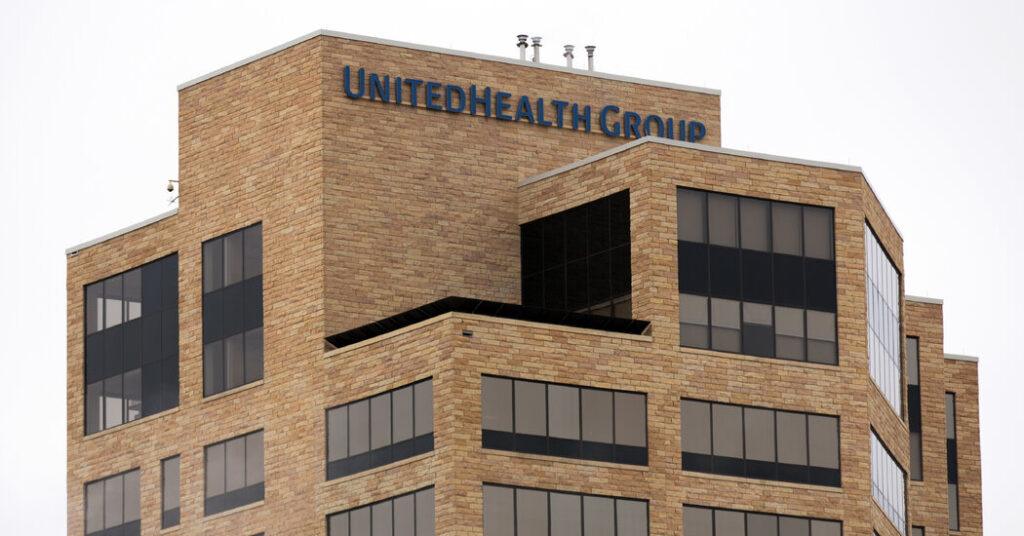
UnitedHealth Group, the giant conglomerate, is still struggling to show signs of recovery from last year’s sharp profit decline, even as the company on Tuesday reported first-quarter earnings that came in above Wall Street expectations.
The company’s profits remained relatively stable year over year, reflecting UnitedHealth Group’s difficulties in coping with rising medical costs, government scrutiny of its billing practices and the general public’s continued distrust of health insurers. It is the first of the major for-profit insurers to report results for the first quarter of 2026, signaling the potential for continued challenges across the industry.
The company reported operating earnings for the first three months of 2026 of $9 billion on revenue of $112 billion, on par with its first-quarter 2025 results. Its total revenue last year was $448 billion.
United modestly raised its 2026 earnings outlook to more than $17.35 per share.
UnitedHealth, once one of the most valued and respected companies in the country, significantly underperformed last spring, causing the company’s stock price to plummet. The stock lost almost half its value in a matter of months.
The company abruptly replaced its CEO, bringing back Stephen Hemsley, a former CEO who promised to overhaul all of the company’s businesses and return it to double-digit growth.
UnitedHealth had long thrived on its ability to amass an unparalleled range of healthcare businesses, from the nation’s largest health insurer to giant data operations, physician practices and pharmacy benefit services.
The company owns UnitedHealthcare, the insurer that pays for care for 49 million people, and is one of the largest sellers of Medicare Advantage plans, the private Medicare plans that now cover health care for about half of beneficiaries who are 65 or older or have disabilities. It operates Optum, which provides care through a broad network of around 90,000 affiliated physicians. Its giant pharmacy benefit manager, Optum Rx, handles about 60 million patient prescriptions.
The conglomerate also owns Change Healthcare, the clearinghouse that processes more than a third of all U.S. claims between pharmacies, doctors, hospitals and insurers and was the target of a devastating cyberattack.
That vulnerability and United’s enormous influence in so many health sectors led some lawmakers to call for the company’s dissolution.
Since last spring, United’s expansion has largely ended, and the company now describes how it is cutting costs: exiting businesses, including some in Britain and other places outside the United States; reform its executive ranks; and abandon plans in unprofitable markets.
In announcing the company’s results for the first three months of 2026, UnitedHealth executives pointed to those efforts. “We continue to help simplify and modernize healthcare for the people we serve, bringing greater value, affordability, transparency and connectivity,” Hemsley said in a statement.
One of the biggest setbacks has been the decline of what had been an extremely lucrative Medicare Advantage business. Federal officials have cracked down on plans’ ability to overcharge the government for their services by exaggerating the prevalence of some diagnoses. Some of those practices are still under federal scrutiny.
That market has also become less profitable for UnitedHealth as policyholders get sicker and medical costs rise overall. The company said it had shed nearly a million customers in the Medicare Advantage market.
And it announced an estimated $6 billion drop in revenue this year, based on the U.S. government’s decision to change the way it pays for Medicare Advantage services, including those provided by UnitedHealth and Optum.
Along with other major insurers in the country, United has become the target of a groundswell of anger and frustration among the public and lawmakers, who cite the industry’s practice of prior authorization for some services, leading to delays and denials of needed care.
In late 2024, its top health insurance executive, Brian Thompson, was shot to death in midtown Manhattan, a murder that sparked visceral public animosity toward insurers.


