
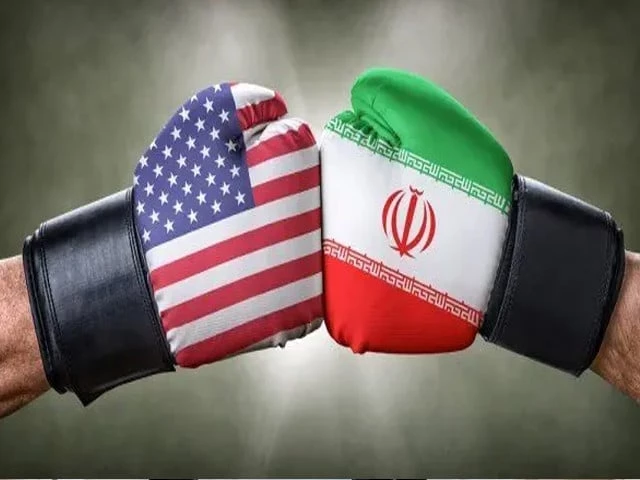
ISLAMABAD:
There is no sign of the next round of talks between Iran and the United States, so far. However, security details remain intact in Islamabad.
This suggests that the door to a diplomatic breakthrough, however narrow, has not completely closed, even as uncertainty continues to hang over the next phase of negotiations.
“There is no positive movement, but no negative movement either,” said one source, referring to security elements on the ground amid radio silence regarding the next round of talks.
Had everything gone as planned, US and Iranian negotiators would have met on Wednesday, trying to discuss a possible deal.
Pakistan was confident as it had done a lot of groundwork through back channels since the first round ended with no breakthrough.
Where did things go wrong?
As of Tuesday afternoon, the plan was already finalized. Steve Witkoff and Jared Kushner would fly first from Miami. Then Vice President JD Vance’s plane was due to take off from Washington.
The press corps accompanying Vance was instructed to be ready to depart around 9:00 am Washington time (6:00 pm PST).
Not that the plan was final, but multiple sources said the security resources and details put on the ground in Islamabad were typical of accompanying the US president’s move.
That meant the United States was prepared if Trump decided to fly there.
But then things began to deteriorate. The American side, which shared some new proposals with Iran through Pakistan, wanted a clear response from Tehran before Vance left for Islamabad.
The United States wanted the second round to show some progress, if not reach a final agreement.
Initially, Iran was inclined to give its consent. That was the reason why Pakistan had put all security measures in place. The American advance teams had landed.
But as the stage was set for talks, Iran, first through state media and then officially, announced that it would not participate in the talks, accusing the United States of violating the terms of the ceasefire.
The Iranian precondition for a US naval blockade was not the only sticking point.
There has been intense clandestine diplomacy to break the deadlock. Some open moves too.
Some notable and public developments include Wednesday’s meeting of the Iranian ambassador with the prime minister and today’s interaction between the acting US envoy and the interior minister.
What has emerged so far is that it is not just certain flashpoints that are eluding the resumption of talks, but a broader divergent approach.
The United States simply wants a quick solution. Trump is eager to seal the deal, sign it and that’s it.
Meanwhile, Iran is unwilling to reach a deal hastily. You want incremental progress, a step-by-step approach.
Pakistan, as the main mediator, does not want the ongoing diplomatic process to be indefinite. You want to take the process to its logical conclusion.
The visit to Tehran by the field marshal, who was going to spend one day but stayed there for three days, had precisely the same objective.
The proposals and new ideas that Trump has spoken of, and the wait for a unified response from Iran, point towards the desire to reach a definitive agreement.
While Iran is reluctant to join the talks, it is believed to still be weighing the option.
Some within the Iranian ranks tend to believe that a deal in its current form will be a difficult sell domestically.
But then, deep down, you also understand that Iran needs a break. It may have resisted Israeli and American power, but the damage to the economy and infrastructure is immense.
Away from the public rhetoric, the news of the ceasefire extension was welcomed by ordinary Iranians. They understand the pain and suffering of this war.
The extension of the ceasefire is a relief and at least there will be no immediate escalation.
Messages have still been exchanged. Efforts are underway to salvage the last-minute deal.
The problem, however, is the slow channels of communication between Iran’s Supreme Leader and the negotiating team.
The other key aspect of this war is that, unlike past conflicts, this war cannot end in a stalemate. One side has to prevail over the other.
Suppose the war ends in a prolonged stalemate. Iran continues to exert control over the Strait of Hormuz while the United States maintains a naval blockade. This situation is unsustainable as it will choke the global economy without either side firing a single shot.
What this means is that, in the end, this stalemate has to end through diplomacy or through war. Both sides, however, want to avoid the path of hostilities.
The stalemate in the Strait of Hormuz can be dangerous, but it is more of a tactical measure by both sides than a full-blown escalation.
So it’s not over until it’s over.


