
No one here can say exactly when it happened, but suddenly China is everywhere in Jakarta, the capital of Indonesia.
Compact Chinese electric cars circulate on the streets. Chinese cosmetics fill pharmacy shelves. Chinese hotpot restaurants and milk tea chains have sprung up in the city’s many shopping malls.
“It’s all very sudden: they just came to this country, all the brands, including cars and drinks, without us knowing,” said Kavin Hibrizy Pradipto Eska, who recently traveled hours from his university to a car show in North Jakarta just to admire the Chinese cars on display.
Squeezed by cautious and tight-fisted domestic consumers, Chinese companies are expanding around the world – from Brazil to the United Arab Emirates – in search of new ones. Indonesia, with its young and large population, is an obvious target.
But dating is complicated. China is already Indonesia’s largest investor and largest buyer of its natural resources, but its presence is not always welcome. A flood of cheap Chinese goods has wiped out local jobs, and anti-Chinese sentiment, which has erupted into riots in the past, still simmers beneath the surface.
And yet, Chinese brands are conquering Indonesians. Companies like Mixue, Haidilao and BYD are reshaping the way Indonesians view China. They are rising as American companies such as Starbucks and McDonald’s fight to win back young Indonesians, many of them Muslims, who have been boycotting American brands over US support for Israel’s deadly attacks on civilians in Gaza.
For decades, China has been the world’s factory for items such as vacuum cleaners, umbrellas and flip-flops. But in recent years, their companies have become household names, driving radical technological change in industries such as solar panels and electric vehicles. Chinese companies now sell more of everything abroad, generating a tsunami of exports to all corners of the world, but especially to Southeast Asia.
Large, fast-growing markets like Indonesia are increasingly vital for Chinese brands as U.S. trade barriers, including steep tariffs and restrictions on Chinese automakers, shut down what was once their biggest export market.
That push into new markets is already shaping 20-year-old Kavin’s consumer choices. As a college student, he still has no income. But once he does, he said, he plans to buy a Tiggo, a hybrid from Chinese automaker Chery, because it looks nice and costs half as much as other foreign cars.
“China is just the future for me,” Kavin said, acknowledging that the sentiment surprises even him. He used to associate Chinese products with poor quality, he said, but that assumption has faded as more Chinese brands have popped up around him, often at the forefront of new technology.
Electric vehicles changed Eski Badillah’s opinion of Chinese companies. Mr. Eski, 35, is a repossession loan officer who repossesses borrowers’ motorcycles when they fall behind on payments. He began to notice the Chinese he was apprehending.
“Before, about 20 years ago, people said, ‘Oh, what is this? It’s made in China,'” Eski said on a recent afternoon, sitting outside a Mixue, the Chinese fast-food chain, in a Jakarta residential neighborhood. “We would probably laugh at the idea of a car or a motorcycle coming from China.”
“Nowadays that has changed,” he added. “The image of Chinese brands has become more positive.” When he has the money, he said, he plans to buy an electric vehicle from BYD.
BYD and Geely, another major Chinese automaker, are battling fierce competition at home and a glut of unsold electric vehicles. To survive, they have aggressively ventured into foreign markets. In Europe and the United States, its cars have faced a number of trade barriers. Indonesia, by contrast, offers preferential tax rates to automakers wishing to build factories here.
Chinese cars are “the most innovative and have the most features,” said Bramantya Adji Pratama, 27, a bank official who was sharing hot pot with his partner at a Chinese franchise Haidilao outlet on a recent weekday.
Nearby, a Haidilao employee stretched ribbons of dough into noodles, spinning them at a brisk pace, part of the theatrics that have helped drive the chain’s popularity. With 12 locations across Indonesia, Haidilao has exported more than just food, providing a distinctive level of service including massages and manicures for customers waiting in line.
China is also exporting purchasing habits. Indonesia has become one of the largest global markets for live shopping on TikTok, owned by Chinese company ByteDance.
Like many other young Indonesians who are tied to their phones and constantly online, Lutfiah, 29, who goes by one name, discovered Chinese makeup brand Skintific through influencers on social media, she said. The brand hosts hour-long live streams during which presenters demonstrate products, answer questions and offer discounts.
“The way I see China and the Chinese people has changed because of some of the products I use,” he said.
Tauhid Ahmad, an economist at Jakarta’s Institute of Development Economics and Finance, said South Korean music and pop culture were wildly popular in Indonesia a decade ago, but Chinese dramas had overtaken them in popularity these days. He said many young Indonesians were unaware of the historical tensions between China and Indonesia.
“They don’t know the past,” he said. “They think China is good because it is a rich country and has good technology.”
This shift is occurring as some young consumers move away from American brands. Boycott campaigns targeting McDonald’s, Starbucks and KFC have spread widely on social media, denting sales and opening opportunities for rivals. The intensity of the boycott campaign has eased since Israel’s war with Hamas began in 2023, but many consumers still avoid those brands.
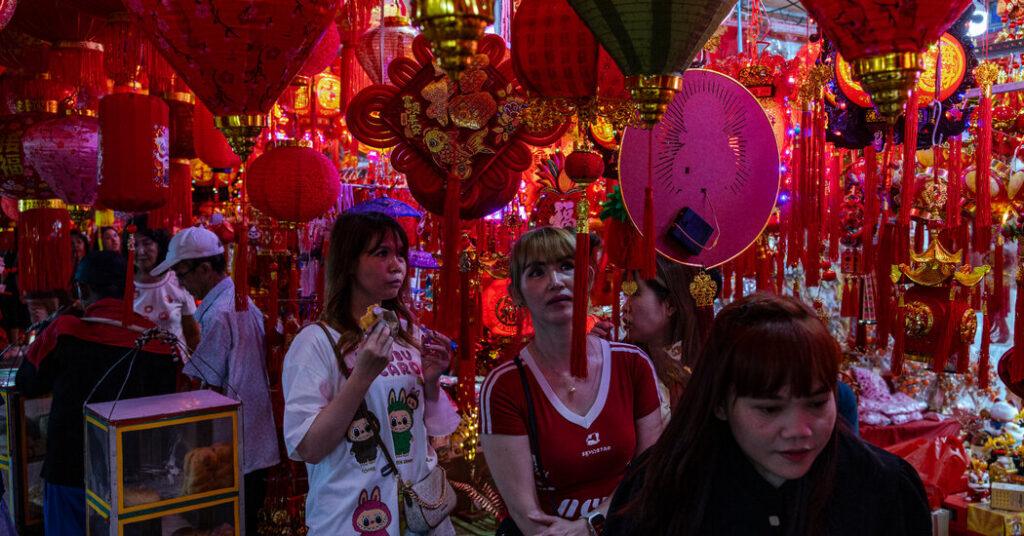
In Jakarta, the acceptance of all things Chinese is visible in places like Glodok, the city’s Chinatown, once known for its wholesale shops selling cheap goods. The area is now packed with cafes and food stalls, set against restored facades and heritage temples.
Restu Ramadhani Putri, 24, wanted to visit the neighborhood after seeing it on TikTok along with impressive videos of China’s vast roads, trains and infrastructure.
“In the past, if we bought something from China, we would say, ‘Ugh, it’s from China,'” Ms. Restu said. “Now it’s like, ‘Wow, China is really cool.'”


