
I had the pleasure of interviewing leading wildlife photographer Will Burrard-Lucas at this year’s Sony World Photography Awards, after he won the top prize in the wildlife category for his ‘Crossing Point’ series.
His stunning and highly detailed photographs were captured over a 6-month period and provided vital data on the wildlife of Kenya’s iconic Masai Mara National Park to local agencies. Park rangers were stunned by some of the discoveries, all captured using Burrard-Lucas’ unique self-developed camera trap system.
Article continues below.
‘Where many mirrorless cameras fall’
Hopefully the series was captured with one of the best mirrorless cameras. In fact, Burrard-Lucas primarily uses Sony equipment for wildlife photography in the field. However, for the remote camera traps used in this winning series, their equipment options were completely different.
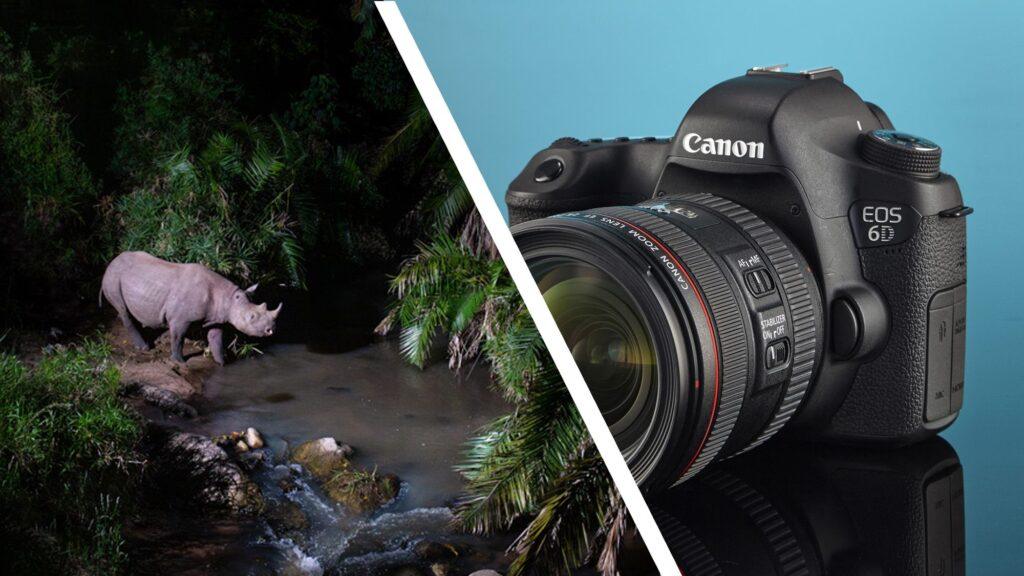
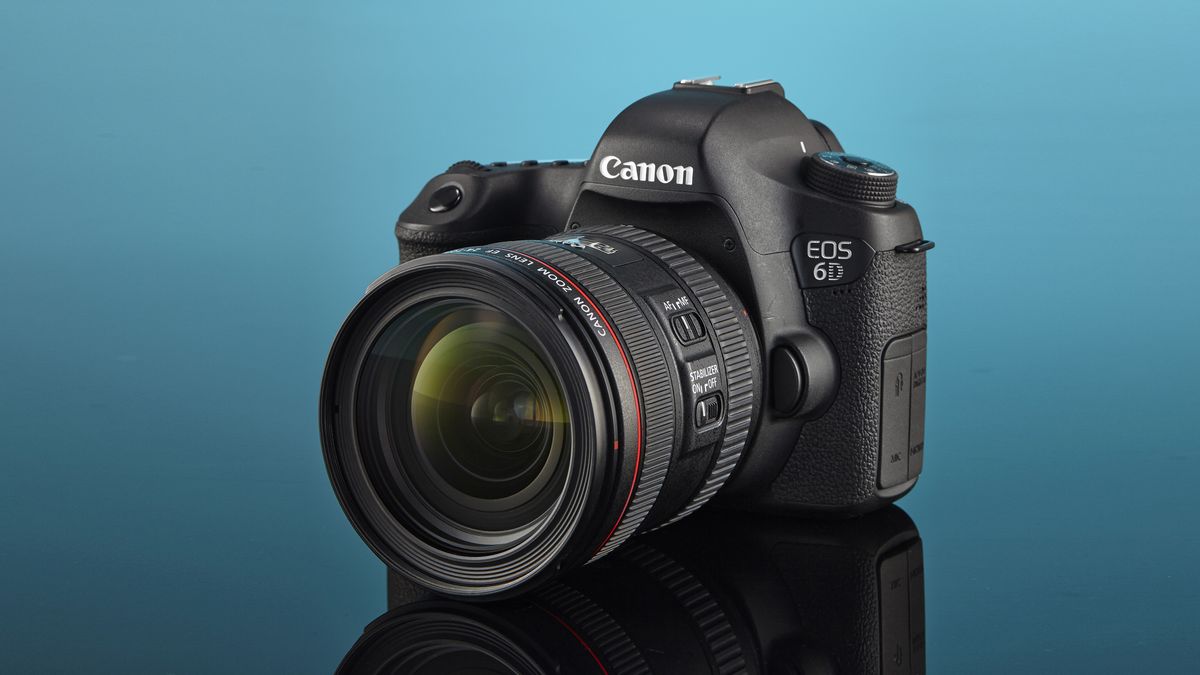
Burrard-Lucas camera traps are based on their own ‘Camtraptions’ devices, specifically a highly advanced motion sensor for wired or wireless operation. Wirelessly paired the motion sensor with a full-frame Canon EOS 6D DSLR camera (equipped with a 35mm lens). That’s right, a 14 year old enthusiast level DSLR.
Given its age, and like most top DSLRs, you can now only buy the EOS 6D second-hand, with ‘excellent condition’ models costing around $400 / £350 at major retailers.
The fact that these older DSLRs are low-cost is part of the appeal for Burrard-Lucas, given the number of camera traps he sets up and the harsh environments he typically works in – the performance consideration comes at a real cost. He told me he needed an affordable, “reliable and robust” device with excellent low-light image quality, and the EOS 6D fit the bill.
Image 1 of 3
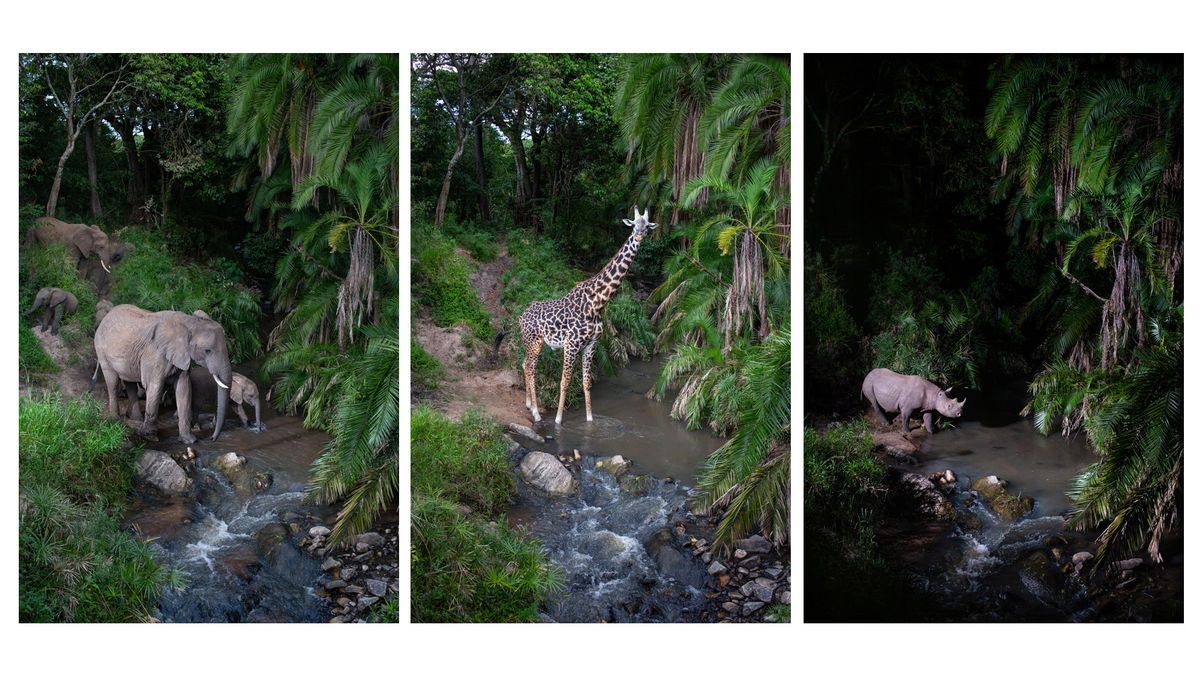
Still, older DSLRs have a technical advantage. Good lighting was crucial for the series, especially because many of the species tracked are typically nocturnal and shy, like rhinos, so Burrard-Lucas needed to use flash.
Burrard-Lucas told me, “Any old DSLR camera works great in the camera trap setup; [the camera] “It needs to work well with flash, which is where many mirrorless cameras fail.”
The composition you see in his ‘Crossing Point’ series was decided upon at the beginning, with the motion sensor positioned to trigger the camera when the animal walked toward the specific part of the frame (on which Burrard-Lucas manually focused the camera lens), and the camera remotely firing three flashes to illuminate the subject and the immediate lush surroundings.
Since composition and focus are selected in advance, Burrard-Lucas had no need to choose a high-spec camera with leading burst shooting speeds and autofocus performance. Their choice of equipment was determined by image quality requirements, reliability and affordability, and the EOS 6D was their choice.
Burrard-Lucas regularly works with camera traps, and they are placed where they are at risk of harm from wildlife. That’s why he told me that whenever he sees “old, cheap second-hand DSLRs, I buy them.”
Any old DSLR camera works great in the camera trap setup. [the camera] It needs to work well with flash, which is where many mirrorless cameras fail.
Will Burrard-Lucas
When I asked him about his use of camera traps, Burrard-Lucas said, “for nocturnal creatures, there is nothing better than camera traps, because it really comes down to lighting.
“For these elusive animals, a photographer might wait 12 hours, but you can’t wait four months, so it’s the only practical way when you have this focal point defined.”
I decided to try the Burrard-Lucas camera trap system and he advised me: “It’s super easy and a lot of people are making new use of their old DSLR camera. You don’t need a lot of extra kit – the sensor, a single flash to start with, keeps things simple and just leave it out for a few nights.”
Burrard-Lucas sells everything needed for its award-winning photography system, except the camera itself, on its Camtraptions website, where you’ll also find much more detailed instructions.
I can’t say I’ll be photographing something as exciting as a rhino or leopard, but it will be great to dust off my old Nikon DSLR and give it a new purpose, and I can’t wait to see what kind of nocturnal wildlife visits my rural garden. Hopefully I’ll share some of the best photos soon.
You can see more photographs from the ‘Crossing Point’ project on the World Photography Organization website.

Follow TechRadar on Google News and add us as a preferred source to receive news, reviews and opinions from our experts in your feeds.


