
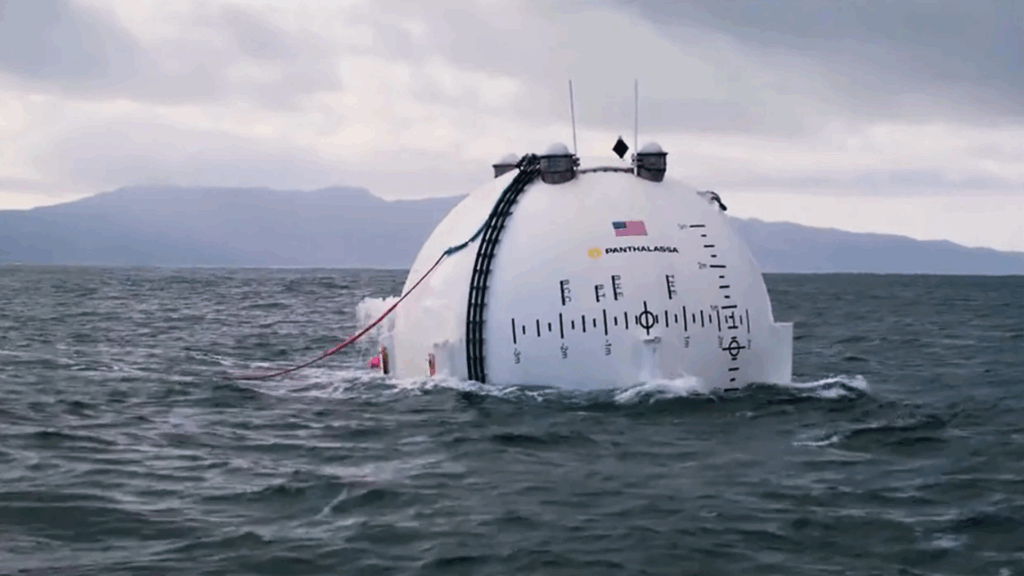
- Panthalassa Ocean-3 generates power and processes AI workloads directly at sea
- The movement of the oceans replaces fossil fuels as a primary energy source
- No cables or anchors, just autonomous systems that navigate constant waves
Panthalassa, a Washington state startup, is building self-propelled floating platforms that generate electricity from ocean waves and use it to power artificial intelligence data centers at sea.
The platform, called Ocean-3, has devices that do not have an anchor, do not need fuel and do not have cables connecting them to the coast.
Each platform rises and falls with the waves, forcing water through an internal turbine to generate electricity.
Article continues below.
How a floating hydroelectric dam works without cables
The generated energy then powers the onboard computing hardware that processes AI tasks on site and the results are sent via satellite.
“The ocean is truly limitless in terms of the amount of energy available,” said Garth Sheldon-Coulson, CEO and co-founder of Panthalassa. “It will really be the cheapest energy on the planet.”
The Ocean-3 functions more like a floating hydroelectric dam. As waves lift the platform, water inside a tube is pushed up into a ballast tank.
This water then flows into a rotating turbine, which generates electricity. The system is self-propelled and moves like a large Roomba instead of being tethered to the ocean floor.
Multiple units deployed together can operate as a single floating data center, with zero carbon emissions and without straining local power grids.
“When many of our systems are deployed, they basically work together as a data center,” Sheldon-Coulson said. “That’s why we consider it a very good alternative to onshore data centers.”
Due to high electricity consumption, which increases carbon emissions and household utility bills, the industry has been looking for an alternative to terrestrial AI data centers.
There have been discussions about underwater data centers and data centers in space, but neither of them appear to be a near-term plan.
As computing demand grows and traditional power grids collapse, Panthalassa offers an alternative that avoids land acquisition and dependence on fossil fuels.
Construction of the Ocean-3 units is already underway and Sheldon-Coulson expects them to be operational offshore in August this year.
The company hopes to eventually deploy thousands of these platforms offshore.
Financing is not a problem, but will it withstand a rough ocean?
Panthalassa has all the private funding it needs because AI companies are eager to find faster, cleaner ways to get power than building data centers on land.
“It’s really exciting that we’re working on something that’s coming along at the right time,” Sheldon-Coulson said, “in a way that’s much cleaner, much more sustainable and quite scalable.”
Although the concept is elegant, there is one uncertainty: the ocean. It has a way of breaking things that works perfectly in tests.
Saltwater corrosion, biofouling, and storm damage are not hypothetical problems for marine equipment; They are everyday realities.
The Ocean-3 platforms will have to survive hurricanes, salt fog and years of continuous movement without mechanical failure.
Satellite links also introduce latency that may not suit all AI workloads, and the cost of repairing a broken generator in the middle of the ocean will be enormous.
Panthalassa has shown that wave energy can power a floating platform, but proving it can do so reliably for years is a much more difficult challenge.
Still, for an industry desperate for power and willing to try almost anything, the ocean offers something no land-based data center can match: unlimited space and a power source that never stops moving.
Through CBS News
Follow TechRadar on Google News and add us as a preferred source to receive news, reviews and opinions from our experts in your feeds.


