
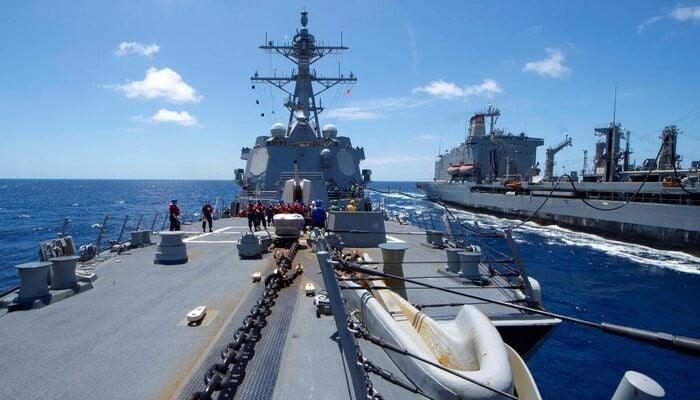
Paradoxically, the US and Israeli attacks on Iran that began on February 28, aimed at bringing Iran to its knees and demonstrating the superiority of America’s overwhelming military power, ended up exposing the limits of its power to achieve its foreign policy goals.
In the face of these illegal surprise attacks that violate the United Nations Charter, Iran has stood firm despite the martyrdom of its top leaders and the enormous destruction of its military and civilian infrastructure. In the process, the United States has been isolated internationally. Even its NATO allies have refused to support US aggression against Iran.
These developments have severely tarnished the image of the United States and significantly diminished its moral standing in the international community. Furthermore, Iran’s ability to challenge American power despite its losses may lead to similar challenges to its authority from powers in other regions. When these developments are considered in the context of the growing challenge posed by an ever-growing China and the emergence of a multipolar world, we may be seeing the beginning of the end of US global dominance. The process of relative decline of the United States may unfold over several decades, but it appears irreversible.
Under President Trump, the United States has become a predatory hegemon, as Professor Stephen Walt explained in a recent article titled “The Predatory Hegemon” in the March-April 2026 issue of Foreign Affairs. A predatory hegemon, he argues, primarily aims to extract unilateral concessions and short-term gains from both allies and adversaries in what he sees as a zero-sum world. In the process, it bypasses the rules and institutions that facilitate mutually beneficial international cooperation, thereby alienating both friends and enemies.
Given the enormous military and economic power of the United States, such a strategy may work for some time. But, says Professor Stephen Walt, it is ill-suited in a multipolar world in which it will “weaken the United States and its allies alike, generate growing global resentment, create tantalizing opportunities for Washington’s main rivals, and leave the United States less secure, less prosperous, and less influential.”
In contrast, a benign hegemon recognizes the value of rules and institutions that promote mutually beneficial international cooperation and that others consider legitimate. Rather than taking advantage of both its partners and rivals, it welcomes positive-sum partnerships with like-minded states and promotes an international environment conducive to the realization of its objectives through cooperation rather than brute force.
The United States under Trump is anything but a benign hegemon, as evidenced by its decisions to withdraw from the Paris climate agreement, the 2015 Iran nuclear deal and the WHO, its attacks on Iran in June 2025 and February 2026 on false and illegal grounds, its disproportionate use of tariffs to secure economic gains, its attack on Venezuela to kidnap its president, and its threats to annex Greenland. President Trump has made it abundantly clear that he sees little use in the United Nations and international law in the conduct of U.S. foreign and security policies.
Washington, sooner or later, will face the adverse consequences of such short-sighted and US-centric policies in the conduct of its foreign policy. This would be particularly true given the radical transformation of the global security landscape driven primarily by China through the rapid accumulation of its economic, technological and military power, its forays into the Global South through the Belt and Road Initiative and other similar initiatives, its close strategic partnership with Russia, and its rapidly growing economic, trade and technological ties around the world.
The world may be at an inflection point, with the United States gradually ceding global supremacy to China over the next two to three decades, aided by the former’s relatively slower economic growth and its strategic overreach. A reasserted Russia and the emergence of powerful medium-sized states in several regions will accelerate the process. The United States will remain a very powerful economic and military power for the foreseeable future, but with an increasingly difficult ability to impose its will on others without permission or obstacles.
The United States’ propensity to get bogged down in long-running regional wars, such as in Afghanistan (2001-2021) and Iraq (2003-2011), may further slow it in the race for economic and technological development vis-à-vis China, which has scrupulously avoided involvement in foreign wars and focused its energies primarily on the supreme national goal of rapid economic, technological, and scientific development.
Interestingly, according to the latest figures, China has surpassed the United States in allocating national resources to research and development, a major driver of economic growth and technological innovation. Also noteworthy is that China’s GDP in terms of purchasing power parity, which is the true measure of the size of the national economy, surpassed that of the United States in 2014.
In addition to the United States’ competition with China at the global level, Washington also needs to address the challenges posed by major regional powers such as Russia in Europe and Asia, Brazil and Mexico in Latin America, India, Indonesia, Pakistan, Iran, Saudi Arabia, Turkey and Egypt in Asia and the Middle East, and Nigeria and South Africa in Africa. Iran’s challenge to the United States in the Persian Gulf region, despite the enormous loss of life and destruction of infrastructure it suffered, has exposed the limits of America’s power in imposing its will on even middle powers.
Iranian tenacity in defending its sovereignty and national interests in the face of US military attack has stripped the United States of its aura of invincibility. Following America’s ignominious defeat in Afghanistan after its longest war, its failure to bring the Iranian nation to its knees may encourage similar challenges to its authority elsewhere. Despite its formidable military power, the United States will find it increasingly difficult to overcome multiple such challenges simultaneously in different regions of the world. These regional challenges will further weaken the United States vis-à-vis China as it attempts to confront them.
The above analysis carries important lessons for Pakistan’s strategic planners. In the emerging multipolar world marked by realpolitik, the diminishing authority of the United Nations and international law, shifting alliances, and the growing importance of economic and technological strength in the spectrum of national power, the ultimate guarantee of a nation’s security and economic well-being lies in its national power and its judicious use.
Therefore, Pakistan should assign top priority to rapid economic, technological and scientific development, while maintaining a credible security deterrent and pursuing a low-risk, non-adventurous foreign policy aimed at promoting peace in our neighborhood.
In view of the enduring threat that India poses to Pakistan, we must also continue to strengthen our strategic partnership and cooperation with China in various fields, while maintaining friendly relations with the United States. Furthermore, developing fraternal ties with OEC member states and Middle Eastern countries should remain a top priority for our foreign policy.
The writer is a retired ambassador and author of ‘Pakistan and a World in Disarray: A Grand Strategy for the 21st Century’. He can be contacted at: [email protected]
Disclaimer: The views expressed in this article are those of the writer and do not necessarily reflect the editorial policy of PakGazette.tv.
Originally published in The News


