
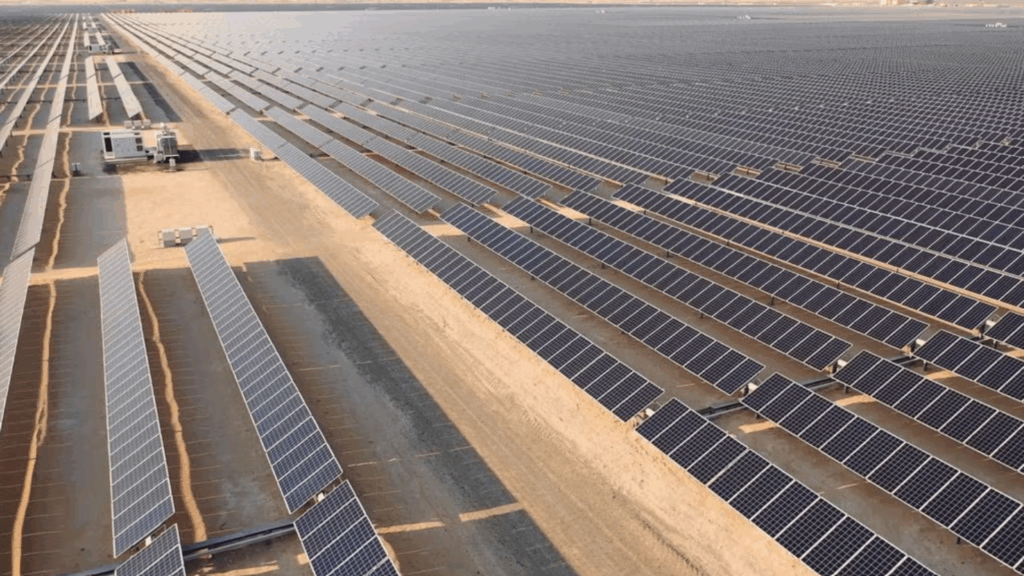
- Luna Ring proposes continuous generation of solar energy from lunar orbit
- The lunar equator would host thousands of kilometers of solar infrastructure
- Energy transmission is based on microwave and laser beam systems.
A Japanese construction company once proposed wrapping the Moon’s equator in a belt of solar panels stretching nearly 11,000 kilometers.
The Shimizu Corporation, a billion-dollar engineering giant, envisioned a structure ranging from several kilometers to 400 kilometers wide at its widest point.
Assuming an average width of 100 kilometers, the total area would reach approximately 1.1 million square kilometers, a territory roughly comparable to the combined landmass of Texas and California.
Article continues below.
How the lunar plant would work
The concept, called the Moon Ring, promised to generate 24 hours of continuous solar energy without any interference from weather or atmospheric conditions.
Solar cells lining the lunar equator would convert sunlight into electricity, which would then travel through a transmission cable to the Earth-facing side of the moon.
There, the energy would be converted into laser or microwave beams and transmitted directly to receiving stations on Earth.
According to Shimizu’s proposal, “the enormous energy of the sun will give us a beautiful Earth and an abundant lifestyle in the future.”
The system would be based on two types of wireless transmission: microwave technology and laser beam technology.
Every country on Earth would possess sets of rectennas (antennas that convert microwaves back into direct current electricity) to receive and distribute the energy.
But building such an immense infrastructure would require maximum use of materials found on the moon itself.
Lunar sand is made up of oxide compounds that could combine with hydrogen brought from Earth to produce oxygen and water.
The same sand could be mixed with cement, ceramics, glass and even solar cells manufactured directly on site.
Large robots would drill into the moon’s hard inner layer and level the softer surface, performing most of the civil engineering work remotely from Earth.
A self-propelled solar cell production plant would move along the lunar equator, manufacturing and installing panels as it goes.
Costs, timelines and validity remain a big debate
This discussion has often felt abstract and has struggled to gain the sustained attention needed to move toward real-world implementation.
When the concept was first introduced in 2010, Tetsuji Yoshida, president of Shimizu’s space consulting subsidiary, acknowledged that it received little public attention or interest at the time.
It wasn’t until after the Fukushima nuclear disaster in 2011 that the idea began to attract renewed attention as Japan reassessed its energy strategy.
However, even in 2011, Yoshida admitted that there was still no concrete estimate of the total cost of the project, leaving great uncertainty about its feasibility.
Masanori Komori of the Institute of Energy Economics noted that lunar solar energy “sounds good in theory, but it costs too much,” and suggested Japan focus on geothermal energy.
At present, this proposal seems more like a futuristic marketing exercise than a viable energy solution for several reasons.
First, building a sun belt longer than the Earth’s diameter across an airless landscape presents staggering engineering challenges.
Second, the robots needed for such construction do not yet exist in operational form, and Shimizu’s glossy brochure appears to underestimate these technical hurdles.
It remains to be seen whether investors will take this decade-old concept with no cost estimates as a true technology roadmap.
Follow TechRadar on Google News and add us as a preferred source to receive news, reviews and opinions from our experts in your feeds.


