
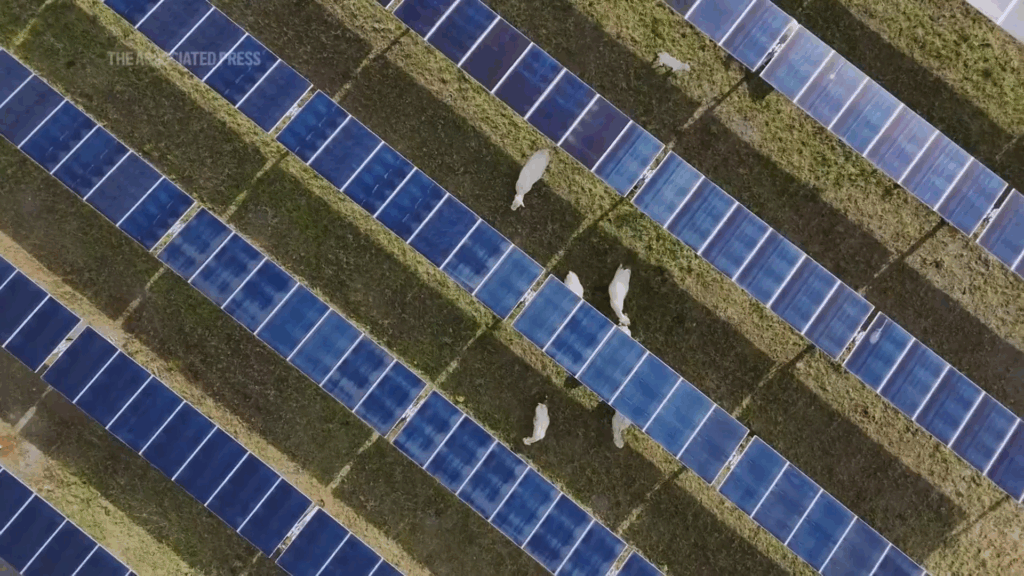
- Silicon Ranch tests cattle grazing beneath active solar energy infrastructure
- Software-controlled panels create space for moving large livestock safely
- Livestock rotation allows for simultaneous grazing and electricity generation in the pastures.
This small solar farm in Christiana, Tennessee, looks like many others from a distance, but beneath its black panels are lush grasses instead of gravel.
The 40-acre facility, owned by Silicon Ranch, allows a small herd of cattle to spend their days munching on grass and resting in the shade.
The ranch is testing whether livestock can coexist with power generation without removing cropland from active use, with a setup that introduces a variation of agrivoltaics, extending beyond crops and sheep to larger livestock systems.
Article continues below.
Ingenious software solves the size problem
This project, which debuted in late April 2026, represents the first serious attempt to integrate livestock grazing with solar energy production on a working farm.
Nick de Vries, the company’s chief technology officer, acknowledged that “we know it works, but we have to prove it to other people.”
Livestock present a unique challenge for solar installations because these animals can weigh more than half a ton and can damage expensive equipment.
Solar panels typically rotate at nearly vertical angles to capture the sun’s rays, leaving very little room underneath for large livestock.
Simply erecting the panels would require prohibitively large amounts of steel and would dramatically increase construction costs.
Silicon Ranch solved this problem by developing custom software that workers activate to turn the panels almost horizontally whenever the cattle are grazing.
Currently, the system rotates 10 cows and their calves between different paddocks every few days.
This allows ungrazed sections to generate approximately 5 megawatts of electricity for a rural electric cooperative.
Financial pressures make this an urgent experiment
American agriculture is facing a really difficult time for farmers due to trade wars, weather extremes, and rising costs.
The USDA forecasts that total cash revenue from animal products will decline by $17 billion in 2026, with revenue from chicken eggs falling 66% and milk falling nearly 13%.
“Agriculture is in a really difficult situation right now,” said Ethan Winter of the American Farmland Trust.
“So maybe this is our moment where we can help states meet their energy needs and do it in a way that provides new opportunities for farmers.”
Farmers can earn about $1,000 per acre by leasing their land for solar installations, which is about 10 times what regular farming typically generates.
Anna Clare Monlezun, a grassland scientist working on the Tennessee project, noted that “there are more benefits for everyone than trade-offs” in this agreement.
Grasses under solar panels retain more moisture and become more drought tolerant, while grazing in the shade makes livestock less prone to heat stress.
These animals can gain more weight and drink less water compared to cattle on open pastures.
By 2024, sheep will have grazed more than 130,000 acres of solar sites across the United States.
However, expanding to livestock requires overcoming additional design challenges and developing appropriate economic incentives for livestock farmers.
Increasing electricity demand from rapidly expanding data centers requires new, carbon-neutral energy sources.
If this Tennessee experiment is successful, advocates believe solar projects integrated with livestock grazing could “help livestock producers preserve their lands and livelihoods” while offsetting billions in financial pressure.
Through AP News
Follow TechRadar on Google News and add us as a preferred source to receive news, reviews and opinions from our experts in your feeds.


