
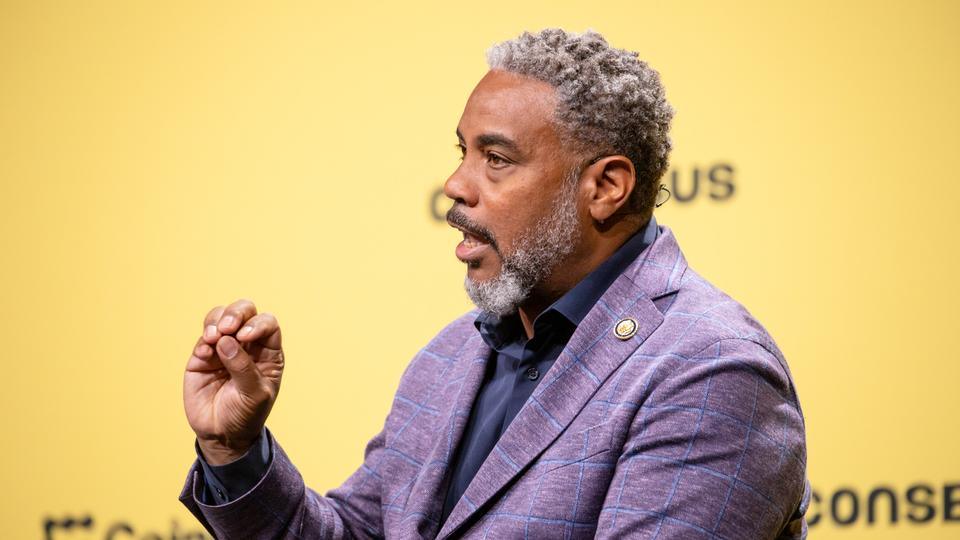
Rep. Steven Horsford said Tuesday at CoinDesk’s Consensus Miami conference that his bipartisan PARITY Act is a gradual path forward in a Congress where Senate negotiations on market structure have stalled.
“PARITY is designed to establish a lasting floor, not to be the last word,” he said, noting that existing issues must be resolved “clearly within the jurisdiction of the tax code to have the protection for the consumer, small businesses and those who own these assets to define whether they are treated as income or capital gains.”
The Nevada Democrat co-authored the discussion draft of the PARITY Act with Republican Rep. Max Miller of Ohio in December, and revised it on March 26. He told moderator Yesha Yadav that he prefers a narrow approach to comprehensive alternatives, including Sen. Cynthia Lummis’ proposal. The risk of a comprehensive bill, Horsford said, is that it “combines genuinely useful provisions with definitional language that is so broad that it creates other problems.”
PARITY’s main provisions include a cost basis test of stablecoin payments, a five-year tax deferral election on staking and mining rewards, and an extension of wash sale rules to digital assets. Horsford said that while access to retirement accounts is not present in the current drafts, he considers it “something I personally want to see, because to close the wealth gap, we have to be able to help people plan for retirement. Digital assets are one way to do that. I know there’s a genuine bipartisan appetite for us to work on this, but rushing and just putting language in a bill without doing it right creates these unintended consequences.”
As for the broader political climate, Horsford said Senate negotiations to advance the CLARITY Act between Sens. Thom Tillis and Angela Alsobrooks appear to be “on hold.” When asked if bipartisan cryptocurrency legislation could be passed before the November midterms, he declined to commit to a timeline.
“It’s less about a schedule and more about getting it right,” he said. “You can rush in and pass a bill through Congress that has unintended consequences that you won’t be able to fix later.”


