
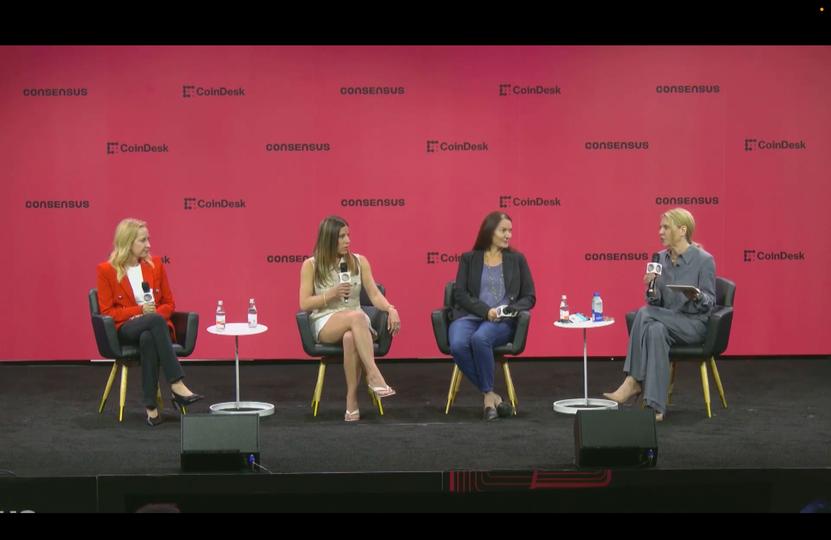
The right voices in the right rooms can reshape products, policies and hiring outcomes in crypto, three top executives said at CoinDesk’s Consensus Miami conference on Tuesday. Each cited a moment in their own organization when an outside perspective changed what was being built, argued, or prioritized.
Maja Lapcevic, senior vice president of Blockchain and Digital Assets at Mastercard, said her company’s crypto team had initially seen infrastructure as the key to crypto adoption, until a partner reframed the issue around usability. “We probably all thought infrastructure was the winning formula for cryptocurrencies,” he said. “But one of our partners really helped shed light on how to make cryptocurrencies accessible, not complex, and very easy to use.” That thinking helped push Mastercard toward cards tied to stablecoins, even for users in markets with limited access to traditional financial services, he said.
Crypto Council for Innovation chief strategy officer Alison Mangiero said her organization had a similar understanding about staking after bringing builders into policy discussions. “Sometimes we think we understand or we put things in a bucket,” he said. “We’ll take a shortcut and say, oh, that sounds like a fund. Oh, that sounds like interest or yield, when in reality what’s happening under the hood is fundamentally different.” After listening to people who create betting primitives, he said, CCI understood the need to describe betting as a technical service rather than a financialized product.
Clerisy co-founder and managing partner Alexandra Wilkis Wilson provided the argument for the hire. “Many of us fall into the comfortable bias of hiring people who don’t just look like us or remember you when you were younger,” he said. He recalled a 10-person startup where a Myers-Briggs analysis found that eight of the 10 team members were extroverts. “It’s really important, when you’re growing teams, to not only incorporate diversity on the outside, but also think about diversity on the inside,” he said.
Mangiero concluded by raising the issue as one that affects the industry in general. Crypto “is going through a moment where people are really interested in hearing our voice,” he said, “but that begs the question: What is our voice at the end of the day?” The conference, he added, “is called Consensus for a reason.” Good policy, he said, requires the industry to ensure that different communities are reflected, including token holders and people building on blockchain networks, while protecting consumers and allowing innovation to flourish.


