
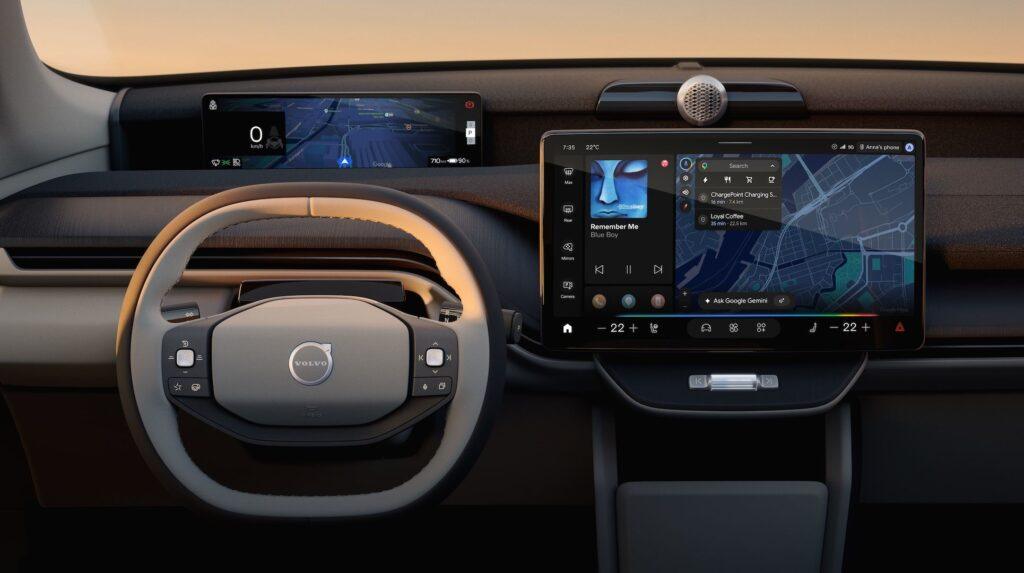
- Volvo, Polestar and GM recently announced Geminis in cars
- Reddit users have flocked to express their distrust.
- Early feedback suggests the system may be slow and clunky
Volvo, Polestar and General Motors recently announced that they have begun implementing Google Gemini into the infotainment systems of their collective automotive portfolios, bringing seamless conversations and vehicle-specific information to vehicles with Google integrated.
Gemini, the company’s much-hyped AI assistant, is designed to go far beyond the typical clunky manufacturer voice assistants that a large portion of the driving population has come to despise.
Despite attempts to reduce driver distraction by allowing select voice commands to activate things like the air conditioning or change a radio station, they have often proven frustrating, with multiple commands having to be used or the software simply giving up and admitting it can’t help.
Article continues below.
Gemini, on the other hand, is touted to enable “natural conversation,” according to the tech giant, with the ability to search for the perfect stop with fluid conversation.
“I need to eat lunch, find some well-rated restaurants along the way. I’m not in a hurry, oh, and I’d like to eat out,” Google offers as an example, claiming it will get a wealth of data, including reviews, from Google Maps to help make a decision.
Drivers and passengers can then follow up with more simple prompts, or ask Gemini to summarize text messages, change the radio to something more jazzy, or reveal EV-specific data, such as the battery level upon arrival or how long it will take to charge to reach a destination.
However, not all customers are happy with the system and a quick look at the Reddit forums uncovers a number of problems.
While not a completely accurate source, several users have complained about the Gemini’s car-heavy nature, the fact that it doesn’t understand voice prompts, its difficulties with third-party app integration, and that it’s too chatty, burying useful information (like opening and closing times) in piles of useless nonsense.
But it’s concerns around driver data that seem to be at the heart of most of the in-car arguments against Gemini.
Analysis: GM customers seem particularly skeptical
General Motors has made headlines on numerous occasions for its “questionable” infotainment decisions, removing Apple CarPlay and Android Auto from all of its cars, choosing instead to rely on its native software in order to build a system that can access vehicle data, rather than being isolated from it, as those “plug and play” solutions are.
However, several skeptics believe that GM, as well as many other manufacturers, are doing it to take control of driver data, a market that is projected to be worth between $300 and $800 billion by 2030.
One Reddit user posted: “The real story (and headline) should be: Google is paying GM billions for driver data.”
Other users say they don’t trust any company with their “conversations,” since GM and its OnStar service have already been prohibited from sharing certain consumer data with consumer reporting agencies.
Given that Stellantis is also coming under fire for running pop-up ads inside vehicles, it’s easy to see why distrust is growing over the growing number of connected technologies appearing in cars.
However, we are still in the early days of the in-car LLM integration space. Like most AIs, they are likely to improve quickly, and the experience people describe now may be very different in six months. Have you tried Gemini in your car? Tell us your experience below in the comments.
Follow TechRadar on Google News and add us as a preferred source to receive news, reviews and opinions from our experts in your feeds. Be sure to click the Follow button!
And of course, you can also follow TechRadar on YouTube and tiktok for news, reviews, unboxings in video form and receive regular updates from us on WhatsApp also.


