
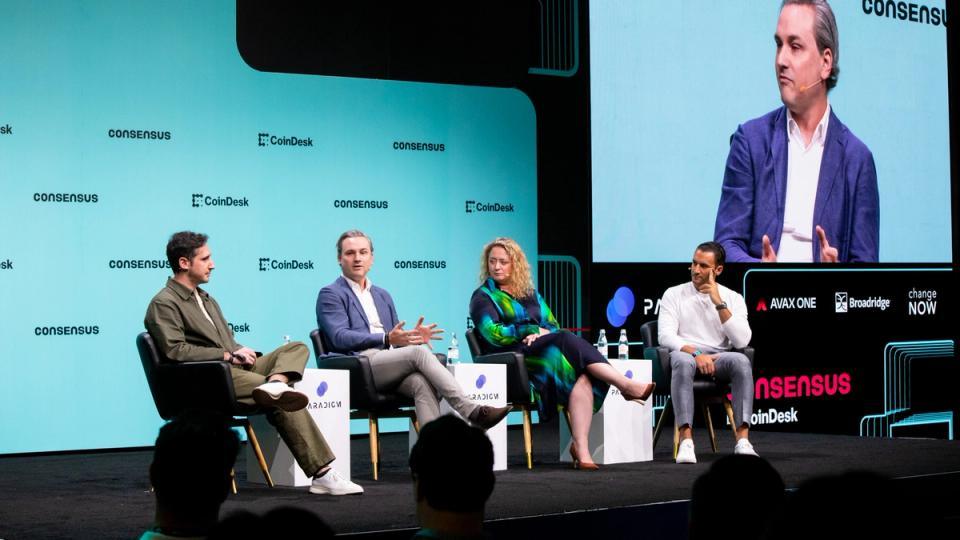
Wall Street’s long-awaited migration to cryptocurrencies is no longer theoretical, according to executives at Ondo Finance, Robinhood-owned Bitstamp, and Babylon Labs. However, institutional adoption remains slower and more fragmented than many in the industry expected.
Executives described a financial industry increasingly adopting blockchain rails, tokenized securities and crypto-native yield products in the “Wall Street Herd Still Coming?” panel at Consensus Miami 2026.
“I think it’s very clear that Wall Street is coming to cryptocurrencies,” said Ondo President Ian De Bode, pointing to recent partnerships with Broadridge and the Depository Trust & Clearing Corporation (DTCC) aimed at tokenizing securities and enabling blockchain-based shareholder voting.
Robinhood’s Nicola White said the conversation with banks has changed dramatically over the past two years. “We no longer have conversations about what blockchain is,” he said. “Now it’s about how do we help them build?”
The panelists emphasized that crypto infrastructure already improves traditional finance in terms of settlement speed and market accessibility. De Bode noted that Ondo’s tokenized treasury products allow investors to mint and redeem positions over the weekend while earning a daily return, capabilities that are not yet largely available in traditional money markets.
“That in itself as a value proposition is mind-boggling to many in TradFi,” he said.
Still, speakers acknowledged that institutional adoption remains limited by legacy financial infrastructure and regulation. White said banks continue to build crypto products cautiously while awaiting clearer regulatory guidance.
“We haven’t spoken to any traditional Wall Street financial companies that have said this is not something they are thinking about,” he said.
Babylon Labs’ Boris Alergant argued that institutions are increasingly focusing on capital efficiency rather than simply bitcoin price appreciation. He said Babylon’s bitcoin-backed lending products are designed to allow investors to borrow against native bitcoin holdings without giving up custody through wrapped assets or centralized intermediaries.
The panel also highlighted a growing divide between regulated US markets and offshore crypto ecosystems. De Bode said permissionless innovation in decentralized finance will likely continue to flourish outside the United States, even as banks adopt more controlled blockchain-based systems domestically.
“I don’t see a world in which everything that happens abroad finds a home in the United States,” he said.
Despite the fork, panelists broadly agreed that the two systems will eventually converge as institutional capital and crypto-native liquidity deepen.


