
ISLAMABAD:
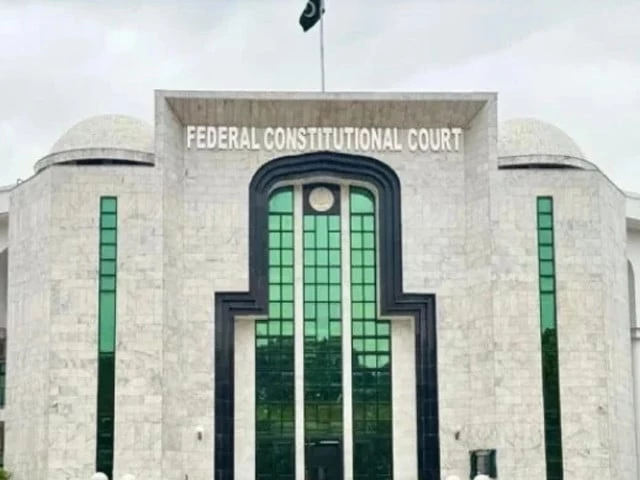
On Thursday, the Federal Constitutional Court (FCC) declared Section 7E of the Income Tax Ordinance 2001 unconstitutional, struck it down and dismissed appeals filed by the Federal Board of Revenue (FBR) seeking its restoration.
The court stated that the provision “shall be deemed not to form part of the Income Tax Ordinance from day one.” It further ruled that all actions taken by FBR under Section 7E are also illegal. The court noted that Section 7E had imposed taxes on certain properties, including plots that were not in active use.
Under Section 7E of the Income Tax Ordinance, any immovable property owned by a taxpayer (other than the first property) was treated as generating rental income if not rented out. This applied to property that was self-occupied, used for business, or agricultural land owned by the taxpayer.
The law assumed national rental income equal to 20% of the FBR assessed value of the property. This deemed income was then taxed at 5%, which effectively amounted to an annual tax of approximately 1% of the FBR (capital) value of the property.
After hearing the arguments, the court held: “We are satisfied that Section 7E of the Income Tax Ordinance, 2001 is ultra vires the Constitution, therefore it is repealed, being null and void ab initio.”
The judgment added that “all actions, proceedings and notifications initiated or taken by the FBR/CIR under Section 7E are declared without legal authority and are hereby set aside.”
FCC Chief Justice Aminud-Din Khan shortly noted that the provision introduced through the Finance Act 2022 had been challenged before multiple high courts across the country on constitutional grounds.
The ruling comes after conflicting decisions across the country. The Peshawar High Court (PHC) and the Balochistan High Court had already declared the provision unconstitutional and struck it down; the Islamabad High Court (IHC) read it partially and declared subsection (2) unconstitutional.
A Lahore High Court (LHC) judgment upholding the provision was later struck down by a division bench, while the Sindh High Court (SHC) dismissed similar petitions.
As a result, taxpayer appeals were allowed, while petitions filed by the Federal Board of Revenue and the Commissioner of Revenue were dismissed. All related procedures have been resolved accordingly.
The court had reserved its judgment of April 30 before issuing the short order.


