“During 1,534 days of war, Ukraine’s health system has come under repeated attacks,” he said.
Every aspect of the system has been focused.from primary health care centers to maternity hospitals, ambulance teams and pharmaceutical warehouses.
“This cannot be normalized”
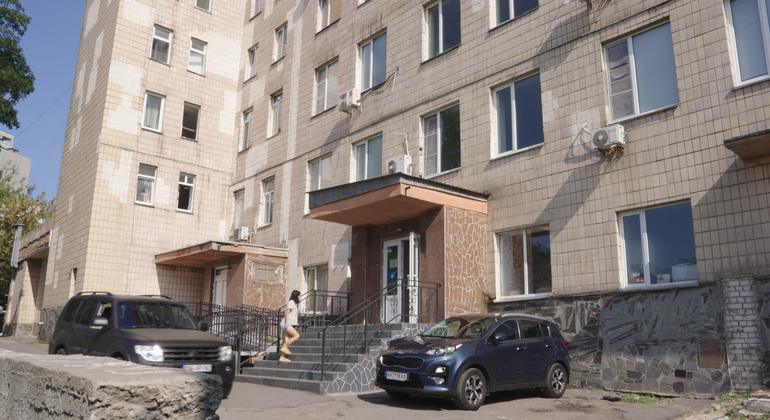
About 80 percent of the attacks affected outpatient clinics, hospitals and other care facilities. They caused immediate casualties, but also disruptions to service delivery and damage to critical infrastructure, ultimately eroding the capacity of the health system.
Attacks on ambulances and other medical vehicles accounted for approximately 20 percent. Almost a third of incidents resulted in casualtieswhich makes medical transport one of the areas with the highest risk of injury and death.
“Each of these attacks is a violation of international humanitarian law and each represents a patient who could not be reached, a healthcare worker in danger, a community left uncared for.”said Dr Hans Kluge, WHO Regional Director for Europe.
“This cannot be normalized. Under international humanitarian law, healthcare is protected.”
Growing victims, growing needs
The attack on Ukraine’s healthcare infrastructure has significantly hampered the ability of medical staff to provide essential care, which comes amid increasing needs.
Some 12.7 million people across the country need humanitarian assistanceincluding 9.2 million who need health support, according to UN figures. Meanwhile, Civilian casualties have increased by approximately 31 percent. compared to 2025.
“Since the beginning of this year alone, 186 attacks on healthcare verified by WHO have resulted in 15 deaths and at least 81 people injured, and the numbers continue to rise,” said Dr. Jarno Habicht, the agency’s representative in Ukraine.
“Compared to the same period in 2025, the number of deaths has almost quadrupled, while injuries have almost doubled.”
Underground maternity wards have been built near combat zones in Kharkiv, Ukraine.
Ongoing support required
Viktor Liashko, Minister of Health of Ukraine, expressed his gratitude to the WHO and its partners for their support. He said the latest estimates show it will cost $23.6 billion to rebuild the health sector over the next decade.
“At the same time, we are doing everything we can to ensure that patients have access to necessary medical care,” he added.
WHO underlined the need to sustain and strengthen Ukraine’s health system to ensure that millions of people across the country have uninterrupted access.
Just in the last year, WHO supported 1.9 million people with essential health servicesnearly 1,000 health facilities with medicines and equipment, and more than 2,500 health workers through training.
Additionally, more than 6,400 patients were assisted in medical evacuation abroad to receive specialized care.
Assistance to farmers
Meanwhile, two UN entities have launched a program to help small farmers in Khersonska Oblast, southern Ukraine, restore agricultural land and revive agricultural activities affected by the war.
The initiative is from the Food and Agriculture Organization of the United Nations (FAO) and the United Nations Office for Project Services (UNOPS) in cooperation with the Ministry of Economy, Environment and Agriculture.
The partners have issued a new call for applications in the State Agrarian Registry (SAR) for farmers from four communities whose lands have been impacted by hostilities and further affected by drought.
Eligible applicants include agricultural producers cultivating between three and 300 hectares of land located a safe distance from the front line.
Cash, seeds and guidance.
Those selected will receive cash assistance and vouchers to purchase items such as drought-adapted seeds, drip irrigation kits and other agricultural inputs needed to restart production.
They will also receive guidance and support to apply for the state compensation program for humanitarian demining.
The initiative is being implemented with financial support from the Ukrainian Community Recovery Fund (UCRF), a UN-backed entity.
It is part of a larger $2.6 million joint FAO and UNOPS project, funded through UCRF, to help farming communities in the Kherson region safely return to agricultural production.