- The SBP expects GDP growth to remain between 3.75% and 4.75%.
- Rising energy prices, transportation costs could inflate import bill: SBP.
- Rising energy prices have implications for tax and non-tax revenues: SBP.
The State Bank of Pakistan (SBP) on Tuesday warned of significant risks to the country’s economic outlook due to conflict in the Middle East, saying rising energy prices and supply chain disruptions could impact the macroeconomy.
The central bank made the observations in its Semi-Annual Report 2025-26, which shows that Pakistan’s macroeconomic stability strengthened in the first half of the fiscal year despite uncertainty in the global scenario.
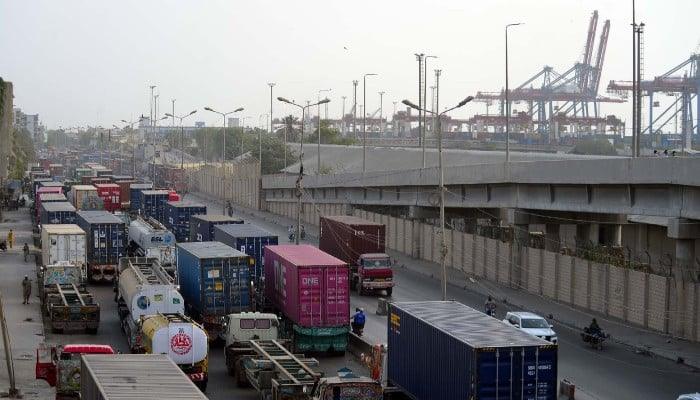
However, the report says that “increases in energy prices, supply chain disruptions, and rising freight and insurance premiums could significantly weigh” on the country’s macroeconomic outlook during fiscal 2026.
The SBP noted that the rise in international energy prices was immediately transmitted to domestic inflation despite the government’s decision to initially absorb most of the increase.
However, its impact on overall economic activity is not expected to be significant in fiscal 2026, it said.
The central bank expected real GDP growth to remain near the lower end of the projected range of 3.75% to 4.75%.
He said increased food crop production and limited export opportunities due to regional conflicts are likely to moderate food inflation.
However, the SBP warned that energy inflation will rise after the government overlooked the rise in international oil prices following the outbreak of war in the Middle East.
“Oil price shocks also pose significant upside risks to core inflation through higher cost pressures, second-round effects and inflation expectations,” it said.
National inflation likely between 5% and 7%
The developments, the central bank said, suggested that domestic CPI inflation is likely to remain above the upper limit of the medium-term target range of 5% to 7% in the remaining months of FY26 and FY27.
Similarly, sharp rise in energy prices and rise in insurance and freight rates are also expected to inflate Pakistan’s import bill and freight service payments, he added.
However, the government’s decision to pass on the impact of rising oil prices to domestic energy prices along with fuel conservation measures is likely to help contain domestic demand and thus reduce energy import volumes.
The central bank also expected a decrease in liquefied natural gas (LNG) imports to reduce energy imports.
Exports are also expected to remain weak due to the possibility of slower global economic growth, low rice prices for several years, closure of Pakistan’s western border and realignment of global trade flows due to ongoing tariff adjustments, the SBP said.
Workers’ remittances may also be affected in Q4FY26, considering that remittances from Gulf Cooperation Council (GCC) countries contributed around 55% of the total remittances between FY21 and FY25.
However, remittances are expected to remain strong in FY26 throughout the year, which would partially offset the widening trade deficit.
Consequently, the current account deficit in FY26 is expected to remain near the lower end of the 0-1% of GDP range.
Probable impact on PDL collection
The war and rising energy prices have implications for tax and non-tax revenues and discretionary spending of the government, the SBP said.
“In particular, the adjustment of domestic fuel prices in the face of rising global oil prices is likely to increase energy subsidies. In addition, PDL collection may also be affected due to reduced POL sales (volume effect) following the increase in POL prices and the implementation of energy conservation measures,” it added.
According to the SBP, the government’s decision to reduce the development budget could cushion the impact to some extent.
The SBP, in its report, expected the fiscal deficit to be between 3.5% and 4.5% of GDP.
Meanwhile, it said the war’s lingering impacts on supply chain resumption and global economic activity could pose significant challenges to macroeconomic stability in the medium term, even though the near-term outlook appears broadly stable.
The central bank maintained that slower economic activity, amid an uncertain situation in the Gulf economies, may affect remittance flows, critical to financing the trade deficit and supporting stability in the foreign exchange market.
Additionally, disruptions in the supply chain, especially the import of critical raw materials and machinery, could affect industrial production and exports, he said, adding that fertilizer shortages may affect crop yields.