Independent studies by the agencies paint a picture of widening disparities that begin in childhood and continue into higher education, despite decades of global progress in school and college enrollment.
An Uneven Report Card
Examining the relationship between economic inequality and children’s well-being in 44 OECD and high-income countries, the UNICEF report found that rates of income inequality and child poverty remain stubbornly high in most countries.
Children growing up in wealthier but more unequal countries face poorer physical health and poorer educational outcomes, the report warns. In all countries surveyed, households in the top 20 percent bring home more than five times the income of those in the bottom 20 percent.
“Inequality profoundly affects how children learn, what they eat and how they feel about life,” said Bo Viktor Nylund, director of UNICEF’s Innocenti centre.
The report also linked greater inequality to worse health outcomes. Children in the most unequal countries are 1.7 times more likely to be overweight than those living in more egalitarian societies, a trend associated with poorer diets and meal skipping.
Worse educational prospects
The educational level is also affected. Children in the most unequal countries are 65 percent likely to leave school without basic reading and math skills, compared to 40 percent in the most equal countries.
Within countries, the gaps between rich and poor students are equally stark. On average, 83 percent of 15-year-olds from the richest households achieve basic skills in math and reading, compared to only 42 percent among children from the poorest households.
UNICEF called on governments to strengthen social protection systems, invest in disadvantaged communities, improve school resources and provide nutritious school meals.
Expansion without equal opportunities
A separate UNESCO report examined global trends in higher education.
The study found that the number of higher education students has more than doubled over the past two decades, rising from around 100 million in 2000 to 269 million in 2024.
However, this expansion has not translated into equitable access, the agency warned.
While around 80 percent of young people in Western Europe and North America are enrolled in higher education, participation falls sharply elsewhere: to 30 percent in South and West Asia and just 9 percent in sub-Saharan Africa.
Lagging completion rates
Completion rates have failed to keep pace with enrollment growth. The global graduation rate increased only from 22 percent in 2013 to 27 percent in 2024.
“This new report shows a growing demand for higher education, which plays an irreplaceable role in building sustainable societies. However, this expansion does not always translate into equitable opportunities, highlighting the need for innovative financing models to deliver inclusive and quality higher education,” said Khaled El-Enany, Director-General of UNESCO.
Changing inscription
Women currently outnumber men in higher education globally, with 114 women enrolled for every 100 men, although they remain underrepresented at doctoral level and in senior academic positions.
The report, which includes new data from 146 countries, also highlighted growing inequalities related to costs and geography. Only a third of countries legally guarantee free public higher education, while many institutions are under increasing financial pressure.
Government spending on higher education averages just 0.8 percent of global Gross Domestic Product (GDP).
Greater international mobility
The number of students studying abroad has more than tripled in the last two decades, from 2.1 million in 2000 to almost 7.3 million in 2023.
However, international mobility benefits only 3 percent of the global student population, with significant regional disparities, the report notes.
Seven countries (United States, United Kingdom, Australia, Germany, Canada, Russia and France) continue to host half of all international students.
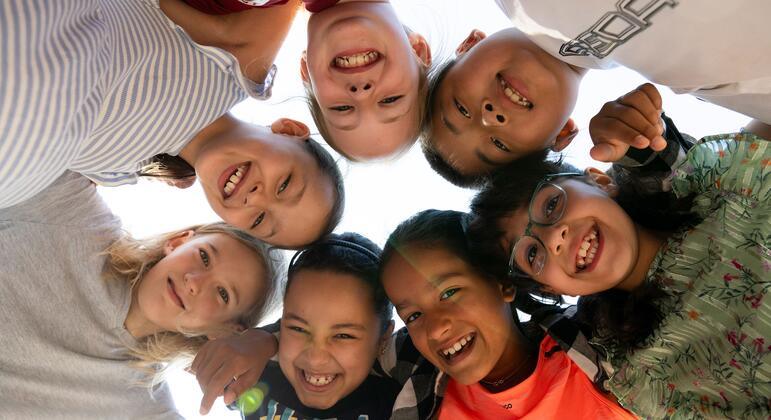
Economic inequality in rich countries is linked to poorer physical health and academic outcomes among children.
Stronger cooperation needed
UNESCO said stronger international cooperation and innovative financing will be needed to make higher education more inclusive and sustainable as student numbers continue to grow.
The report also warns that rapid growth in enrollment is putting pressure on universities, underscoring the need to maintain the quality of teaching and expand access to disadvantaged groups.
Digital technologies and artificial intelligence are also reshaping teaching and learning, but only one in five universities had a formal AI policy in 2025.
An inequality gap that lasts a lifetime
Together, the two reports suggest that inequality creates disadvantages that accumulate over time, beginning in childhood and extending into adulthood.
Children who grow up in poverty are more likely to struggle in school, have poorer health, and face barriers to entering and completing higher education.
Both agencies warned that without greater investment in education, health and social protection, economic divisions risk becoming entrenched across generations.