
It proposes a prioritized structured transition framework, including the establishment of a national health financing forum.
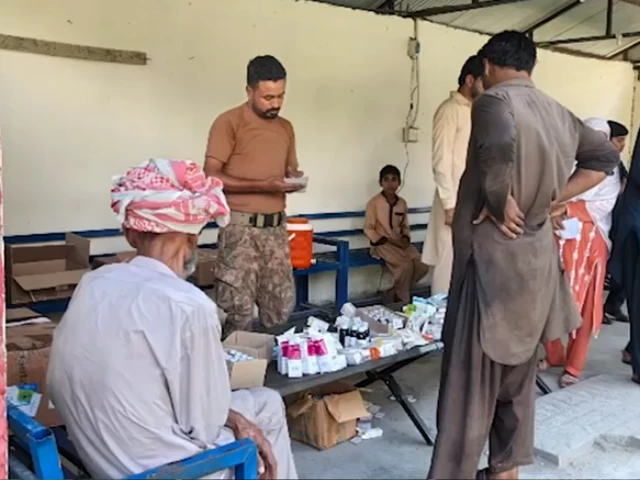
Patients queue for medical assistance at a health camp. Photo: Express
Cuts in development aid and funding pose a significant threat to the country’s health sector and its functioning, according to a report by think tank Tabadlab.
In a press release issued today, the think tank said its new report warns that “Pakistan’s health system faces a functional collapse in critical programs as Official Development Assistance (ODA) is withdrawn, a crisis that cannot be resolved by budget increases alone.”
The report, titled: “Beyond dependency: Understanding the impact of ODA cuts on Pakistan’s health system”, was published last week and was authored by Shahab Siddiqi, Behzad Taimur and Syeda Farwa Qamar Jaffri of the think tank.
The press release said it documented how recent donor reductions were disrupting specific system functions that national budgets only partially covered: commodity procurement, diagnostic capacity, supply chain management and specialized staffing.
He added that the report was based on interviews with dozens of development professionals and public health officials from federal and provincial governments, along with analysis of budget and ODA data.
“The evidence is already visible. USAID’s suspension closed more than 60 facilities, disrupting care for 1.7 million people. A $27.2 million reduction from the global fund halved tuberculosis monitoring in Punjab and Khyber-Pakhtunkhwa, cut funding for diagnostic kits, and put the treatment of tens of thousands of HIV-positive patients at risk. These disruptions will only intensify if the government does not develop effective transition plans as the “AOD continues to contract,” the press release said.
“This is a functional problem, not just a fiscal one,” said Siddiqi, head of human capital at Tabadlab.
“Pakistan’s public budgets fund salaries and facilities. ODA funds vaccines, medicines, diagnostics and supply chains. When ODA contracts, services retain staff but lose the operational core that makes programs work,” he said.
The press release said the pressure was further compounded by Pakistan’s “chronically low health investment” of just 0.9% of GDP, “well below” the World Health Organization’s recommended minimum of 5%.
“In Pakistan, grant-based assistance has contracted by 59% since 2017, while OECD projections indicate a further 5.9% decline in global ODA by 2026, indicating a structural change rather than a temporary disruption.”
The press release said the report proposed a structured transition framework with immediate priorities including establishing a national health financing forum, developing a national ODA registry and designing a risk matrix to classify functions by substitutability and criticality.
“Medium-term actions focus on time-bound transition plans for tuberculosis, HIV-AIDS and immunization programs, regulatory reforms for flexible purchasing and contracting, and increasing public health spending to 3% of GDP.
“Long-term reforms focus on improving technical capacity and progressively integrating vertical programs into primary care,” the press release concluded.


