
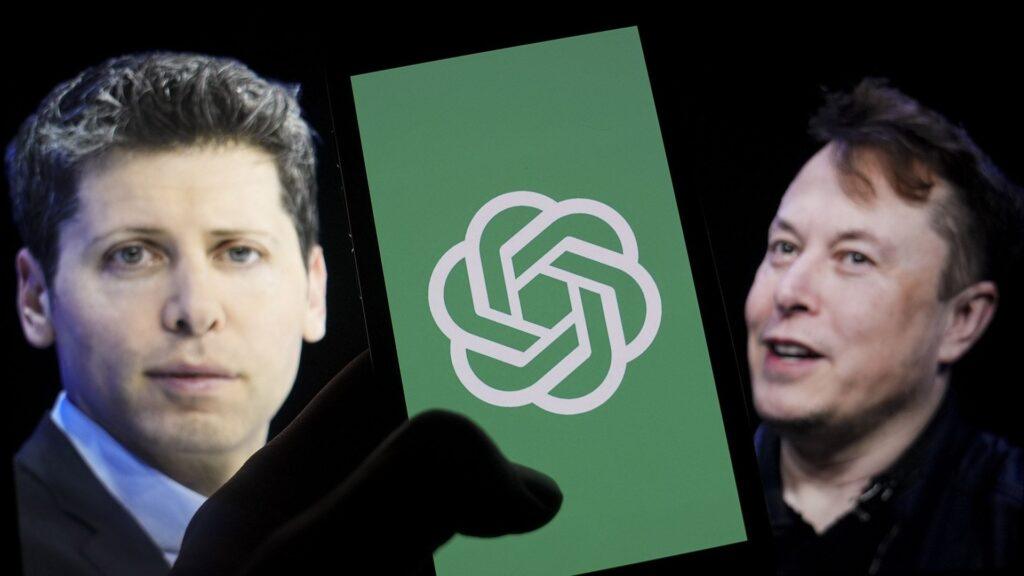
- Sam Altman testified in the ongoing OpenAI trial
- He claimed that Elon Musk wanted “total control” over the company during its early years.
- Altman alleged that Musk suggested he would pass OpenAI to his children
Sam Altman’s time on the witness stand during Elon Musk’s OpenAI lawsuit was no less heated than Musk’s own. Terminator-infused statements, although less cinematic in the references. He described Musk to the jury in Oakland, California, as a man who was unwilling to build OpenAI unless he could eventually master it.
OpenAI’s CEO alleged that Musk aggressively pushed for control during the company’s early years and resisted structures that distributed authority among multiple leaders. According to Altman, Musk believed that only he could be trusted to make the difficult long-term decisions related to artificial intelligence.
Musk “felt strongly that if we were going to form a for-profit company, he needed to have full control over it initially,” Altman said. “He only trusted himself to make non-obvious decisions that would turn out to be correct.”

The testimony landed as one of the most dramatic moments so far in the closely watched Musk v. Altman, which has become an extensive public discussion about money, power, ego and who can shape the future of AI.
According to Altman, someone asked Musk what would happen to that control after his death. Musk responded: “I haven’t thought about it much, but maybe control should pass to my children.”
For a company originally founded around the idea that advanced AI should benefit humanity at large, the exchange sounded downright feudal.
Fight for the power of AI
The court battle technically centers on Musk’s claim that OpenAI betrayed its original nonprofit mission through its business partnership with Microsoft. Musk maintains that the company has transformed from a public interest research laboratory to a for-profit artificial intelligence giant focused on the commercial domain rather than openness.
But testimony unfolding in court increasingly suggests that the deeper conflict began years earlier and had less to do with nonprofit structures than with fundamentally different ideas about control.
Altman’s version of events portrays Musk as someone who considered concentrated authority necessary to safely and effectively build artificial general intelligence. Altman promoted the opposite philosophy. He testified that one of OpenAI’s founding principles was that no individual should possess uncontrolled control over AGI systems, regardless of their intent.
That distinction now seems central to the entire modern AI industry. Power is increasingly focused on a handful of executives and companies, regardless of Altman’s goals. OpenAI itself has become one of the most valuable and influential AI companies on the planet, in part due to huge outside investment and increasingly closed commercial products. Musk left OpenAI in 2018 before launching xAI.
The irony of a trial between these two, who once publicly framed OpenAI as a safeguard against the concentrated power of AI, is palpable. Altman described Musk as deeply skeptical of governance structures that diluted his authority. He testified that he had seen enough disputes over control of startups over the years to doubt that Musk would be willing to give up power later, once a company became successful.
AI control
It is not in vain that the business conflict is presented in philosophical terms. Jurors are hearing a debate between competing views on how the AI industry should operate and on contract violations.
Musk’s legal team maintains that OpenAI abandoned transparency and public benefit in pursuit of huge commercial success. Altman’s testimony suggests that Musk wanted personal authority from the beginning and became frustrated when he couldn’t get it.
As petty as some may seem, there is a lot at stake in the trial. Musk’s lawsuit threatens billions in potential damages and could reshape OpenAI’s corporate future if successful. But the testimony already reveals that all the altruistic discussions about advanced technology can often turn into a fight over who controls it.

Follow TechRadar on Google News and add us as a preferred source to receive news, reviews and opinions from our experts in your feeds.

The best business laptops for every budget


