
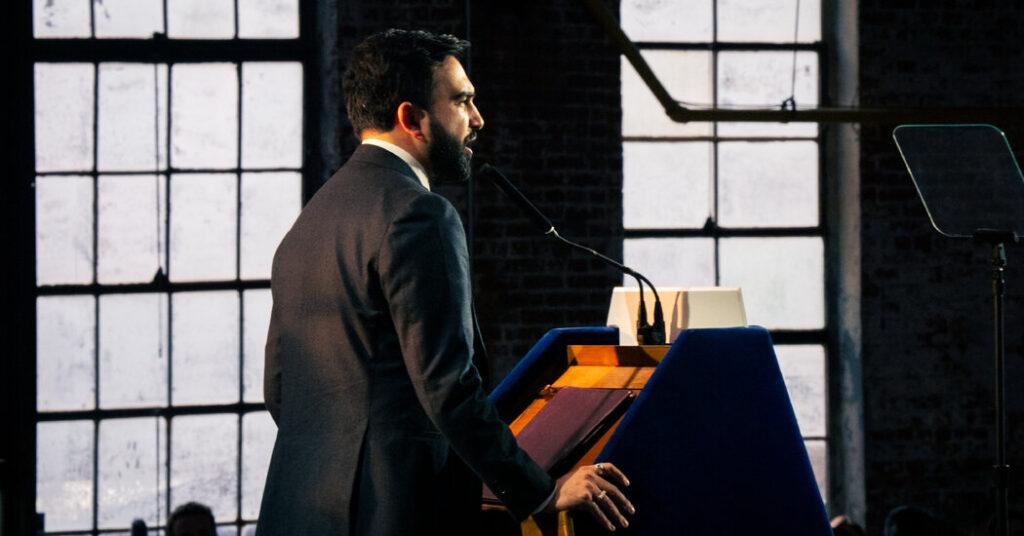
Global mergers are not typically on a New York City mayor’s agenda. But Mayor Zohran Mamdani is weighing in on a proposed settlement that he says would financially hurt many of the city’s immigrants.
In a letter, Mamdani urged the New York State Department of Financial Services to block Western Union’s proposal to acquire International Money Express, a company that sends money transfers from the United States to Latin America, for $500 million.
The April 24 letter, obtained by The New York Times, argues that a combination of the companies, both large companies in New York City, could lead to higher rates and worse service for customers.
Western Union and International Money Express, known as Intermex, operate retail establishments where recent immigrants transfer money, often to relatives in their home countries. These remittances, amounting to billions of dollars a year, are a vital resource for immigrants who do not have access to traditional bank accounts. Across the United States, remittances have increased as immigrants send home as much money as they can before being deported.
“Remittances are a crucial lifeline for New Yorkers and their communities abroad,” Mamdani wrote in the letter. He added that the agreement would “further strain the already difficult economic circumstances facing New York City’s immigrant communities.”
The deal, announced in August, is expected to close in mid-2026, subject to approval by authorities including the Department of Justice and the country’s state financial regulators.
In response to Mamdani’s letter, Western Union told the Department of Financial Services that the agreement would “ensure that accessible and affordable services” remain available to New York City immigrants, helping them compete against online-only rivals.
Western Union said it was “committed” to retail remittances, adding that they now account for about 60 percent of its revenue.
“Failure to support the combination would simply create the illusion of increased competition by undermining the ability of Western Union and Intermex, as a combined company, to continue to provide, improve and innovate their services in retail establishments,” the company said in its response.
He also said the Department of Financial Services was the only state regulator that had not approved the deal.
Spokespeople for Western Union and Intermex did not immediately respond to requests for comment. Semafor previously reported on Mr. Mamdani’s letter.
Mamdani’s role as an antitrust agent may be limited, given the relatively few deals that require state or local approval. But one of his influential advisors has experience bringing a progressive perspective to mergers and acquisitions. Lina Kahn, chair of the Federal Trade Commission during the Biden administration, was co-chair of Mamdani’s transition team after his election in November and remains his outside adviser.
By voicing his objection to the deal with Western Union, Mamdani is drawing attention to another issue of affordability, which was a central tenet of his campaign and remains a focus of his fledgling administration, whether the issue is the cost of rental housing or World Cup tickets.


