
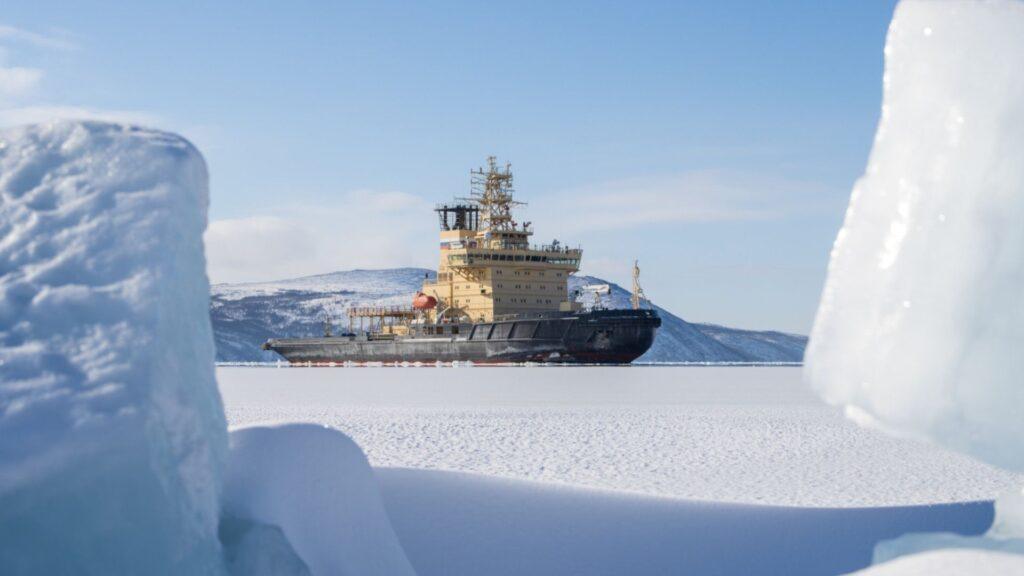
- The EU studies laying submarine cables through the Arctic
- Its objective is to avoid regions of conflict and instability such as Russia and Iran.
- The routes are expected to cost €2 billion and be operational in 2030.
If you currently access or communicate with the Internet in Asia as a European, around 90% of your traffic travels over undersea Internet cables in the Middle East.
Given the recent conflict between the United States and Iran, expanding capacity and building new projects has been a failure, as Meta knows well.
To combat this bottleneck and avoid the obvious problems of surfing the Internet through Russia, the European Union wants to take the Northwest Passage, or transit the North Pole.

Putting the Internet on ice
The two proposed solutions, under the name Polar Connect, come with their own challenges, but the EU is apparently willing to bring icebergs and thick sea ice over a region of periodic instability and Vladimir Putin, to the point that the EU has included Polar Connect as a priority project with an operational target of 2030.
For one route, which runs through the Northwest Passage in Canada to Asia, there is the obvious problem that has plagued sailors from John Cabot to John Franklin: the region is teeming with sea ice. The unfortunate silver lining is that climate change has reduced the Arctic ice cover by a considerable amount, making the route a viable option.
As for the North Pole route, the cables would start in Scandinavia and run through the North Pole.
Both routes would require specialized equipment to lay icebreaking cables at a high price, or one ship to break the ice and another to lay cables, which is equally expensive. But the costs seem like a reasonable price to pay for a more reliable connection to Asia.
This is not the first time submarine cables have been laid under the Arctic Ocean. Quintillion was the last company to attempt such a venture and had some success. A section of cable began in Nome, ran along the northern coast of Alaska and reached Prudhoe Bay. Unfortunately, icebergs can drag their lower halves along the bottom of the seafloor to depths greater than that of an undersea cable, damaging or even shearing them in an event known as “ice welding.”
When Quintillion encountered this problem in June 2023, they did not have access to an icebreaker and had to wait for the ice to melt before they could repair the cable. The same thing happened again in January 2025, causing an eight-month downtime that left many Alaskans without high-speed internet. Quintillion never traced the rest of the route to Asia.
But given the expense of trying to lay and repair cables (and circumvent potential taxes on undersea cables by hostile nations in the Red Sea or Gulf of Aden), a €2 billion route through the Arctic gives Europe sovereignty over its cables and the data that flows through them.
Through The edge

Follow TechRadar on Google News and add us as a preferred source to receive news, reviews and opinions from our experts in your feeds.


