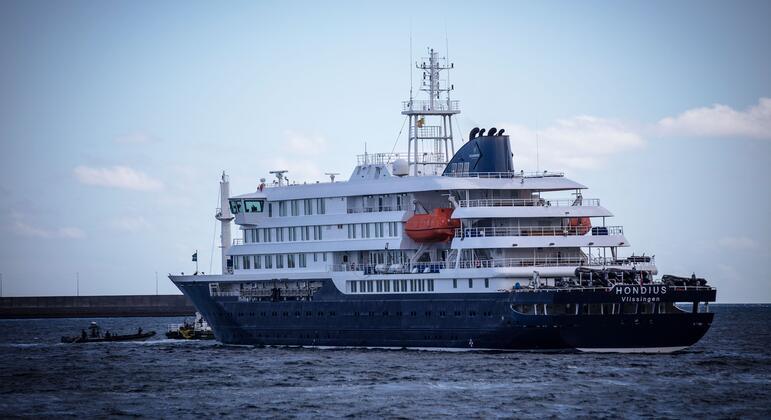
Nearly 150 passengers and crew from 23 countries had been stranded aboard the Dutch-flagged cruise ship for weeks following an outbreak of Andean hantavirus, a rare but potentially deadly disease that, in rare circumstances, can spread between humans through close contact.
WHO Director-General Tedros Adhanom Ghebreyesus said the operation, coordinated under the International Health Regulations (IHR), demonstrated the importance of international solidarity during health emergencies.
“We can say with confidence that this phase of the operation was a success,“Tedros said during a press conference in Tenerife on Tuesday. “All passengers have disembarked and left Tenerife, and MV Hondius is now en route to the Netherlands.”
As of May 13, the WHO said 11 cases linked to the ship had been reported, including three deaths. Eight cases were laboratory confirmed as Andes virus infections, two were considered probable, and one was inconclusive pending further testing in the United States.
The WHO said the global risk remains low and emphasized that all confirmed and suspected cases had been isolated and managed under strict medical supervision.
“At the moment, there are no signs that we are seeing the start of a larger outbreak,“Tedros said.”But of course, the situation could change.“
The monitoring phase begins
WHO officials warned that additional cases could still arise because the virus has a long incubation period. WHO guidance calls for active monitoring and quarantine of passengers and crew repatriated to their home countries for 42 days starting May 10.
“Anyone showing symptoms should be isolated and treated immediately.Tedros said.
The agency has asked countries to regularly report through the IHR network on the health and well-being of passengers and crew.
WHO officials said the Tenerife operation involved more than 120 people who disembarked over two days and boarded nine charter flights organized by eight countries. No passengers traveled on commercial flights.
Sara Barragán Montes, WHO technical lead on border health and points of entry, described the response as “a key example of the IHR in action.”
“The response has been a key example of RSI in action,” he said during a WHO social media briefing on Wednesday, referring to the international framework governing cooperation during health emergencies.
Emotional toll on passengers
Tedros repeatedly praised Spain for accepting the ship after the WHO determined that Cape Verde, where three symptomatic passengers had previously been evacuated, lacked the capacity to manage a full disembarkation.
“I thank President Sánchez not only for fulfilling Spain’s legal duty under international law, but also for exercising his moral duty to show solidarity, compassion and kindness to the ship’s passengers,” he said.
WHO officials also highlighted The emotional cost of passengers. for weeks at sea.
“Some of the passengers were facing a mental breakdown,Tedros said, rejecting calls from some commentators for passengers to remain isolated on board the ship for the entire quarantine period.
“Our opinion was that it would have been inhumane and unnecessary. Yesterday… I considered it even cruel to suggest that,” he said.
The ship is now sailing towards Rotterdam with 25 crew members, a Dutch doctor and a Dutch nurse. The WHO said it would continue to coordinate with authorities until the ship is safely disinfected and all remaining staff disembark.