

- New high-priority functionality to allow Windows 11 taskbar repositioning is now in testing
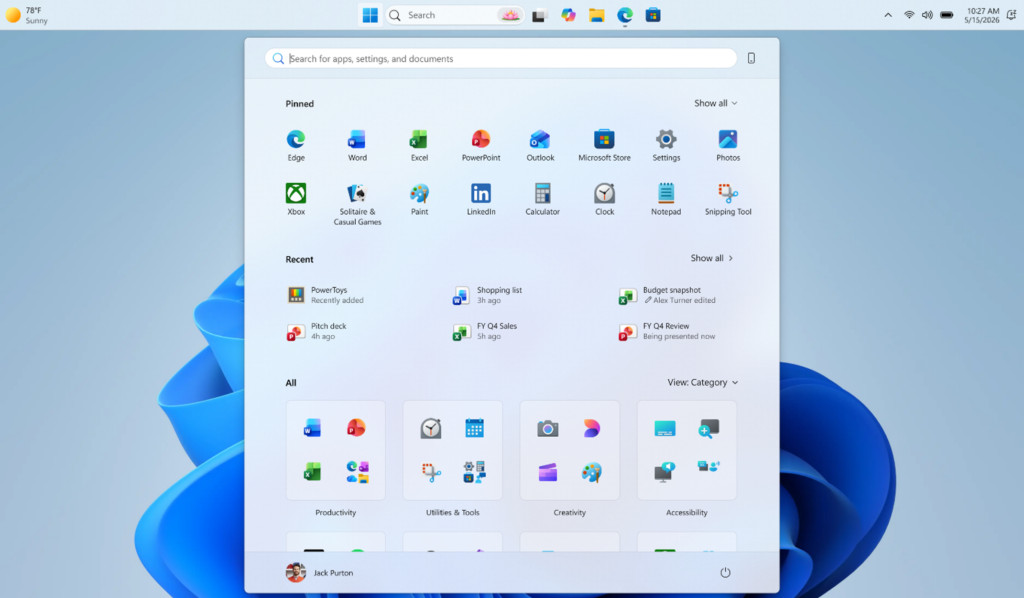
- Changes to resize and customize the Start menu will be tested soon
- These seem like well-thought-out and well-implemented features, but the top item on my Windows 11 wish list will likely never be addressed.
Windows 11 finally gets some of the most sought-after features for its interface, namely the ability to move the position of the taskbar (and make it smaller), along with the option to further resize and adjust the Start menu.
Microsoft’s blog post on ‘Make the taskbar and Start more personal’ explains that the taskbar changes are rolling out now to the experimental channel for Windows 11 preview builds, and that the Start menu overhaul is coming soon, in the “next few weeks.”
Users will be able to move the taskbar to the top or to any side of the desktop, which has been one of the most sought-after features of Windows 11 since it arrived. (Windows 10 has this functionality and people were dismayed to see it fall by the wayside in the successor operating system.)

Microsoft also allows people to choose the icon alignment (centered or not) for any position on the taskbar. Programmers, such as those with ultra-widescreen monitors who would prefer to have the taskbar located on the side of the screen, will be very happy to see that this feature is now available.
A further addition is the ability to manually choose a small taskbar (with smaller buttons), which was previously an automatically selected mode (for small screens).
Another major complaint lately has been the fact that the Start menu has become too large; In some cases, it takes up much of the desktop and effectively becomes a Start screen (as seen in Windows 8, if you remember).
To prevent this, Microsoft will give users control over the size of the Start menu in Windows 11, with small and large settings. Another change is clear and simple changes to disable any section you don’t want to see, whether it’s Pinned, Recommended, or All (the full list of apps).
You can turn off the Recommended panel now, but that also turns off jump lists and recent files in File Explorer, so Microsoft is decoupling it, meaning you can keep those last bits in place while dismissing recommendations.
All of this is useful, and the upshot is that if you want a compact Start menu that only shows your pinned apps and nothing else (a simple launcher for all your favorite apps), then you can have that (as previously rumored).
As noted, the changes to the Start menu have not yet been tested, but will be rolled out soon.
Analysis: A challenge to prove me wrong, Microsoft
It’s good to see this happening, as Microsoft promised, previously stating that the taskbar change was a top priority. I’m also pleased to see a careful implementation of the changes to the Start menu, giving people plenty of options to greatly optimize this part of the interface.
Yes, this should have been the case from the beginning, but I can’t continue beating that particular drum; At least Microsoft has realized its previous mistake by burying its head in the sand regarding complaints about the Windows 11 interface.
Now that Microsoft is listening more closely to feedback from the Windows 11 user base and directly enlisting the help of testers to fix various facets of the desktop operating system, I feel more hopeful for the future of the operating system than I have since, well, since it was first released.
So what do I personally hope Microsoft fixes next? I would love to see Microsoft bring back the option to install the desktop OS with a local account and not force the use of a Microsoft account when setting up Windows 11 (or have people avoid it). The good news is that we’ve seen a hint that this change could be in the works, but it hasn’t been officially announced yet.
It would be a move that would please many, and while I myself use a Microsoft account, and I’m not looking to change that, I want to see this implemented as a broader signal that Microsoft will stop forcing people to adopt certain behaviors in Windows 11.
If this move were to happen, my real hope is that it can make Windows 11 more free of the various promotional pieces seen for Microsoft services (be it OneDrive, Edge, Bing, or even games like Declared). Again, that’s something Microsoft has already hinted at, but what I’d be very pleased with would be the introduction of a system-wide change to remove all those veiled promotions and ads in Windows 11. (Or a bank of options where you can leave certain recommendations, if you want, but where it’s possible to activate all off, and I mean everyone).
Despite all the good work Microsoft is doing right now and my renewed faith in Windows 11, to some extent, I can’t believe for a moment that something like this could happen.
However, if it were, it would really be a sign that this is a completely different Microsoft at the wheel of the operating system.
So come on Microsoft, prove me wrong. You’re listening to the comments and you’ve probably noticed complaints that you shouldn’t receive ads or promotions on an operating system you paid for. Act on this front and you will fully regain my faith and probably the trust of many people.
The best laptops for all budgets

Follow TechRadar on Google News and add us as a preferred source to receive news, reviews and opinions from our experts in your feeds.


