
Demands local hiring in South Waziristan, investigation report on Kohat gold auction awaited
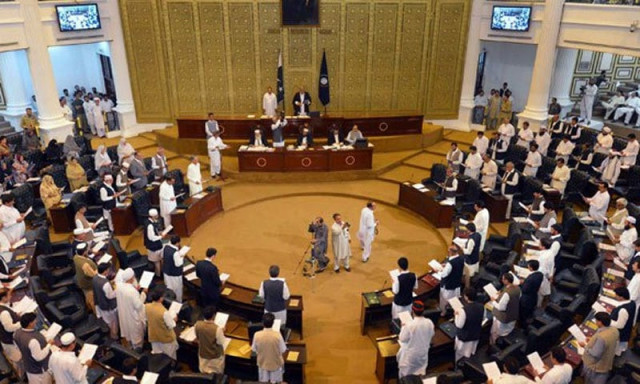
The Khyber-Pakhtunkhwa Assembly discussed the problems faced by Pakistanis in the UAE and the Gulf region. PHOTO: ARCHIVE
PESHAWAR:
The Khyber-Pakhtunkhwa Assembly on Monday unanimously adopted a resolution expressing concern over the problems faced by Pakistani expatriates in the Gulf countries, particularly issues related to residency permits (iqama) and visa cancellations.
The resolution, moved by government MPA Obaidur Rehman, highlighted the difficulties faced by Pakistani citizens in Saudi Arabia and other Gulf states. He pointed out that the visas of many Pakistanis were being canceled in the UAE and urged the Ministry of Foreign Affairs and other relevant departments to take immediate steps to resolve it.
The house also called for facilitating early repatriation of deceased Pakistanis so that their bodies can be brought home without delay.
In the same session, the assembly witnessed harsh criticism over recruitment irregularities in the health department, particularly in South Waziristan. Government MPA Asif Khan launched a strong attack on the provincial government, accusing it of violating local domicile rules in Grade 11 appointments being carried out through the Educational Testing and Evaluation Agency (ETEA).
Asif warned that candidates from other districts were being favored for seats in Upper and South Waziristan, while local residents were being sidelined. “We participated in the elections in the name of Imran Khan and carried the hopes of the people. If this practice continues, I will resign,” he said, adding that such decisions taken in “closed rooms” were unacceptable.
He regretted that the provincial health minister had not visited Waziristan even once in seven months despite the poor conditions in hospitals and basic health units (BHUs), where doctors were reportedly absent from duty.
President Babar Salim Swati supported the concerns raised by Asif and issued a ruling to halt the recruitment process until the concerned standing committee examined the matter and gave its recommendations.
Law Minister Aftab Alam also endorsed the principle that district-level posts should preferably go to local candidates and suggested necessary amendments to the rules.
Controversy over recruitment for health reasons dominated much of the process, with members emphasizing that terrorism-affected areas such as Waziristan deserved special attention and that new appointees must give written assurances of serving in the region.
Separately, the house was informed about the completion of an investigation into alleged irregularities in the auction of gold ore blocks in Kohat.
PPP MPA Shazia Tahmase raised the issue through a question. In response, Alam and Minister Riaz Khan stated that the provincial cabinet had constituted an inquiry committee as soon as the complaints arose. The committee had finalized its report, which would be presented before the next cabinet meeting. The report would then be presented to the assembly. The National Accountability Office was also continuing its own investigation into the matter.
The day’s proceedings reflected growing concern within the ruling alliance over the welfare of expatriates, fair recruitment practices in backward districts and transparency in the awarding of mining contracts. Observers see the speaker’s decision on recruitment and the cabinet’s impending discussion on the Kohat gold investigation as significant steps to address public grievances and ensure accountability in provincial governance.


