
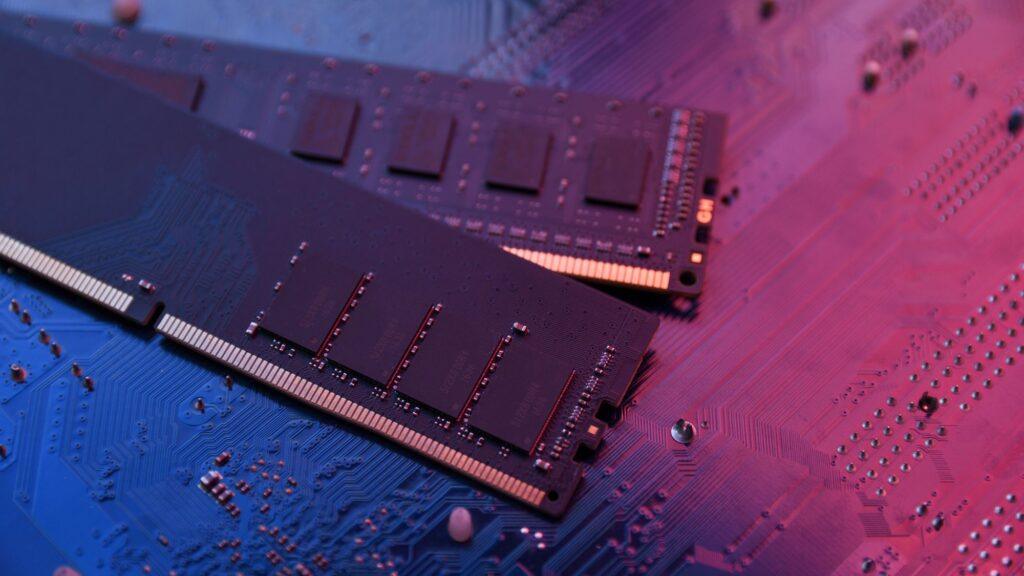
- The former head of Samsung’s semiconductor business made a more optimistic prediction about the RAM crisis
- The memory situation will improve thanks to an increase in RAM production by Chinese companies and some deflation in the AI bubble.
- Due to those factors combined, we are told: “There is a chance that the market will change starting in the second half of next year or the first half of 2028.”
Could the RAM crisis be over sooner than I thought, and maybe even in not much more than a year? A former Samsung executive has stated that this could be a possibility.
Wccftech pointed to a report from Seoul Economic Daily (via PC Gamer), which cited Kye-hyun Kyung, who was head of Samsung’s semiconductor business until a couple of years ago.
In a speech at the Korea National Academy of Engineering in Seoul, Kyung noted that “Chinese companies are aggressively expanding their production capacity” to make RAM.

He then added: “There is a possibility that the market will change starting in the second half of next year or the first half of 2028, when memory supply increases.” (Note this is translated from Korean.)
The former Samsung boss further noted that there was also a possibility that the “return on investment for Big Tech” would decline relative to the capital invested in AI, and that this could lead to a weakening of the AI boom. This, combined with the aforementioned increase in RAM production in China, could mean a faster-than-expected correction in the balance between supply and demand.
Or at least faster than predictions so far, in which no one has risked predicting that the AMR crisis could end before 2028.
Analysis: some welcome optimism, but it goes against the grain

Of course, Kyung has only indicated that we may see the beginning of the end (so to speak) of sky-high RAM prices come the second half of 2027, but that’s still a more optimistic line of thinking than we’ve seen before. And I’ll accept that sentiment, certainly.
I’m not convinced that the currently booming AI industry is going to start taking a nosedive anytime soon, but the observation that the amount of money going into AI far outweighs any benefits to be made is a fair point.
Other comments we’ve received this month about the AMR crisis have been decidedly more somber. In fact, we’ve witnessed warnings of one kind or another from all three big memory chip makers (including Samsung) predicting that the crisis will last at least until 2028 and, in one case, possibly until 2030. And they should be in a pretty good position to know that.
So for now, talking about a recovery that will kick in in just over a year seems like looking through rose-tinted glasses, but I’m happy to entertain the idea and hope that other, more positive forecasts may be imminent.

The best laptops for all budgets

Follow TechRadar on Google News and add us as a preferred source to receive news, reviews and opinions from our experts in your feeds.


