
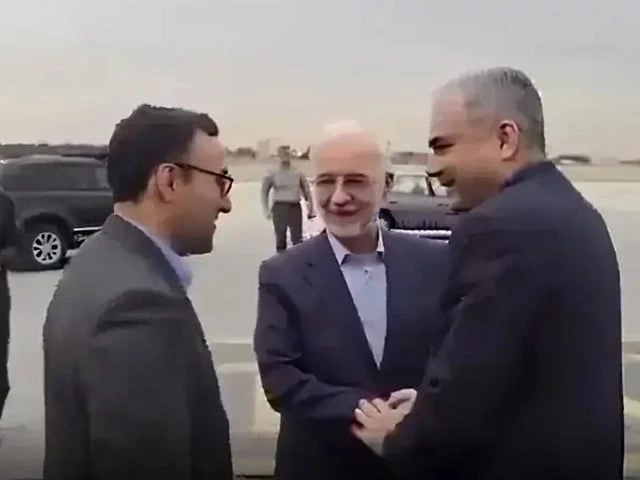
Naqvi briefs Prime Minister and CDF on meetings in Iranian capital, Pezeshkian says all paths remain open on our side
ISLAMABAD:
Pakistan’s Interior Minister Mohsin Naqvi made another trip to Tehran on Wednesday after returning home only on Monday, in what appeared to be intense diplomatic efforts aimed at securing a deal to end the war between Iran and the United States.
Naqvi’s second visit in a matter of days underscored a growing sense of urgency, with some sources saying President Donald Trump had set a timetable for negotiations to succeed or risk new military escalation.
Additionally, a U.S. source said Trump told Israeli Prime Minister Benjamin Netanyahu that mediators were working on a “letter of intent” that both the United States and Iran would sign to formally end the war and launch a 30-day period of negotiations on issues such as Iran’s nuclear program and the opening of the Strait of Hormuz.
Naqvi, who returned to Pakistan after spending nearly four days in Iran, briefed Prime Minister Shehbaz Sharif and Defense Forces Chief Field Marshal Asim Munir about his meetings in Tehran before leaving again for the Iranian capital.
What seemed particularly significant during the latest trip was Naqvi’s meeting with Ahmad Vahidi, a top commander in Iran’s Islamic Revolutionary Guard Corps and considered one of the country’s most powerful figures after Supreme Leader Ayatollah Ali Khamenei.
Naqvi also met with Iranian President Masoud Pezeshkian for the second time in less than a week.
After his meeting with Naqvi, the Iranian president wrote in
Sources said Naqvi’s latest visit was “a continuation of the previous trip” and that his agenda focused on restoring negotiations between Washington and Tehran.
Iran’s semi-official Tasnim news agency, considered close to the Islamic Revolutionary Guard Corps, also confirmed Naqvi’s arrival in Tehran.
Although Islamabad has not officially shared details of the minister’s engagements, the back-to-back visits come at a critical time when Pakistan is exchanging messages between Tehran and Washington in an effort to secure a permanent ceasefire and revive negotiations.
Pakistan’s mediation efforts have received overwhelming support from several countries, particularly from the Gulf region, which fear further instability if the war resumes.
President Trump revealed the other day that he had stopped planned attacks on Iran at the request of Saudi Arabia, Qatar and the United Arab Emirates. He said he had accepted the request because serious talks were taking place.
Within hours of Naqvi landing in Tehran, Saudi Arabia’s Foreign Minister issued a statement backing Pakistani efforts and urging all parties to seize the opportunity.
Saudi Foreign Minister Faisal bin Farhan Al Saud, in a statement published on
“Saudi Arabia also highly appreciates the ongoing mediation efforts undertaken by Pakistan in this regard. Saudi Arabia hopes that Iran will seize the opportunity to avoid the dangerous implications of escalation and respond urgently to efforts to advance negotiations leading to a comprehensive agreement to achieve lasting peace in the region and the world,” Prince Faisal bin Farhan added.
The reference to restoring the Strait of Hormuz to its pre-war state suggested that freedom of navigation through the vital waterway has become a central issue in ongoing diplomacy, amid fears that any prolonged disruption could severely impact global energy supplies and regional stability.
Iran, however, wants to exert greater control over the waterway and is even considering charging tolls. Other interested parties are not in favor of such a measure and want the strait to return to its pre-war state.


