
Experts believe that weak administration, political interference and insufficient budgets are making the situation worse.
LAHORE:
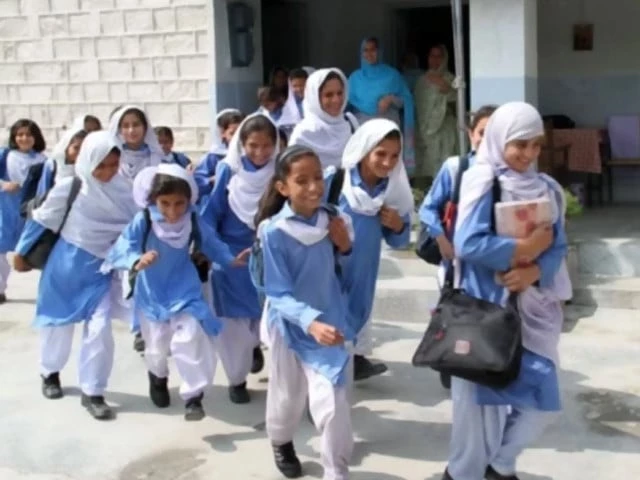
Even though Punjab is considered the educational hub of Pakistan, millions of children in the province are still out of school. Government and international reports show that poverty, inflation, teacher shortage, lack of basic facilities and financial difficulties faced by parents have become major barriers to education in the province.
According to official education statistics, thousands of government schools are operating across Punjab with millions of students enrolled, but between 9.6 and 9.7 million children remain out of school, the highest number in Pakistan. Reports from UNICEF and the Pakistan Institute of Education say that more than 25 million children across the country are out of school, with Punjab accounting for the largest proportion.
Former provincial Education Minister Imran Masood opined that poverty and inflation in rural areas are forcing many parents to send their children to work instead of school. “Many families struggle to cover even daily household and food expenses, making the costs of education impossible to bear. Girls are especially affected as they often drop out of school due to domestic responsibilities, early marriages and social restrictions,” Masood said.
“There are mainly two categories of out-of-school children in Punjab. The first includes students who study up to primary or secondary level and then drop out of education, while the second includes children who never enroll in school. Many parents are not aware of the importance of education and prefer their children to contribute financially to the household income. In several rural areas, schools are located very far away and no transportation facilities are available, making it difficult to access education. Some children outgrow and are then denies admission,” Masood said.
Reports further reveal that thousands of schools in Punjab are functioning with a single teacher in charge of the entire institution. Many schools also lack basic services such as electricity, drinking water, furniture, bathrooms and computer labs. In some cases, school buildings are in dangerous condition and pose risks to the safety of children.
Parents say the quality of education in public schools remains poor, preventing students from receiving adequate learning opportunities. In urban areas, private school tuition is too high for poor and middle-class families, while in rural regions many communities still lack nearby schools.
Imran Masood added that poverty alone is not responsible for the growing crisis. “Weak administration, teacher absenteeism, political interference, poor supervision and insufficient education budgets are making the situation worse,” Masood said. Experts warn that unless children receive quality education, safe learning environments and modern facilities, the crisis could intensify further.
Education expert Rana Liaqat explained that school attendance is monitored through the School Information System, but the current digital system has also contributed to reducing attendance records. “Under the system, attendance must be uploaded online within a fixed time limit, after which no registrations can be made,” Liaqat said.
According to attendance data collected from 37 districts of Punjab, more than 9.6 million students are enrolled up to 10th standard. However, attendance figures from April 21 showed that only about 370,000 students were marked present, while hundreds of thousands were absent and millions had no attendance record at all. The highest number of missing students was reported in Lahore and Khanewal.
The provincial government says it has launched enrollment campaigns, teacher recruitment, digital tracking systems and public-private partnerships to get children back to school. Authorities say millions of children have been re-enrolled and teacher training is improving.
However, education experts say these measures are not enough. They call for more schools in rural areas, scholarships for poor families, reducing the teacher shortage, better infrastructure and awareness campaigns on the importance of education, while highlighting strict measures against child labour.
Experts warn that without urgent and sustained reforms, the growing number of out-of-school children could create serious economic, social and security challenges for Punjab and Pakistan.


