
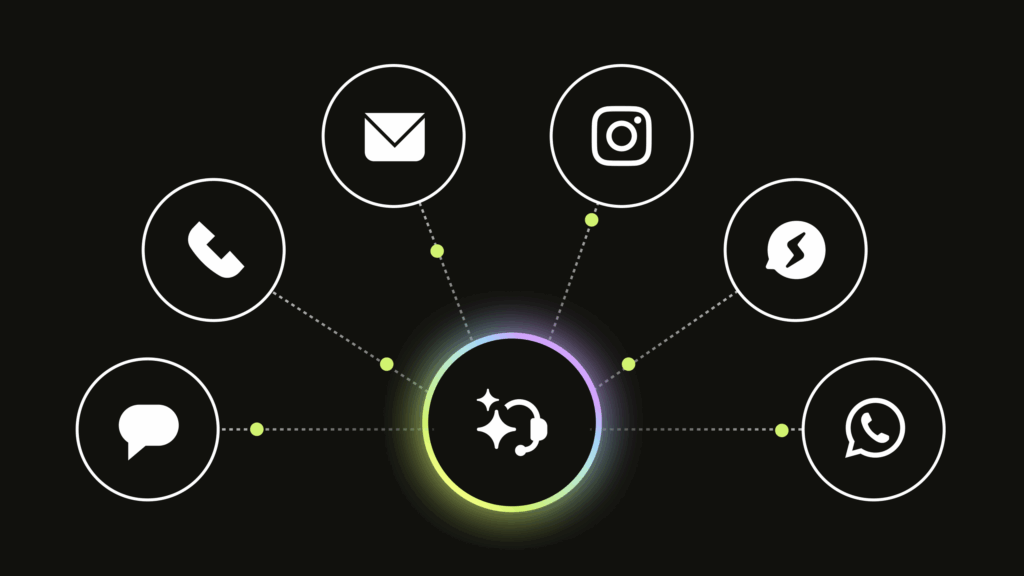
- Zendesk AI agents are expanding to third-party platforms, including AI chatbots
- New framework ensures consistent context across all customer channels
- AI voice agents now support 60+ languages and language switching
Aside from its MCP efforts also announced at its annual Relate conference, Zendesk has expanded its agent AI capabilities to more environments, including ChatGPT and Gemini, marking a fundamental shift not only in its own business model, but that of other companies as well.
We are currently experiencing an industry shift towards platform-agnostic experiences, where businesses are now expected to meet customers where they are.
Instead of forcing customers to use proprietary apps or support channels, companies are now looking for AI solutions that can operate consistently across third-party ecosystems, including messaging apps, voice assistants, and AI chatbots.

Meet customers where they are
This need is driven by changing consumer behavior, as President of Product, Engineering and AI Shashi Upadhyay noted: “You’re just going to go to Perplexity or Gemini… you’re not going to go to a website and search for it.”
The updates are designed to enable Zendesk AI agents to maintain context and continuity in customer interactions, regardless of where conversations begin.
This shift reflects how customer service is rapidly evolving beyond traditional support tickets and standalone chatbots. Instead, companies are preparing for AI agents to seamlessly follow customers across channels, devices, and platforms, retaining memory, offering high-quality personalization, and leveraging organizational knowledge bases.
At the same time, the customer service giant announced expanded support for voice AI agents, including support for more than 60 languages and switching languages mid-conversation without loss of context.
We already know that consumers are turning to chat interfaces like ChatGPT and Gemini as primary discovery interfaces, hence the ongoing work by OpenAI and Google to integrate product discovery and sales channels directly within interfaces. Now, support is also becoming an important use case for chatbots, and companies are facing increasing pressure to ensure their services are accessible through these third parties, while maintaining governance and brand consistency.
While vendors meeting customers in these third-party ecosystems is novel in itself, the biggest advantage here is the underlying framework that allows those companies to collect interactions, regardless of platform, for consistent context, helping to avoid repetitive conversations and bad support experiences.

Follow TechRadar on Google News and add us as a preferred source to receive news, reviews and opinions from our experts in your feeds.


