
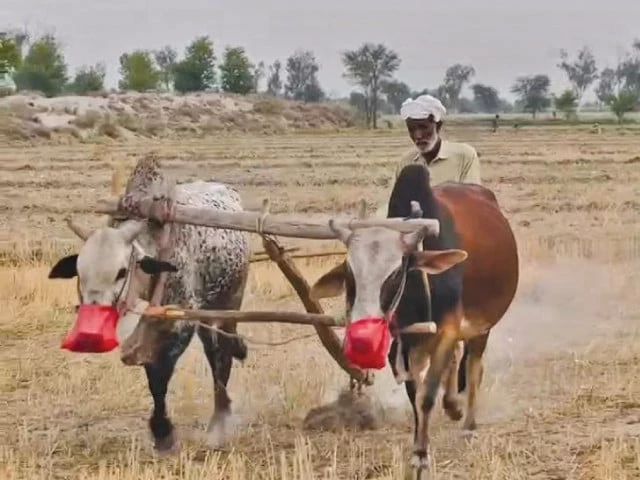
A farmer plows his field with bulls in Perowal as rising fuel prices and rising farming costs force smallholders to return to traditional farming methods. Photo: Express
PEROWAL:
Rising inflation, rising costs of agricultural inputs and the global energy crisis have forced small farmers in the Perowal area to abandon modern mechanized farming and return to traditional methods using oxen instead of tractors.
In what many describe as a symbolic step back in agricultural progress, fields that once echoed with the sound of tractors now see ox-drawn wooden plows.
Farmers say the change reflects growing financial pressure that has made modern cultivation increasingly unaffordable.
The agricultural sector, long considered the backbone of the rural economy, is currently facing serious strains due to rising diesel and petrol prices, expensive fertilizers and rising operating costs.
Farmers can now be seen plowing fields under the scorching sun, shoulders bent, bodies drenched in sweat and feet sinking into the soil as they return to traditional, labor-intensive farming practices.
Farmer Mazhar Siyal said that while the land and fields remain unchanged, increasing expenses and limited resources have left them no choice but to revert to older methods.
“The land is the same, the fields are the same, but our resources are shrinking and costs are increasing. That’s why we are forced to adopt traditional agriculture again,” he said.
Another farmer, Mian Afzal, said the rising cost of fuel had left them no choice. “High petrol and diesel prices have forced us to go back to old methods. It requires more time and effort, but at least it reduces financial pressure. With current costs, even household expenses have become difficult,” he said.
Agricultural experts warn that if energy prices and input costs are not controlled, this could seriously affect farmers’ incomes, crop yields and national food security. Numberdar Association district president Shafiq Ahmad urged the government to introduce a ‘Kisan Khushhaal Scheme’ with subsidies on fertilisers, pesticides and farm machinery.
“If this situation continues, farmers may no longer be able to farm.
“The government must take urgent measures to save the agricultural sector from collapse,” he warned.
Farmer Muhammad Faiz said the return to ox farming was more than just an agricultural change: it reflected economic hardship.
“Once again we are walking down a path that we had left behind a long time ago, thinking that it belonged to the past,” he said.


