
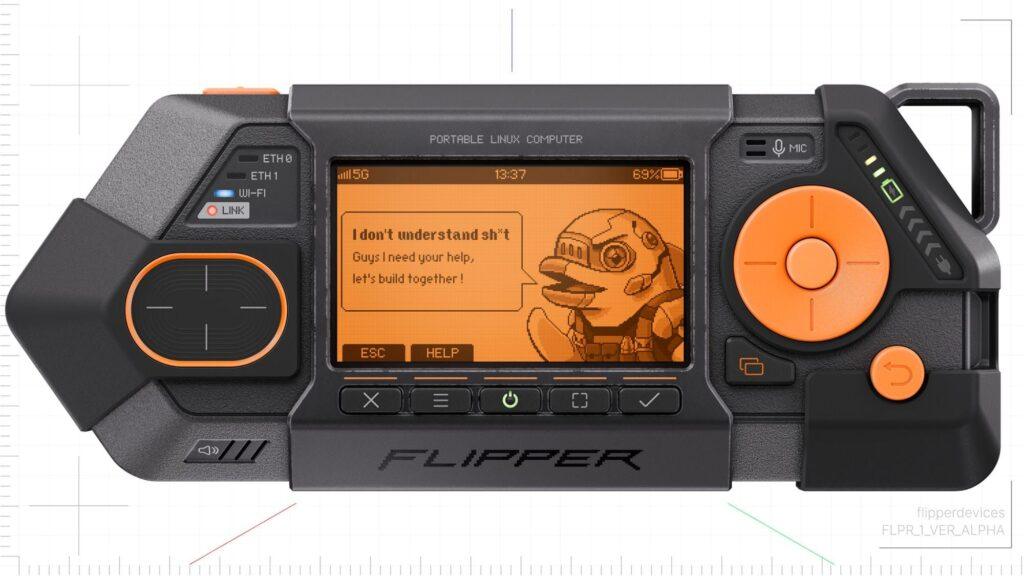
- The Flipper One is more than just an incremental upgrade to the Zero
- The team behind this has already created a developer portal and is engaging with end users with the goal of offering a completely open source ecosystem.
- Pricing information has not yet been made public, but a significant premium over its predecessor can be expected.
Flipper Zero has earned a reputation as the Swiss Army Knife for modern security researchers, enthusiasts, and penetration testers, and its development team is now looking to take things to a significant new level.
Its new Flipper One aims to focus squarely on high-end networking, with modularity, extended I/O, and the ability to run applications and tools that require considerably more power than the Zero.
Despite this, the successor to the Flipper Zero is not intended to replace it but rather to complement an already successful design that has sold more than a million units to date.

A much more versatile offer focused on open source
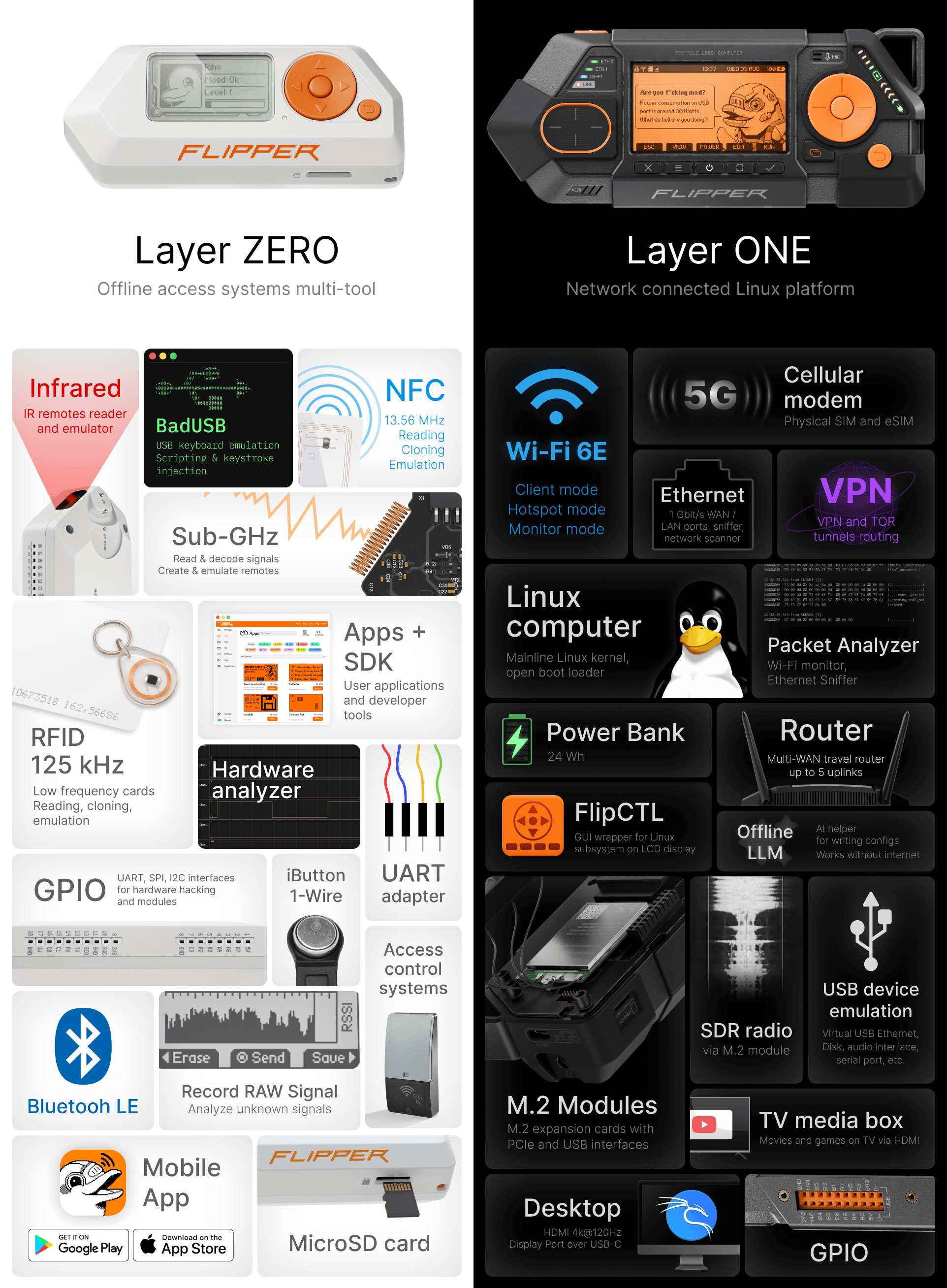
With plenty of additional features under the hood, including 4K 120Hz support via a dedicated HDMI port that allows it to function as a capable media box, NVMe SSD support, built-in WiFi 6E support plus two Ethernet ports, the Flipper One has a lot to offer compared to the more physical layer-focused Flipper Zero.
Something the company has identified and intends to address is the popularity and support tools like Flipper Zero that they have seen from a thriving developer community. To do this, you have already set up and are looking to hire an administrator for your developer portal. With a wealth of documentation available, even though Flipper One has yet to reach the hands of most developers, the team is looking to establish a relationship with its target audience, a move that has already sparked discussions on multiple forums, including Reddit.
The most significant difference lies in the operating system. While Flipper Zero runs a custom version of FreeRTOS, Flipper One will ship with a full Linux kernel. This makes it considerably easier to develop, run programs, and take advantage of its modular expansion slots, including GPIO.
A coprocessor approach to things
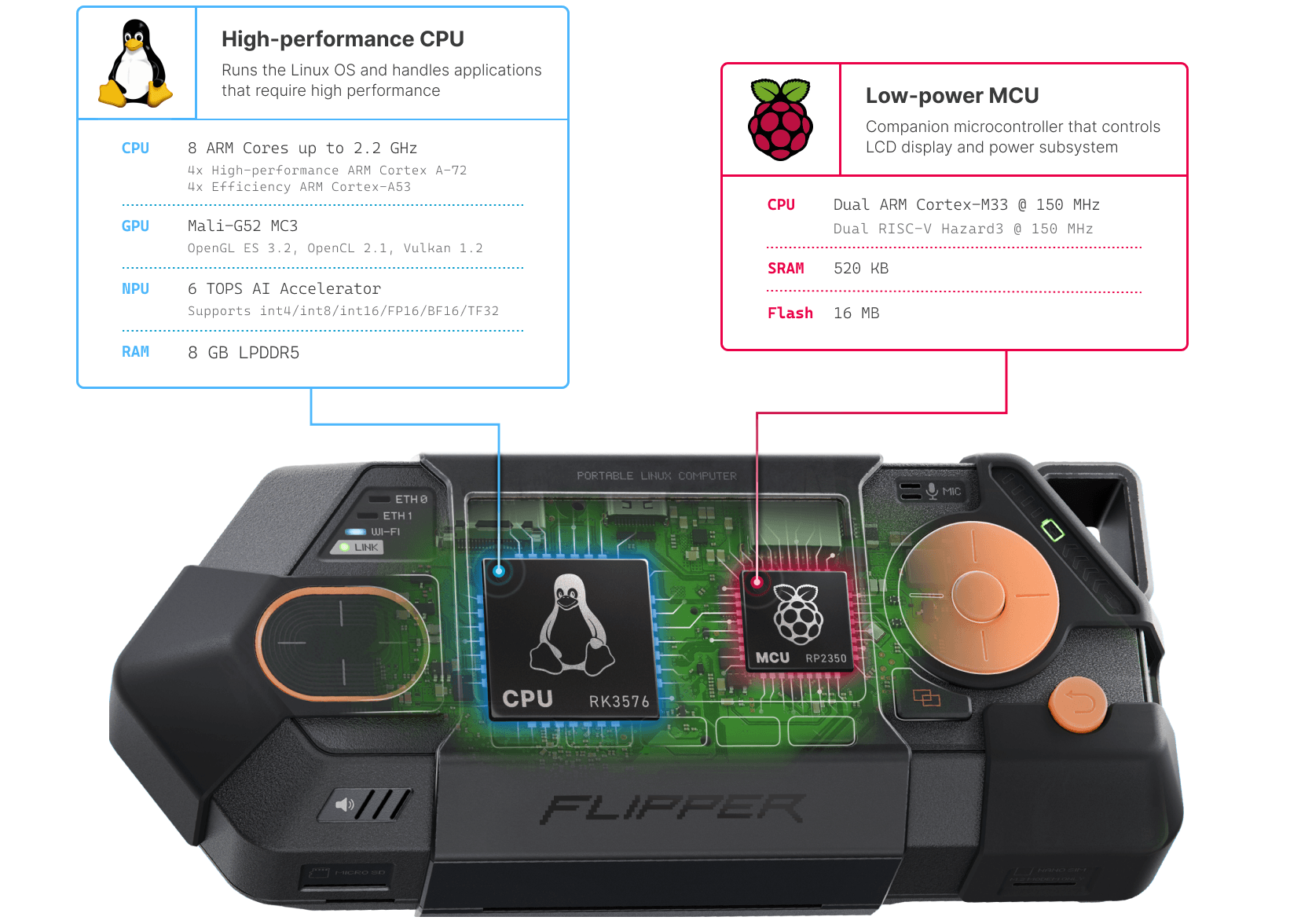
Flipper One leverages a coprocessor architecture, using an ARM-based octa-core SoC (Rockchip RK3576) as the primary controller and a low-power microcontroller for auxiliary functions, allowing users to take advantage of the device even without using Linux for certain tasks.
Flipper is also pushing for a “truly open” ARM-based Linux offering, focusing on open source packages for its next device and collaborating with Collabora to ensure it has a fully functional open source stack at launch.
The team didn’t mention a price for the Flipper One, but one could assume it would be priced considerably higher than the $200 its sibling currently costs, especially considering how ambitious it is and the volatile component and memory markets, which now play a larger role in its final cost.
Given that Flipper Zero will be around for the foreseeable future, the One may be a great value-added option for those who can shell out the extra we expect it to cost, even if some of its supposed features, such as an integrated offline LLM, have yet to be demonstrated.

Follow TechRadar on Google News and add us as a preferred source to receive news, reviews and opinions from our experts in your feeds.


