
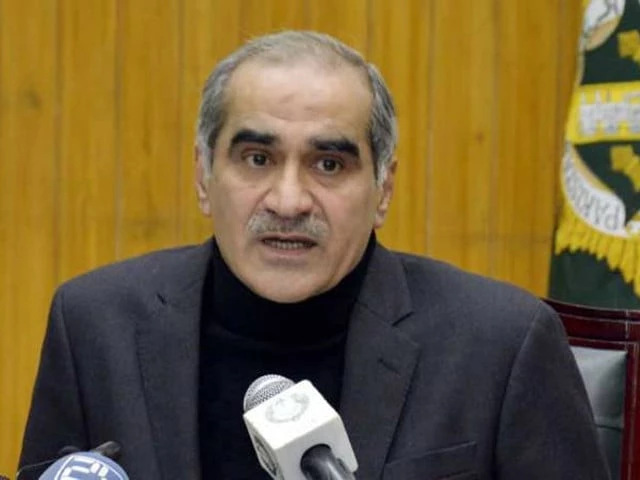
Says everyday incidents of violence and terrorism require broader national consensus
LAHORE:
PML-N leader Khawaja Saad Rafique on Sunday called for a new Charter of Democracy and Charter of Economy, urging political reconciliation and dialogue between political parties amid rising terrorism, economic difficulties and deepening polarization in the country.
At a ceremony in Lahore, former federal minister Khawaja Saad Rafique said Pakistan’s political players would eventually have to sit together to reduce political instability and address growing national challenges.
“The political temperature within Pakistan must be lowered,” he said, adding that daily incidents of violence and terrorism require a broader national consensus.
The former federal minister said that both the government and the opposition should reach a consensus on key national issues, particularly security and the economy, while insisting that all political forces that accept the Constitution should participate politically.
He also suggested that the PTI would not be able to avoid talks with rival political parties indefinitely. “If enemies can be reconciled at the international level, then political forces within Pakistan can also engage in dialogue,” he said.
Saad further called for constitutional protection for local governments, arguing that the repeated dissolution of local bodies had weakened governance and aggravated provincial grievances.
Although he expressed support in principle for smaller provinces, he opposed proposals focused solely on the division of Punjab, saying that all provinces should be treated equally.
Saad defended Nawaz Sharif’s silence over his overthrow, saying: “People say Nawaz Sharif doesn’t speak. How much more should he speak? He has already paid enough price for it.”
“People in our party don’t speak. I do. That’s why I have remained free,” he said. Later in the speech, the PML-N leader went on to address regional and international issues, praising Pakistan’s nuclear tests in 1998 and crediting the armed forces, scientists and political leadership for protecting the country’s nuclear program despite international pressure and economic difficulties at the time.


