- Iranian officials in Doha to discuss a possible deal with the United States.
- US stock futures hold back gains, European stock futures mixed.
- Bonds are holding steady after last week’s decline on inflation and rate hike fears.
Oil prices rose on Tuesday and stocks were mixed, as investor optimism about an imminent US-Iran peace deal was tempered by fresh US attacks in the Middle East.
Iran’s top negotiator and its foreign minister were in Doha for talks with Qatar’s prime minister about a possible deal with the United States to end the war, an official briefed on the visit said, after Washington and Tehran downplayed hopes of an imminent breakthrough.
The Nikkei newspaper reported separately that both sides were discussing a plan to open the Strait of Hormuz about 30 days after reaching an agreement to end hostilities.
But even as talks progressed, U.S. forces carried out strikes in southern Iran on Monday against targets, including ships trying to lay mines and missile launch sites, in what they described as defensive actions.
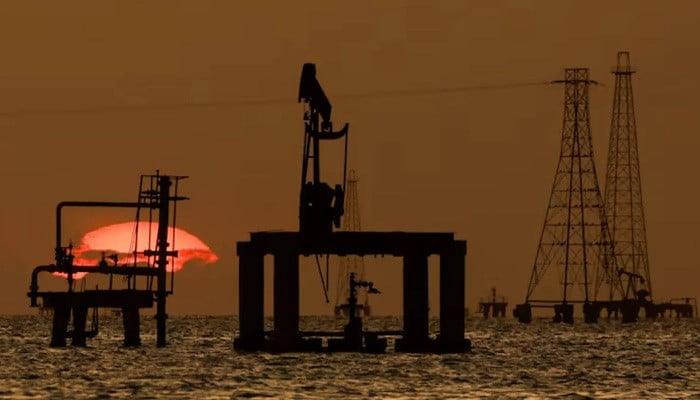
The developments sent Brent futures up more than 1% in early Asian trading to $97.32 a barrel. US West Texas Intermediate crude oil rose slightly from Monday’s last traded price, but was down 5.5% from Friday’s close. There was no agreement on Monday because of the Memorial Day holiday in the United States.
“I’m a little skeptical… They keep telling us there’s a deal close, but what does that deal look like? That’s what’s really important. When the Strait of Hormuz will open… There’s a lot we don’t know,” said Joseph Capurso, a strategist at Australia’s Commonwealth Bank.
Stock markets were mixed, with MSCI’s broadest index of Asia-Pacific shares outside Japan gaining 0.8%, while Japan’s Nikkei lost 0.2%.
Nasdaq futures pared earlier gains to trade 0.9% higher, while S&P 500 futures rose 0.68%.
Eurostoxx 50 futures fell 0.36%, while FTSE futures added 0.4% and DAX futures lost 0.43%.
“The market wants to believe that everything is going to end soon, because the fact that the war is not ending is bad enough for the world economy. The world economy has had these buffers to deplete inventories, but you can’t continue to deplete inventories,” Capurso said.
The dollar stabilizes
In currencies, the dollar stabilized on Tuesday on renewed safe-haven demand, although it remained some distance from a six-week high reached last week.
The euro fell 0.06% to $1.1636, while the pound sterling fell to $1.3498.
Against the yen, the dollar was stable at 158.95.
Bonds were largely steady after a slide last week on concerns that longer higher energy prices would stoke a resurgence in inflation and trigger rate hikes in developed and emerging markets.
The two-year U.S. Treasury yield was little changed at 4.0612%, while the 10-year yield fell to 4.5024%.
“We are likely to see periodic pullbacks in yields at times as geopolitical risks subside, but inflation and fiscal risks are likely to be more sustained,” said Eric Robertsen, head of global research and chief strategist at Standard Chartered.
“Commodity supply dislocations will take months to resolve, and fiscal support measures are likely to drive a sustained deterioration in sovereign balance sheets, which will also require higher borrowing in an environment of higher financing costs.”
Elsewhere, spot gold fell 0.5% to $4,545.90 an ounce.