
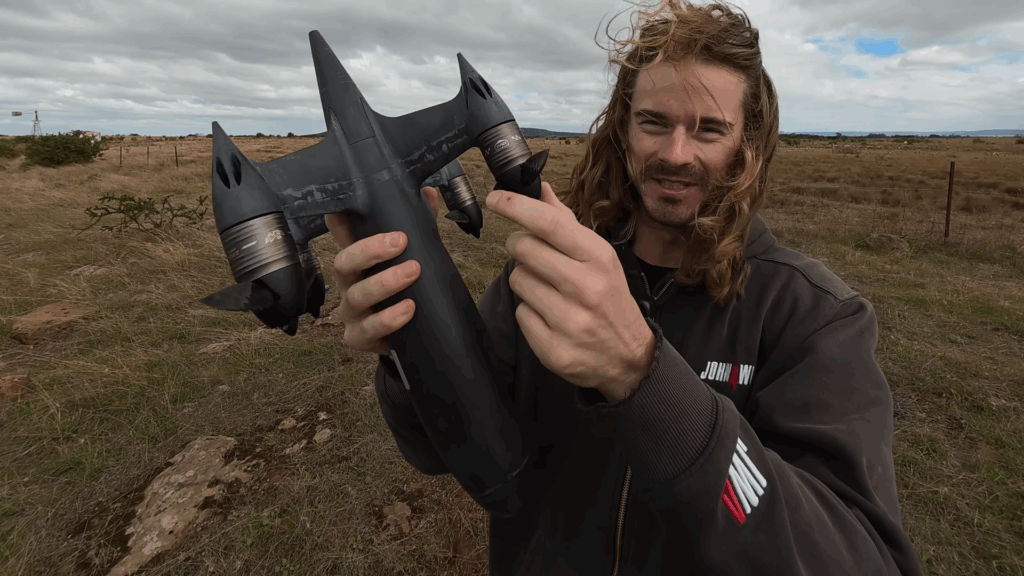
- Although it is not official because there is no professional observer, a new world speed record for drones has been achieved
- The first attempt was a disaster: the drone lost contact and crashed.
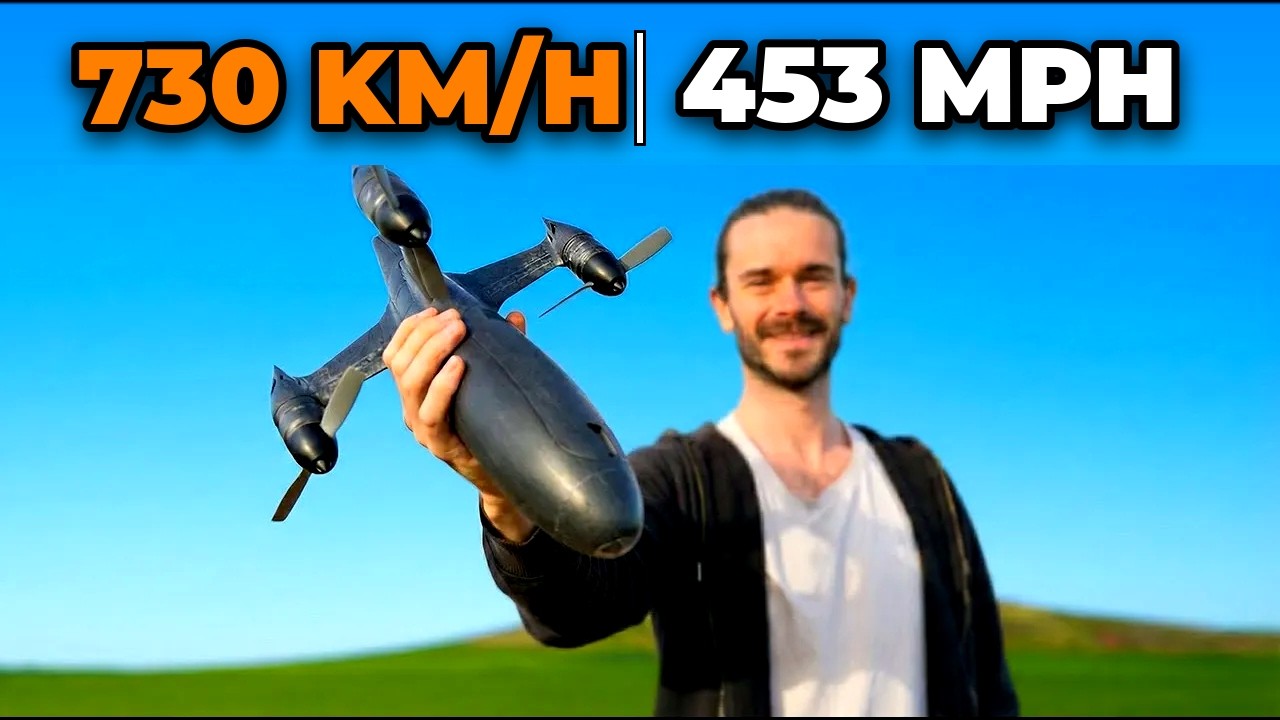
- The record is almost double the speed of a Formula 1 car (730 km/h compared to 397 km/h
The battle for the title of the fastest drone in existence has become unexpectedly exciting over the past year. The current officially recognized Guinness World Record was set by Luke Maximo Bell in December 2025, with his customized Peregreen V4 reaching 658 km/h. However, this was unofficially surpassed by Australian duo Ben Biggs and Aidan Kelly of Drone Pro Hub in February 2026 when they reached 690 km/h, and has now been broken again with a staggering top flight speed of 730 km/h.
The reason this record is not official is because the couple did not have a professional observer present to ratify the attempt. However, you can see in the video below the attempts made to break the record, the last of which is successful. The record-breaking drone is called ‘Blackbird’, a scratch-built device manufactured by Biggs, an engineer; It’s quite a different beast than the consumer camera drones we usually review.
Watch the video below. It’s worth reiterating that the couple is Australian and there is a lot of colorful language.

Look
The first attempt to break the record again is an absolute disaster: the two reach 630 km/h, but lose video contact with the drone. Their theory is that this is due to some combination of a blind spot in the drone’s antennas, a Doppler shift compromising the video link, and an overloaded signal when the drone passed the pilot at close range (although there is currently a lively debate in the comments of the video). But whatever the cause, the result was the same: a mangled Blackbird.
Fortunately, the pair had another prototype ready and the next round of testing broke the record. The Blackbird reached a verified average speed of 685 km/h (426 mph), with a maximum downwind speed of 730 km/h (453 mph). This was confirmed by GPS and by telemetry on the camera.
How the Blackbird was pushed even faster
According to Biggs, the key to making the Blackbird faster than ever came from a set of updated, custom carbon fiber propeller blades. These blades were handcrafted by friends of the channel and were built with a sawtooth-shaped leading edge, which generates vortices that keep air moving toward the back of the blade instead of sliding to the sides, increasing efficiency. The blades are also tilted more toward the direction of flight, again improving efficiency by minimally disrupting airflow, as Tom’s Hardware explains.
The downside is that this design provides much less power at low speeds, meaning functions such as takeoff and landing can consume a lot of energy. Well, to be fair, the whole operation requires a lot of power: at its peak, the Blackbird produced a power draw of 400 amps for 10 seconds. When it fell after its successful flight, its batteries were smoking and its cables melted.
Fortunately, the drone suffered no permanent damage and we have a feeling it won’t be long before Biggs and Kelly return with an official spotter to officially claim their Guinness World Record. And beyond that, who knows? We now officially have a drone capable of traveling at more than 700 km/h. Could 800 km/h be on the horizon?
While Blackbird is not commercially available, Pro Drone Hub plans to distribute the plans to allow people to 3D print the components themselves; You can sign up on their website to be notified when the launch becomes official.

Follow TechRadar on Google News and add us as a preferred source to receive news, reviews and opinions from our experts in your feeds.
The best drones


