
PTI leader says he was asked to leave Gilgit for lack of NOC before being detained by police; PTI condemns arrest
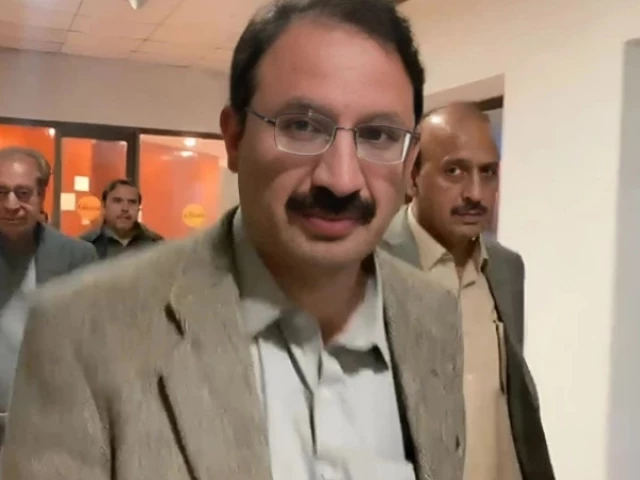
Junaid Akbar was elected unopposed chairman of the Public Accounts Committee in January 2025. Photo: Express/ Archive
Pakistan Tehreek-e-Insaf (PTI) Khyber-Pakhtunkhwa Chairman Junaid Akbar Khan was arrested by Gilgit-Baltistan (GB) Police in Hunza while campaigning for the upcoming elections, according to party leaders and officials.
Ahead of Britain’s scheduled general election on June 7, Akbar was visiting several areas in the region as part of the party’s election campaign when he was detained along with National Assembly members Saleemur Rehman and Syed Mehboob Shah.
Read: Senate and NA to meet on June 5 for budget sessions
Speaking after the incident, Akbar said he was told to leave Gilgit because he did not possess a no-objection certificate (NOC).
“I was told that since I don’t have an NOC, I should leave Gilgit,” he said, asking, “Isn’t Gilgit-Baltistan part of Pakistan?”
Reacting to the arrests, PTI Information Secretary Sheikh Waqas Akram strongly condemned the detention of Akbar and other party leaders in Britain.
He called the move “a failed attempt to suppress political activities and influence elections” and urged the president of the National Assembly to immediately intervene to ensure the release of the detained leaders.
Let us strongly condemn the shameful expulsion of PTI leaders from Gilgit-Baltistan! The authorities prevent them from campaigning with unfounded excuses. This is pure fear of PTI’s popularity and a desperate attempt to impose Form 47 results through manipulation.
Enough politics…– Sheikh Waqas Akram (@SheikhWaqqas) May 29, 2026
“Democracy cannot be silenced through arrests and pressure,” he said.
In response to this situation, KP Chief Minister Suhail Afridi warned that he would personally travel to Britain if the detained MPs were not released soon.
Read also: PTI’s Junaid Akbar resigns from PAC chairmanship
He said questions would be raised about alleged mistreatment by the “puppet government” in Britain and those seeking to form a government there.
“These attitudes are damaging Pakistan and increasing hatred,” the prime minister said, adding that denying the PTI a level playing field in elections through “force and oppression” was damaging the democratic system.
He further said that the UK Prime Minister was not responding to his calls and described the situation as “undemocratic and apolitical”.
“We will not allow Gilgit-Baltistan to become a no-go zone,” he added.
KP Higher Education and Local Government Minister Meena Khan Afridi also condemned the arrest and called it “regrettable” that Akbar was detained during the election campaign.
He said the harassment of workers and political leaders went against democratic values and warned that suppressing dissent by force was not a positive sign for democracy.
Afridi demanded that Akbar be introduced immediately and called for a free and transparent political environment for the GB elections.
He also condemned what he described as “political victimization and undemocratic tactics,” and urged law enforcement agencies to act in accordance with the Constitution and the law.
Provincial Information Minister Shafee Jan also criticized the arrests, calling them “the worst example of political revenge.”
He said the detention of elected legislators was against democratic norms and amounted to a lack of respect for the public mandate.
“Participating in an electoral campaign is a constitutional, legal and democratic right of every political party,” he stated.
Jan alleged that while other political parties were allowed to campaign freely in GB, the PTI was being obstructed.
He questioned why the UK government was “scared” to the point that elected lawmakers were being arrested.
“These tactics cannot weaken the resolve of PTI workers,” he said, adding that the party would continue to participate in the elections despite what he termed political vendetta.
He further said that the people of Britain would reject the policy of political victimization through the power of the vote.
“The government fears Imran Khan’s public popularity so much that it has resorted to such tactics before the elections,” he added.


