
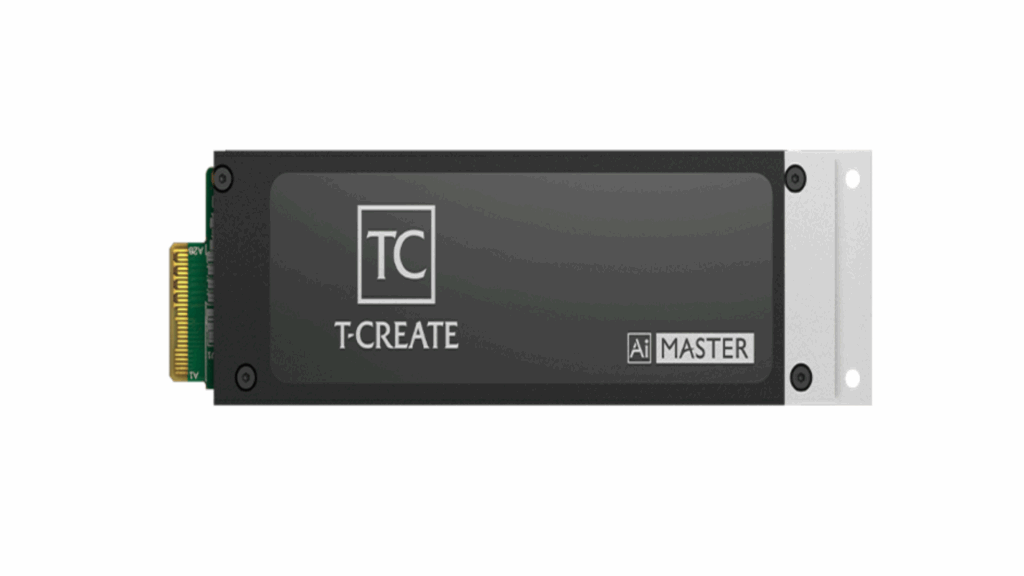
- Teamgroup launches a 28 GB/s SSD that your PC can’t use
- AI infrastructure continues to be faster than consumer hardware ecosystems
- Motherboard limitations leave PCIe 6.0 performance effectively stranded
PCIe 6.0 solid-state drives have been discussed for years as the next big leap in storage performance, but practical adoption remains largely out of reach for everyday users.
Teamgroup has now joined a small group of manufacturers demonstrating what the technology can offer, introducing a new drive capable of reaching speeds previously associated with enterprise infrastructure rather than desktop computing.
The company’s new T-CREATE MASTER Ai I6E E1.S SSD, announced at Computex 2026, uses the PCIe 6.0 interface and an E1.S form factor commonly associated with servers and specialized computing platforms.

Enterprise storage is ahead of consumer hardware
According to Teamgroup, the drive can achieve sequential read speeds of up to 28 GB/s, making it among the fastest storage devices announced to date.
Those specifications are aimed squarely at AI training, inference workloads, and high-performance computing environments where massive data sets must be continuously processed.
The drive is also designed to operate with low latency while maintaining energy efficiency, attributes increasingly valued in large-scale computing installations.
On the memory front, Teamgroup is also pushing parallel upgrades like MASTER AI RDIMM, which offers registered memory with 64GB per module.
It expands up to 512GB of total capacity, designed to support the same AI-intensive workloads that demand ultra-fast storage.
Despite the performance numbers, there is a significant limitation for anyone looking to install the SSD inside a conventional desktop computer.
Conventional consumer and prosumer motherboards do not currently support PCIe 6.0, leaving the technology largely confined to specialized enterprise implementations.
The announcement follows several years of growing expectations around PCIe 6.0 storage.
Long before PCIe 5.0 drives became widely available, industry discussions focused on the possibility of next-generation SSDs approaching 28 GB/s transfer speeds.
Micron demonstrated the world’s fastest SSD with PCIe 6.x technology last year, reaching 27 GB/s.
Samsung then suggested that a 512TB PCIe Gen6 drive would arrive for business users around 2027, but for regular users, the wait could be until 2030.
Earlier this year, Micron released the first purchasable PCIe 6.0 SSD, but only for hyperscalers running AI inference workloads.
Teamgroup follows the same roadmap by launching a product that ordinary consumers cannot install.
The company has obtained invention patents in Taiwan and the United States for its one-click data destruction mechanism applied to both industrial and consumer products.
Fast storage without a consumer platform
Teamgroup’s latest SSD therefore represents a growing gap between enterprise storage development and consumer hardware readiness.
While manufacturers continue to introduce faster drives for data center and AI applications, desktop platforms have yet to provide compatible infrastructure.
Teamgroup says its creator-focused T-CREATE brand is focusing on technologies that support generative AI, professional content creation and advanced computing workloads.
However, the presence of a PCIe 6.0 SSD in your portfolio doesn’t mean that consumers can immediately benefit from those speeds.
For now, the drive primarily serves as a test of where storage technology is headed, rather than something most enthusiasts can buy and deploy.
Unless motherboard vendors accelerate adoption of PCIe 6.0, the practical audience for 28GB/s SSDs will remain concentrated among enterprise operators and hyperscalers.

Follow TechRadar on Google News and add us as a preferred source to receive news, reviews and opinions from our experts in your feeds.


