
Gold has fallen below its 200-day moving average (200DMA), a widely followed long-term technical indicator that tracks the average closing price over the previous 200 trading days.
A break below the 200-DMA is often interpreted as a sign that long-term bullish momentum has weakened and that a broader trend reversal may be underway. This is the first time gold has traded below its 200 DMA since October 2023, with prices now falling below $4,300 an ounce.
The drop follows a major rally that saw gold rise almost 200%, going from less than $2,000 an ounce in October 2023 to an all-time high of $5,600 in January of this year. Much of that advance was driven by “debasement trading,” the investment thesis that government spending, rising debt levels and loose monetary policy would erode the purchasing power of fiat currencies, increasing demand for scarce reserves of value like gold.
Gold has now entered bear market territory, having fallen more than 20% from its all-time high. The latest weakness follows a stronger-than-expected U.S. jobs report on Friday, which led markets to price in a higher likelihood of a Federal Reserve tightening. The CME FedWatch tool now calls for a 25 basis point rate hike in December, which would lift the fed funds rate to a range of 3.75% to 4.00%.
Silver, which is often considered a higher beta version of gold due to its higher volatility, is currently testing support at its own 200DMA near $67 per ounce.
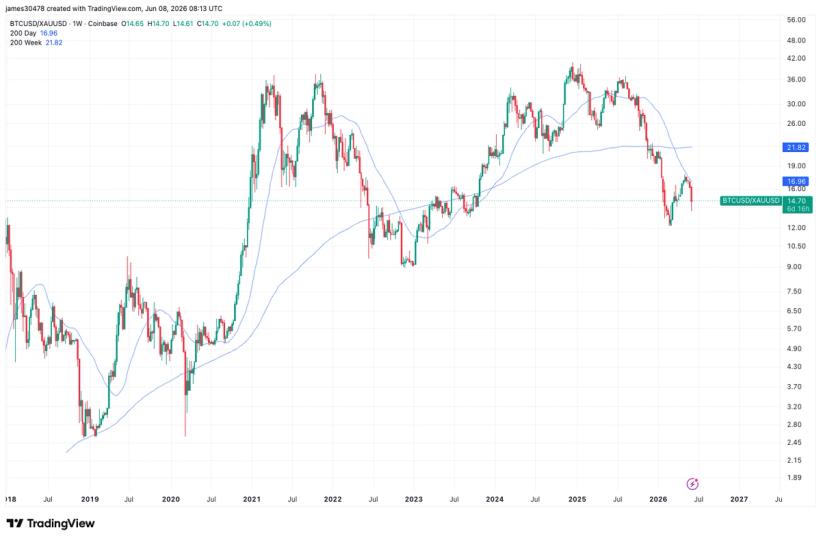
bitcoin The gold ratio, which measures how many ounces of gold one bitcoin can buy, has risen 3% in the last 24 hours to 14.72 ounces as bitcoin recovers towards $63,000.
Despite the rally, the ratio remains about 70% below its December 2024 high of about 41 ounces. Last month, the ratio was rejected at its 200DMA, which preceded bitcoin’s fall below $60,000. However, the ratio remains above its February lows, offering a modest sign of resistance for bitcoin bulls.
Adding pressure to risk assets, the US Dollar Index (DXY) has risen back above 100. A stronger dollar is typically a headwind for commodities, gold and cryptocurrencies because it tightens global financial conditions, reduces liquidity and makes dollar-denominated assets more expensive for international investors.


