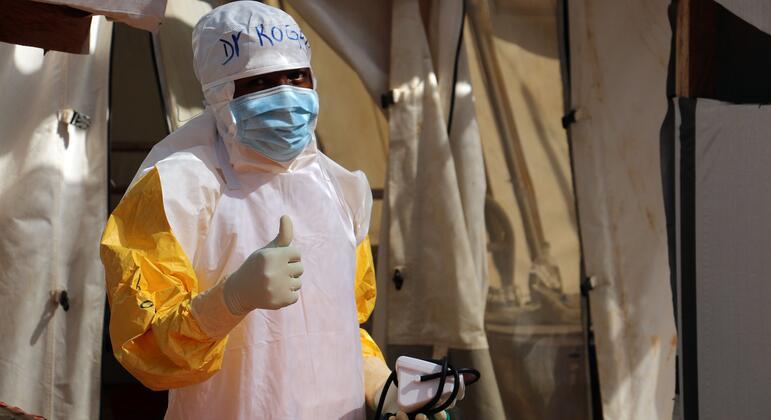
WHO has expanded isolation capacity for suspected cases and improved treatment facilities, including building individual isolation rooms that meet the latest infection prevention and control standards and installing a 10,000-liter water tank to support patient care.
At a high-level meeting of African leaders on Tuesday, WHO director Tedros Adhanom Ghebreyesus described community mistrust as a “major barrier” to the response.
“These communities feel – perhaps rightly – that the outside world only wants to protect itself from Ebola and does not really care about them“, said.
Following a visit to the epicenter of the outbreak in Ituri province, Tedros said insecurity, displacement and population movements continue to complicate response efforts. He He also criticized the sweeping travel restrictions, saying they are “an unnecessary overreaction that does more harm than good.”.
No vaccines or therapies.
The outbreak is being fought without vaccines or approved treatments for Bundibugyo virus disease, although clinical trials of “promising drugs” are expected to begin in the coming weeks.
“The most important question is what will we do to prevent the 18th and 19th Ebola outbreak,” Tedros said.
He stressed that ending the outbreak will require strong community commitment, cross-border cooperation and investment in broader health services.
“If we protect these communities from Ebola, but not from malaria or unsafe births, or measles or malnutrition, or from conflict not caused by them, we won’t really have helped.”
Practical guide to managing deadly viruses.
Meanwhile, the WHO published its first comprehensive clinical management guidelines for all filovirus diseases, including Ebola and Marburg viral diseases.
They set out 16 evidence-based recommendations focused on early supportive care, which the WHO says can significantly improve survival, particularly when vaccines and treatments are not available.
“These new guidelines are a perfect example of how WHO is harnessing science to better protect and care for people during outbreaks and health emergencies,” said Dr Tedros. “The current Bundibugyo virus outbreak is a A stark reminder of the need for diligent, holistic and person-centered healthcare.to save lives and preserve human dignity.”
Key recommendations include prompt treatment of dehydration and shock, laboratory monitoring, prompt treatment of bacterial infections, and structured follow-up care for survivors.
The WHO said early recognition, prompt referral and optimized supportive care remain the foundation of effective treatment.